
Every supplier page shows the same wall of badges. ISO 9001. SGS. CE. REACH. A gold seal that says “quality assured”. Most of those logos are real documents. That is exactly the problem.
A valid ISO 9001 certificate tells you a factory runs a controlled quality system. It says nothing about whether the film rejects heat or survives five summers on a dashboard in Riyadh. Two different questions, two different documents, and suppliers mix them up on purpose.
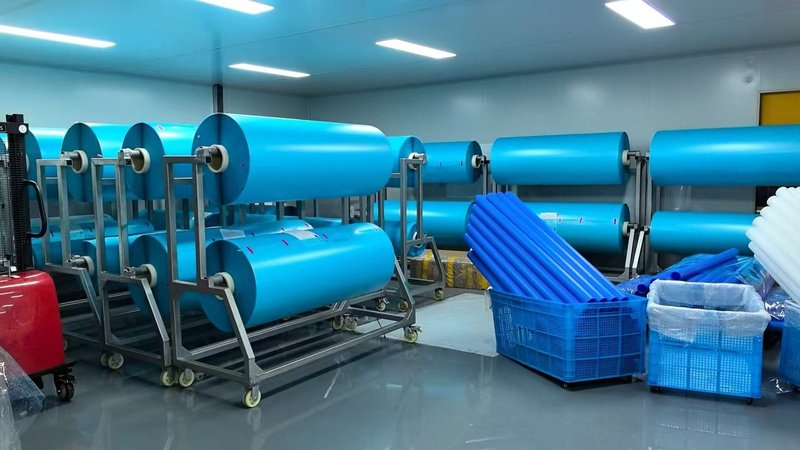
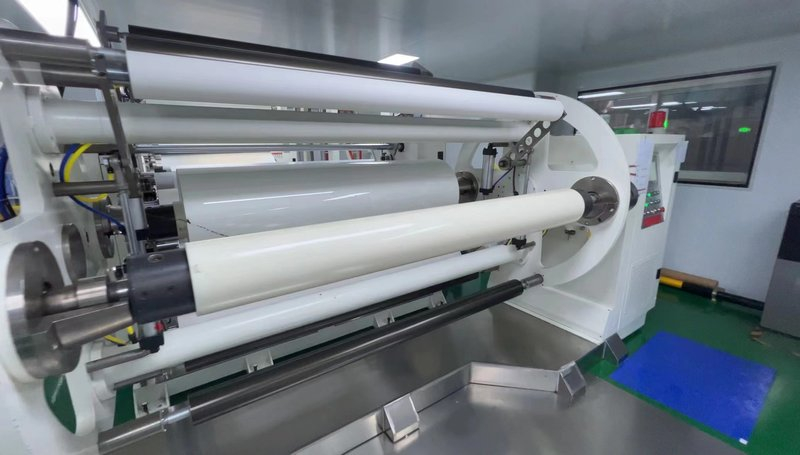
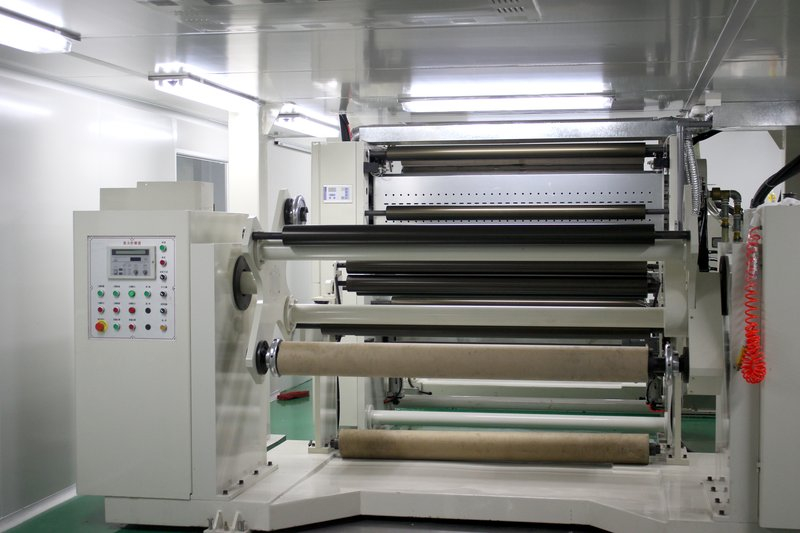
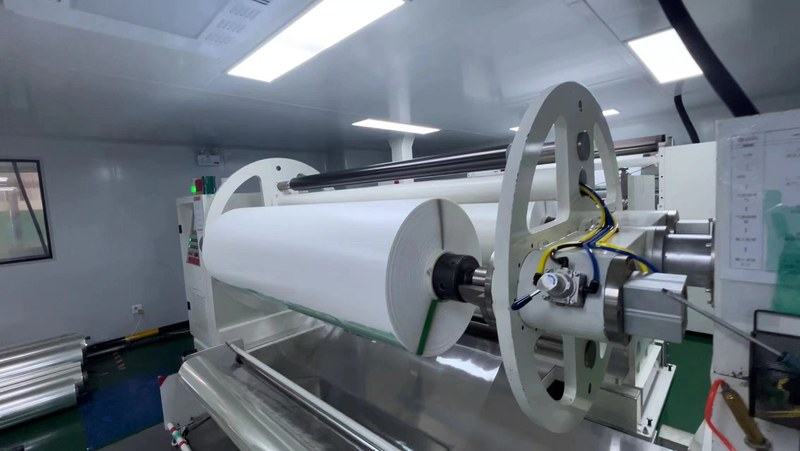
I handle export sales at KSB Window Film in Guangzhou. Buyers in Jeddah, Lima and Lagos send me certificate PDFs every week asking the same thing: is this real, and does it matter? Here is the short list of window film certifications that protects your money.
The Certifications That Actually Matter (Skip the Rest)
Four documents do real work for an importer.
ISO 9001 covers the factory. ISO 9050 or EN 410 covers measured product performance. NFRC in North America, or EN 15752-1 with a European Technical Assessment in the EU, covers market access. REACH covers chemical legality in Europe, with RoHS applying in narrow cases.
Everything else is decoration. A “CE certified” sticker with no standard named. A self-issued “quality certificate” from the supplier’s own office. None of those can be verified, which is the point of showing them.
One distinction saves buyers more money than any other. A test report and a certification are not the same document. A test report means a lab measured one sample on one date. A certification means an outside body keeps checking the product, year after year. Ask which one you are holding. Half of suppliers do not know.
ISO 9001 — What It Tells You About the Factory
What it covers: how the factory controls its processes. Incoming resin checks. Batch records. Calibration schedules for the coating line. Complaint handling with a paper trail. If a roll comes out wrong in month eight, a certified factory can trace which adhesive lot and which machine settings produced it. An uncertified factory guesses.
What it does not cover: performance. A factory can hold a valid ISO 9001 certificate and still make film with 40% heat rejection and a two-year life. The standard is about consistency, not about the quality level. A factory that consistently makes mediocre film can be fully certified.
That is why ISO 9001 is your first question, not your last. Ask for it before you ask for a price, then move on to the product documents. If you are still shortlisting factories, our guide on how to find reliable window film manufacturers in China covers the rest of the screening.
The current version is ISO 9001:2015. Certificates run three years with an annual surveillance audit. If the PDF says ISO 9001:2008, someone is showing you a document that should have expired years ago.
How to Verify an ISO 9001 Certificate in Ten Minutes
Step one: read the certificate body and the accreditation mark. A genuine certificate names the certification body and the accreditation body that oversees it. UKAS in the UK. ANAB in the US. DAkkS in Germany. JAB in Japan. No accreditation body named means no independent oversight.
Step two: search IAF CertSearch, the International Accreditation Forum’s global database. Enter the company name or certificate number. If nothing comes up, ask for the certifying body’s own verification link and check there.
Step three: check the scope line. The scope must cover window film manufacturing — coating, laminating, slitting — at the address you are buying from. A certificate covering “trading of building materials” at a downtown office does not cover the plant making your film.
Red flags I have seen more than once. A certificate with no number. A certificate issued by a body whose website is one page long. An ISO logo used as a product badge, which is not allowed, because ISO does not certify anyone.
ISO 9050 and EN 410 — The Performance Testing Standards
This is where your heat rejection number comes from. ISO 9050 is the international standard for glazing optical and solar properties. EN 410 is the European equivalent. Both measure light and solar transmittance across 250 to 2,500 nanometers.
What differs is the reference solar spectrum. ISO 9050 uses air mass 2. EN 410 uses air mass 1. So the same film can read SHGC 0.35 under NFRC and SHGC 0.38 under EN 410. Nobody lied. The test conditions were different.
Never compare two suppliers’ numbers unless both used the same standard. Ask for the test standard in writing. Our guide on how to read a window film spec sheet explains what each number means.
A real test report contains all of these. The lab name and its ISO/IEC 17025 accreditation, such as SGS, Intertek or TÜV. The exact standard cited. The product name as a real model, not “automotive film”. The reference glass, for example 4mm clear float to ASTM C1036. The wavelength range, at least 250 to 2,500 nm. Each metric stated separately. And a test date within the last 12 to 18 months.
Here is the part that surprises buyers. Our XO series blocks up to 98% of infrared heat. Our IR series sits at 82% with pure ceramic construction. Both are real figures from the same accredited lab.
But an IR rejection number with no wavelength range cannot be compared to anything. A film measured at one cherry-picked wavelength can claim 95% IR rejection while total solar energy rejection sits at 40%.
ANSI Z97.1, NFRC, and the Two North American Certificates
If you sell into the US or Canada, two more documents decide whether your film gets specified or ignored.
NFRC for Energy Performance
NFRC is the National Fenestration Rating Council. NFRC 300 rates the solar optical properties of window films. NFRC 100 covers U-factor, visible transmittance and SHGC.
The distinction that catches importers: testing to NFRC methodology is not NFRC certification. Certification means the product sits in the NFRC Certified Products Directory under ongoing verification. Architects increasingly want the directory listing, not a lab report stapled to a brochure.
ANSI Z97.1 for Safety Film
If you sell safety or security film, this is the certificate that gets you onto the specification. ANSI Z97.1 is the US safety glazing standard. Look for ANSI Z97.1 Class A together with CPSC 16 CFR 1201 Category II. In Europe the equivalent is EN 12600, the pendulum impact test, where a classification such as 1B1 is the strongest result.
“Safety film” with no standard reference and no test result is not a product claim. It is a slogan.
CE Marking — A Must-Have for European Markets
Here is where I have to correct something you will read every week. Adhesive backed window film has no harmonised European standard. There is no automatic CE route for it the way there is for a toaster.
Film applied to glass in buildings is assessed through EN 15752-1, which defines requirements for PET-based adhesive backed film. It does not cover PVC. To CE mark architectural film, a manufacturer goes through a European Technical Assessment based on EAD 030927-00-0404.
So when a supplier offers “CE certified window film” with nothing behind it, ask one question: under which route? If they cannot name the standard or the assessment document, the mark is decoration.
RoHS and REACH for Chemical Safety
REACH applies to the film as an article. The Candidate List of Substances of Very High Concern is updated twice a year and now runs past 240 entries. If any SVHC sits above 0.1% by weight in a homogeneous part, you pick up supply chain communication duties. That covers the PET base, the sputter layer, the adhesive and the hard coat. Importers may also face SCIP database notification duties.
RoHS is narrower than most buyers assume. It governs electrical and electronic equipment, so a plain automotive tint film is not in mandatory scope. It matters when your buyer or a retail platform demands it, or when the film is electrically active. Where it applies, the restricted substances include cadmium at 100 ppm, lead, mercury and hexavalent chromium at 1,000 ppm, plus PBB, PBDE and four phthalates.
Watch the wording. “REACH certified” does not mean the film is legal tint in your country. REACH governs chemicals. Road-use tint limits are national law. Two separate questions.
What we do at KSB: film tested to ISO 9050 protocols and a quality system certified to ISO 9001:2015. Third-party reports from SGS and Intertek state the product name and reference glass. When a buyer needs chemical documentation for a REACH review, we send it and let their assessor decide.
How to Verify a Certification Is Real (Not Photoshopped)
Four checks, in order. Same discipline as how to test window film quality before buying in bulk, applied to paperwork.
One: ask for the certificate number, not the certificate image. Numbers are checkable. Images are not. Anyone with a design tool can produce a convincing logo.
Two: go to the issuing body’s own directory. IAF CertSearch for ISO 9001. The NFRC Certified Products Directory for NFRC. The SGCC database for safety glazing. The accreditation body’s site to confirm the certifier itself is accredited.
Three: match the scope and the address. The certificate has to name the legal entity and the production site you are paying. A certificate for the trading company that does not cover the coating plant is a certificate for a different business.
Four: check the dates. A test report older than 18 months describes a product that may have changed. An expired certificate is not a certificate.
One habit saves real money: cross-check the numbers. If the spec sheet claims 82% heat rejection, the report must show the same figure for the same product name on the same reference glass. When the two disagree, the sales team wrote the spec sheet, not the lab.
FAQ: Window Film Certifications
Which certification should I ask for first?
ISO 9001 for the factory, then an ISO 9050 or EN 410 test report for the product.
Is a test report the same as a certification?
No. A test report covers one sample tested on one date. A certification means a third party keeps verifying the product over time.
Does ISO 9001 mean the film is high quality?
No. It means the factory produces film consistently. Consistency and performance are two different things.
Do I need CE marking to sell window film in Europe?
For architectural film, CE marking goes through a European Technical Assessment, because no harmonised standard exists.
Is RoHS required for window film?
Not for plain tint film. It applies when the film is electrically active, or when your buyer or sales channel requires it.
How do I check that a certificate is not fake?
Get the certificate number, search IAF CertSearch or the issuing body’s own directory, then confirm the scope and production address match your supplier.
Ask for the Number, Not the Logo
A logo on a website costs nothing. A certificate number costs a factory a real audit every year. That difference is the whole test.
Before your next order, ask for three things. The ISO 9001 certificate number. An ISO 9050 or EN 410 test report showing the product name and reference glass. And the name of the lab that issued it. If all three land in an hour, you are talking to a real factory.
Want to see what those window film certifications look like on paper? Ask us for a sample kit with the test reports attached. Test XO, NK, SF, IR, DD and K in your own shop before you commit to a container. Send a message to KSB Window Film and tell us which market you sell into.