
What a Pre-Shipment Inspection Really Is
A window film pre-shipment inspection is a factory visit you pay for, three to five days before the container is loaded.
An inspector opens cartons, unrolls film, measures it, photographs what he finds, and writes a pass or a fail.
It is not a lab test. It will not tell you the film still looks good in Dubai after four summers. It tells you whether the batch in front of you is the batch you paid for. That is the whole promise of a window film pre-shipment inspection.
That sounds modest. It is the cheapest insurance in this business.
The 80% Rule
Book the inspection when at least 80% of the order is produced and packed. Not 50%.
Inspect too early and your sample comes from a different run than the one that ships. Inspect too late and the container is already sealed.
In practice, call the inspection company five to seven days ahead and leave three to five days of buffer before the vessel sails.
Why Film Is Harder to Inspect Than Most Products
A carton of phone cases can be counted. A roll of window film cannot be counted into quality.
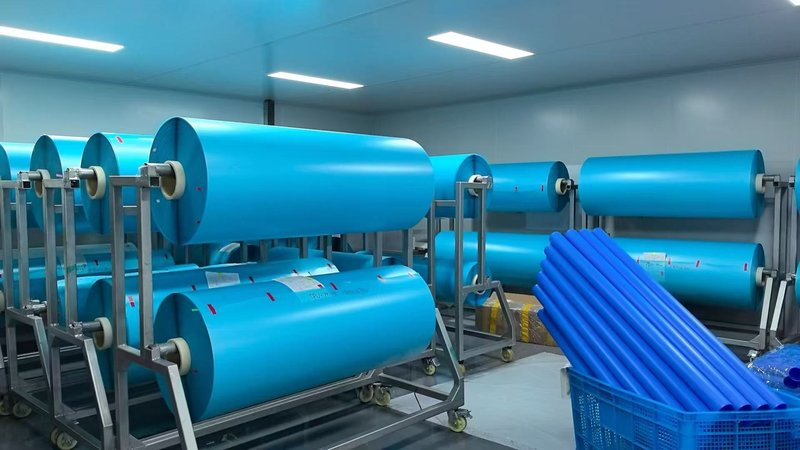
One standard roll is 1.52m wide and 30m long. That is 45.6 square meters of coated polyester, and the defects that ruin an install are often smaller than a grain of rice.
You will not find them from the outside of the roll. You find them by unrolling the head and the tail and holding the film against a light box.
Film failures also arrive late. Haze, orange peel and a half-step shade difference do not stop the film from being installed. They show up on the customer’s car two days later, then come back to your shop.
I have watched a 400-roll order get rejected by installers over a shade difference you could only see with two cars parked side by side.
The factory was not cheating. One coating line ran four hours at a slightly different temperature. Nobody caught it because nobody opened a roll at the end of that run.
What to Check: Appearance, Specs, Packaging
Split your checklist into three parts. Most buyers only do the first one.
Appearance
Unroll at least two meters from the head and two meters from the tail of every sampled roll. Head and tail are where the coating line starts and stops, so that is where most defects live.
Hold a sample against a light box and sight along a doorframe. Any bend or ripple in that line is optical distortion, and your customer will see it every morning.
| What you see | Where to look | What it means |
|---|---|---|
| Scratches, scores | Head and tail of the roll | Hard coat damaged. Fails in the installer’s hands. |
| Pinholes, coating gaps | Against a light box | Coating line fault. Visible as bright dots. |
| Streaks, uneven shade | Mid-roll, full width | Coating weight drift. Causes a two-tone car. |
| Gel spots, dust, fiber | Between film and liner | Lamination in a dirty room. Not removable. |
| Orange peel texture | Low angle under a lamp | Adhesive or liner fault. Reads as haze. |
| Wavy or crushed edge | Roll ends, on a flat table | Handling damage. Wastes 1m per side. |
| Telescoping, oval core | Roll profile from the side | Winding tension fault. Film feeds crooked. |
Specs
Do not accept a printed spec sheet as inspection. Ask the inspector to measure.
A handheld transmission meter gives VLT, UV rejection and near-infrared rejection in about ten seconds per sample.
A haze meter following ASTM D1003 gives haze, which is the number that decides whether a clear film looks clear or milky.
Both tools are cheap. A bench haze meter costs under $3,000.
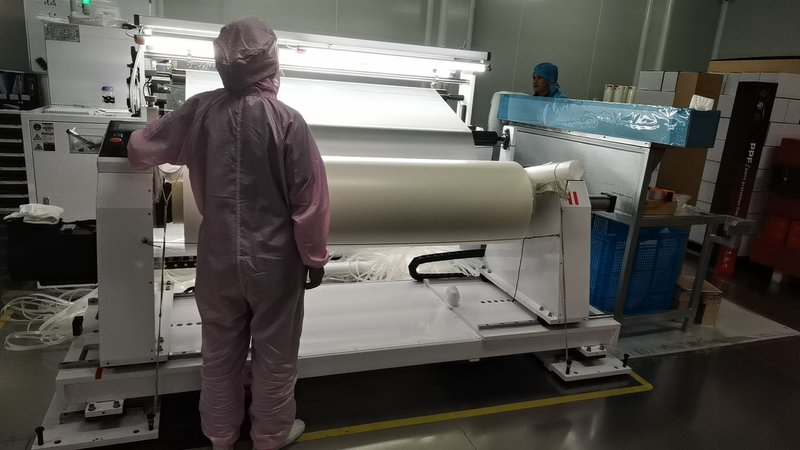
Measure the roll too. Width with a tape at both ends. Length by weight against the known gram weight per square meter.
A roll sold as 1.52m that measures 1.50m quietly costs your installer a full car set every twenty rolls.
Which numbers actually matter is a separate conversation, and I covered it in the guide to window film certifications and test standards.
Packaging
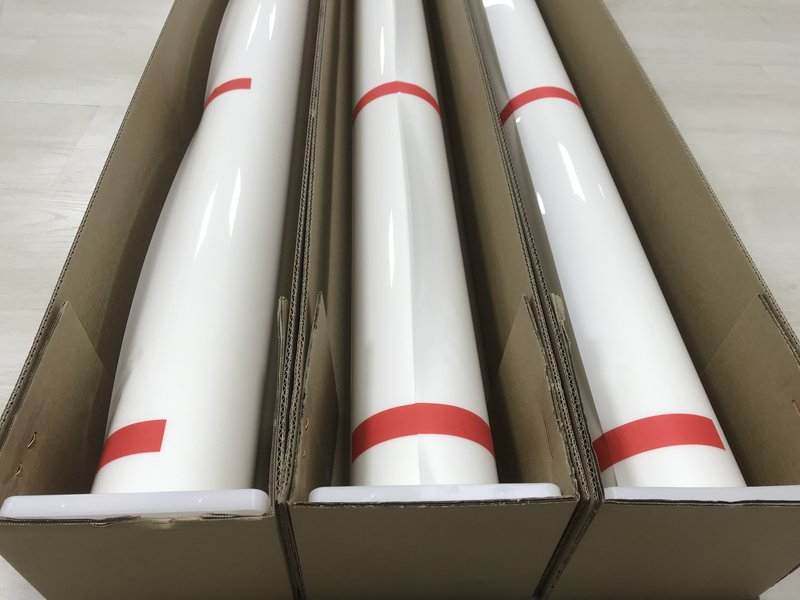
Cartons should be about 160 x 18 x 18 cm, one roll per carton, end caps fitted, roll standing on its end.
Check the carton wall, the liner printing, the batch number, and whether the carton carries your label or a blank one.
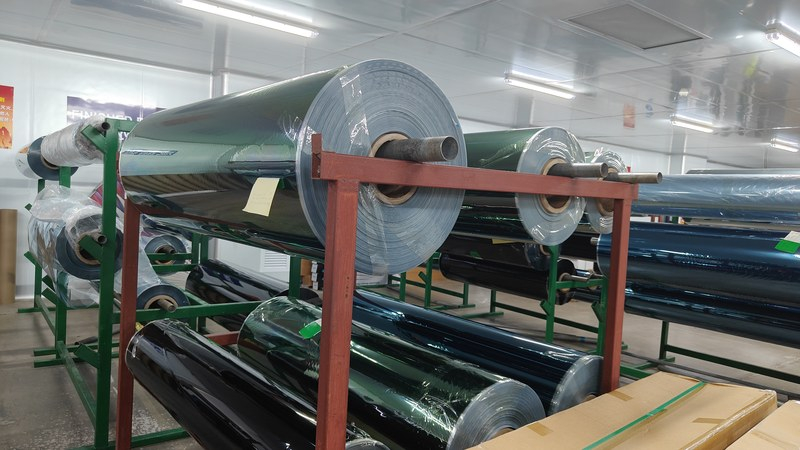
Check the wrap and the desiccant as well. A carton that arrives soft has been sitting in a humid warehouse, and the adhesive at the roll edge will show it within a month.
Photograph every carton you open with the carton number visible. In a claim, a photo without a carton number is a photo of nothing.
How Many Rolls Do You Actually Open?
You cannot open a thousand rolls. Nobody can, and nobody should.
For a window film pre-shipment inspection the answer is AQL sampling under ISO 2859-1, General Inspection Level II. You pick a sample size from the lot size, then accept or reject on the defect count.
For film the usual split is critical defects at zero, major defects at AQL 2.5, minor defects at AQL 4.0.
Critical means the roll cannot be used at all. Wrong shade code, wrong width, adhesive failure, liner that will not release. One of those and the lot fails.
| Rolls in the lot | Code | Rolls to open | AQL 2.5 accept / reject | AQL 1.0 accept / reject |
|---|---|---|---|---|
| 151 – 280 | G | 32 | 2 / 3 | 1 / 2 |
| 281 – 500 | H | 50 | 3 / 4 | 1 / 2 |
| 501 – 1,200 | J | 80 | 5 / 6 | 2 / 3 |
| 1,201 – 3,200 | K | 125 | 7 / 8 | 3 / 4 |
| 3,201 – 10,000 | L | 200 | 10 / 11 | 5 / 6 |
Read it like this. A 20ft container holds roughly 1,000 rolls of 1.52m by 30m film. That puts you in the 501 to 1,200 band, code letter J, sample size 80.
At AQL 2.5 you may accept 5 major defects. At 6, the lot fails. At AQL 1.0 you may accept 2.
Eighty rolls at four minutes each is one working day. That is why film inspection is quoted per man-day.
One warning. Let the inspector choose the rolls, not the factory. If the cartons are stacked in loading order with the best ones on top, you are inspecting a display.
Hiring Someone to Do It for You
You can send your own QC person. Most importers cannot spare one, so they book a third party.
The four names that appear in letters of credit are SGS, Bureau Veritas, Intertek and TUV. QIMA and V-Trust sit one tier down at a lower price and book faster.
| Who you hire | Cost per man-day | Report in | Best for |
|---|---|---|---|
| SGS, Bureau Veritas, Intertek, TUV | $250 – $500 | 1 – 2 days | Letter of credit, first order |
| QIMA, V-Trust, HQTS | $150 – $300 | 1 day | Repeat orders, tight schedules |
| Your own QC or agent | $80 – $200 | Same day | Monthly shipments, same factory |
For a window film pre-shipment inspection the real cost is one man-day. Budget $250 to $500 with a big-four firm, $150 to $300 with a mid-tier one.
On a $110,000 container that is about 0.3% of the goods value. On a $6,000 trial order it is 5%, which is why trial orders skip it and pay for it later.
What the Report Must Contain
A usable report has five things. The PO number and the batch numbers of the rolls opened. The AQL plan used. A defect list counted by class. Forty to eighty photographs with carton numbers. A clear pass or fail.
Ask for the raw measurement data, not only the summary. A report that says “VLT within tolerance” with no numbers is an opinion.
Ask for one more document: the factory’s own batch test record. A factory with real finished-goods QC logs VLT, IR and haze against the batch number. If it cannot produce that record, the inspection is the only data you will ever have.
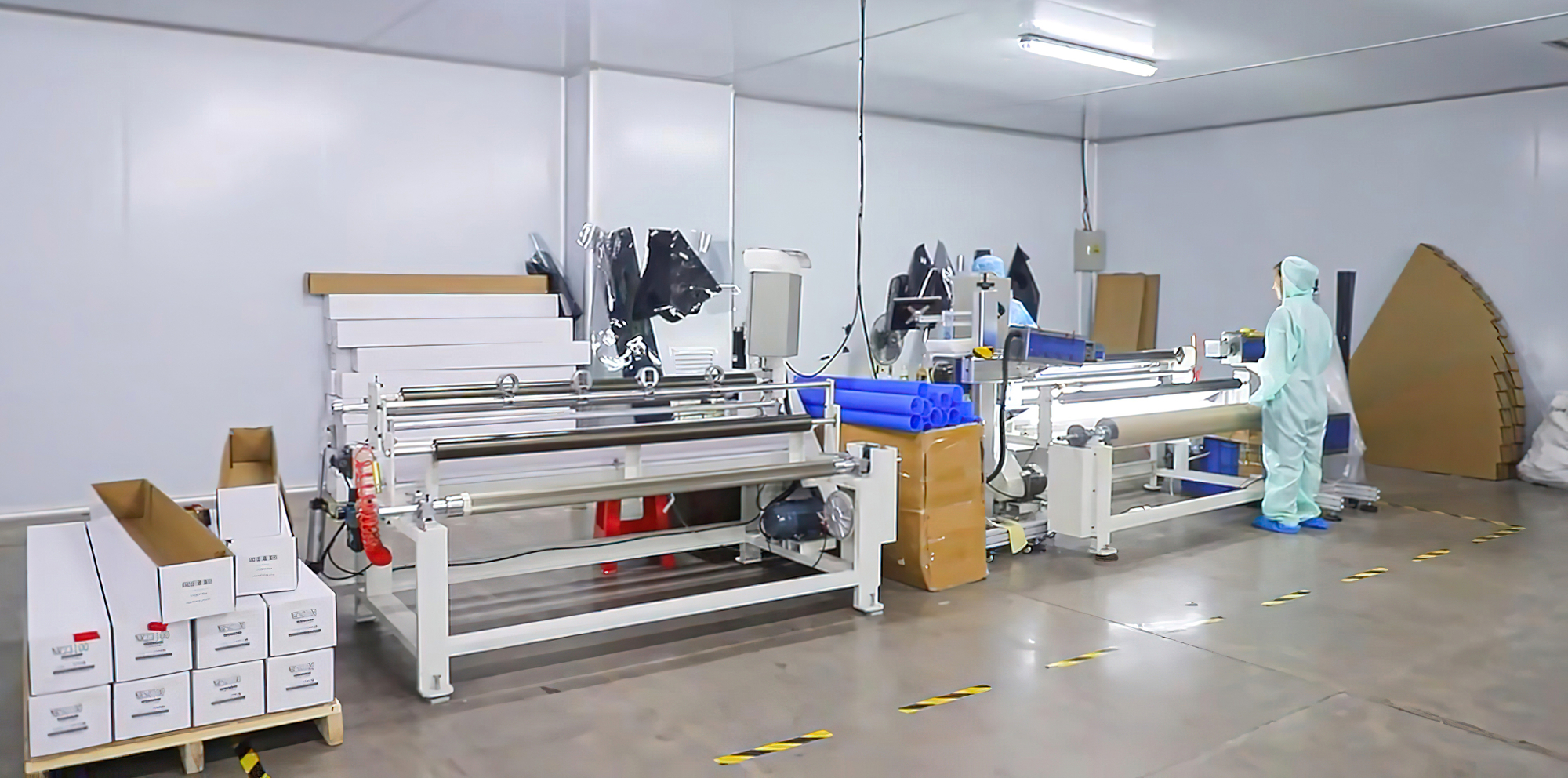
Here is how a window film factory runs quality control from the inside.
What to Do When It Fails
A failed inspection is not a disaster. A failed inspection you ignore is.
Rework or sort. The factory opens every carton, pulls the bad rolls and replaces them. This works when the defect sits in a known band of the run, and it should cost the factory.
Price adjustment. You take the lot with a credit for the defective rolls, usually the full roll value plus a handling allowance. Fine for a carton that is scuffed. Dangerous for anything optical.
Rejection. The goods stay in China. Do this only when the defect is systemic, because you will lose the deposit and the production slot.
Whichever you choose, your hold on the deal is the same: the balance payment. Standard terms are 30% deposit and 70% against the bill of lading copy.
Do not release that 70% until the inspection passes or the rework is signed off. Once the money leaves, your remaining tool is a lawyer in a country you do not live in.
A re-inspection costs $150 to $200. Put it in the original quote so a fail does not become an argument about the delay.
The Checklist I Send to New Buyers
If you do only one thing, send this list to your supplier before production starts. An inspector can only measure against a standard both sides agreed to.
- Agreed sample. One roll from the approved run, sealed and signed by both sides, kept at the factory. Every later dispute is settled against that roll.
- Written specs. VLT, IR rejection, UV rejection, TSER, thickness in mil, width, length, adhesive type, shade code.
- Defect classes. What counts as critical, major and minor, in words an inspector can photograph.
- Packaging spec. Carton size, roll orientation, end caps, labels, batch numbering.
- Payment link. A passed inspection as a condition of the balance payment, written into the proforma invoice.
That last line changes behaviour more than the other four. A factory that knows the balance depends on a third-party report runs a different line.
Frequently Asked Questions
How much does a pre-shipment inspection cost for window film?
One man-day is usually enough for a 20ft container. Expect $250 to $500 with SGS or Bureau Veritas and $150 to $300 with a mid-tier firm. Remote factories add travel.
Can I inspect the film myself without hiring anyone?
Yes, on a trial order. Open about 10% of the rolls, use a light box, a tape measure and a transmission meter. It costs you a day and a few hundred dollars of equipment.
What counts as a critical defect in window film?
Wrong shade code, wrong width beyond 5mm, adhesive failure, liner that tears instead of releasing, and visible haze above the agreed limit. Any of these fails the lot.
Do I need an inspection on every order?
No. First order, new factory, new product, or any order after a claim. Once a supplier has run clean for a year, in-process checks are enough.
Is AQL 2.5 too loose for optical products?
For appearance and packaging it is fine. For haze, distortion and shade match, tighten to AQL 1.0 or 1.5 and keep the sample size the same.
What if the factory refuses an inspection?
Then you have your answer. A factory with a real QC line welcomes the visit. A refusal usually means the batch is already mixed from several runs.
Send Me Your Spec and I Will Send the Checklist
Tell me the film series and the destination market. I will send back the window film pre-shipment inspection checklist in the wording an SGS or QIMA inspector expects, plus the spec sheet to attach to your PO.
If you are still shortlisting factories, start with the wholesale window film directory.
For South America, IR and DD on volume.
For Southeast Asia, the full range from HP carbon to SF ceramic.
Ask for the batch test record before you ask for the price. A supplier who cannot produce one has never run finished-goods QC.