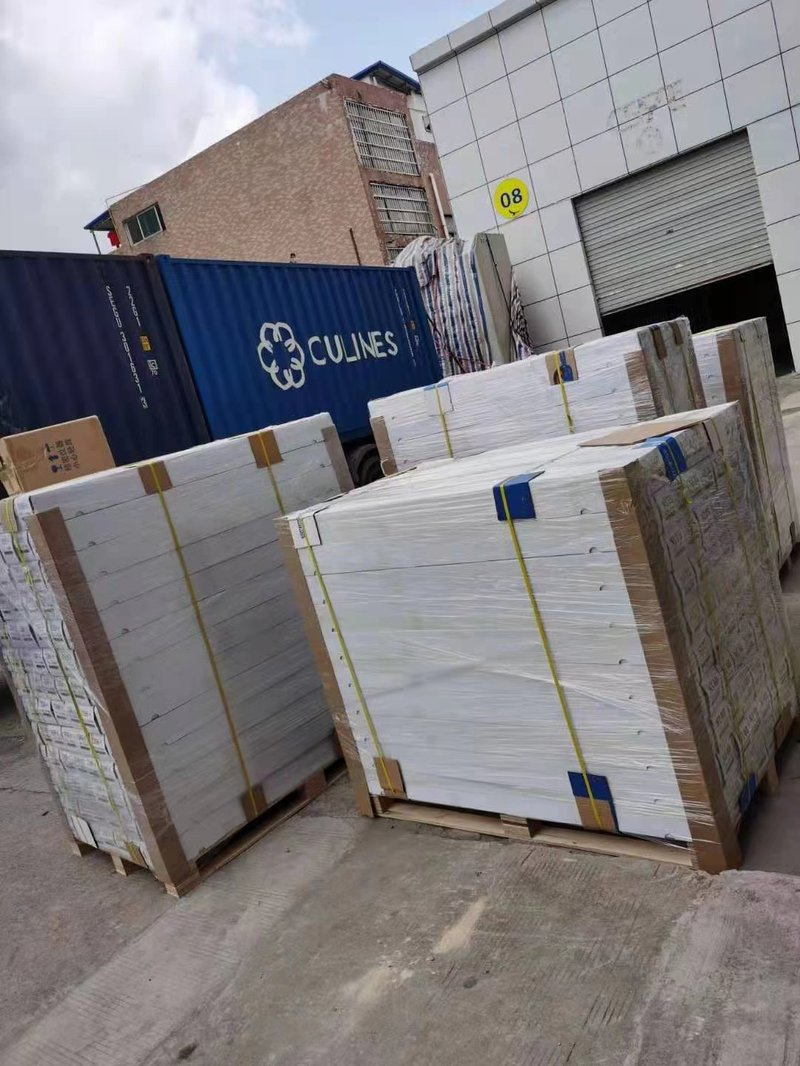

Your container lands at Jebel Ali on a Thursday. The manifest says window film. The invoice says window film. Customs asks which film, and the paperwork cannot answer.
That box sat for eleven days. The storage bill was AED 9,400. Nothing was wrong with the product.
I have cleared film into more than forty markets. The five core window film import documents never change. Only the local extras do.
The Five Documents You Cannot Ship Without
Every shipment needs a commercial invoice, a packing list, and a bill of lading.
Add a certificate of origin when the market asks for one, and an import declaration filed on arrival.
Three of those window film import documents come from your supplier. Two come from the shipping line and your broker.
On FOB terms, all five become your problem when the film leaves the factory gate.
| Document | Who issues it | Who reads it | If it is missing |
|---|---|---|---|
| Commercial invoice | Your company | Customs, broker, bank | No entry filed. Box held. |
| Packing list | Your factory | Customs, insurer, warehouse | Damage claims fail. |
| Bill of lading | Line or forwarder | Carrier, bank, broker | Cargo not released. |
| Certificate of origin | CCPIT or China Customs | Customs at destination | Preferential duty lost. |
| Import declaration | Your customs broker | Destination customs | Goods sit in terminal. |
Lose any of the first three and the container stops. Lose the last two and you pay storage while you fix it.
The Commercial Invoice Does More Than Bill You
Customs does not read your invoice to check what you paid. It reads it to decide what you owe.
In the United States, 19 CFR 141.86 lists eleven required fields. Most supplier invoices carry seven of them.
The fields that carry the weight
Port of entry, seller, buyer, detailed description, quantity, unit price, currency, itemized charges, country of origin, and any assists.
The invoice and every attachment must be in English. A Chinese-only invoice waits at the port until a translation arrives.
One field does most of the work: the description. Window film is not a description. It is a category.
Write it like this: self-adhesive polyester film in rolls, 1.52m by 30m, nano ceramic, for automotive glazing, HS 3919.90.
That sentence lets a broker reach 3919.90.50 in the US or 3919.90.80 in the EU without guessing. The code sets the duty rate.
Three invoice mistakes I see every month
The first is an Incoterm that fights the freight bill. FOB on the invoice and prepaid freight on the bill of lading is a mismatch someone has to explain.
The second is a currency you were never paid in. A $110 roll invoiced in RMB at last year’s rate reads as undervaluing.
The third is a trading company named as the manufacturer. Those are two separate fields, and CBP reads both.
On 1,000 rolls at $110, US duty at 43.3% is $47,630. Classify it loosely and you pay less now, then pay again with interest later.
The Packing List Is Your Damage Claim
The packing list is the only document that ties a roll to a carton. When six rolls arrive with crushed cores, this is what proves which six.
Write carton count, dimensions, gross and net weight, and the roll numbers inside each carton.
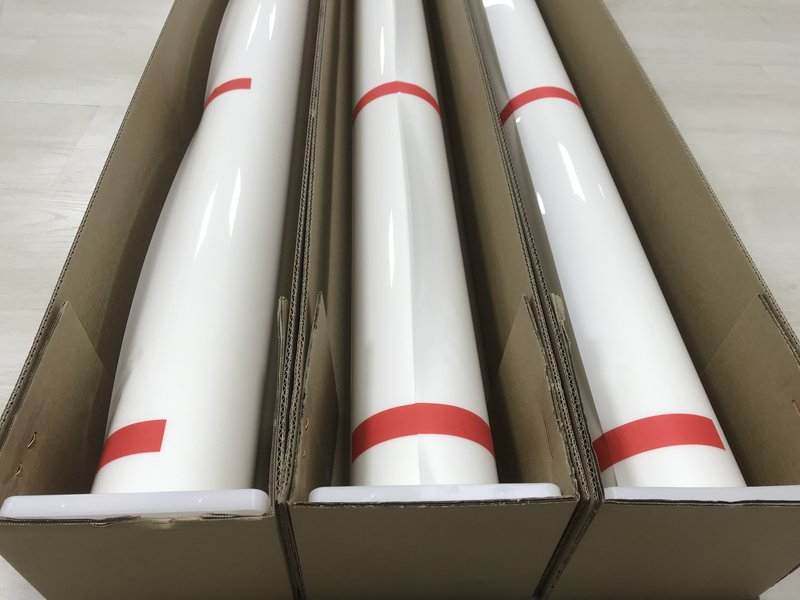
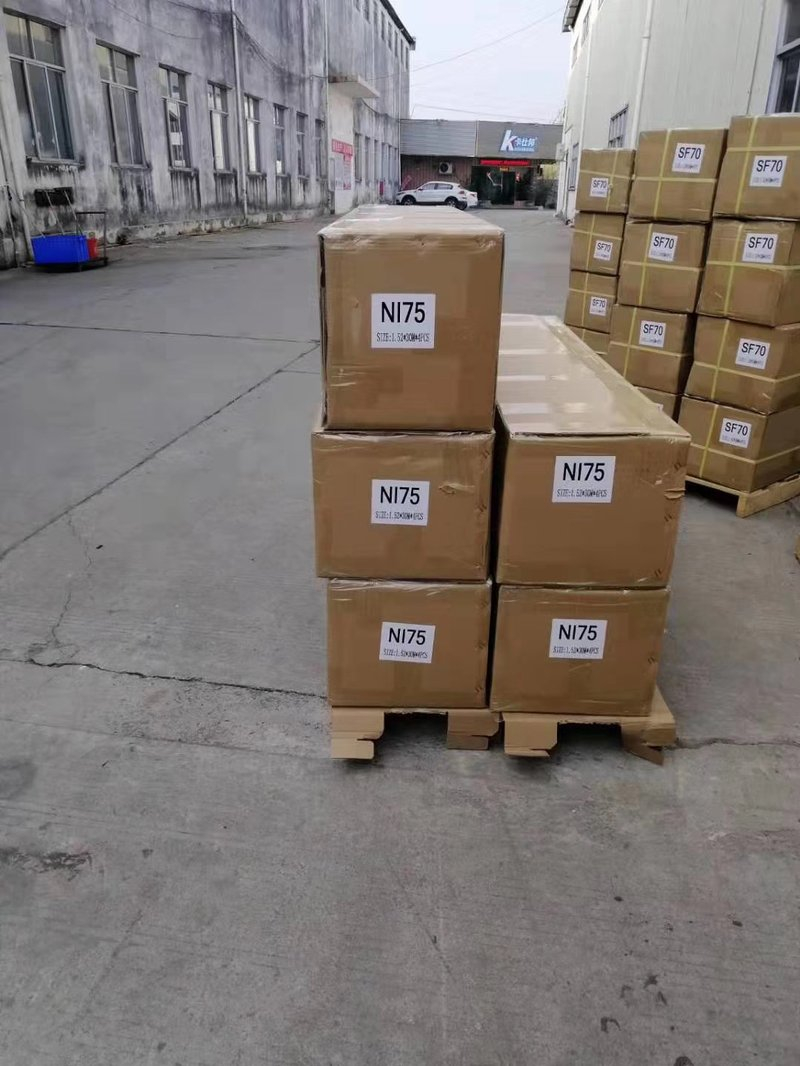
A 1.52m by 30m roll ships in a carton near 160 by 18 by 18cm, at 6.5 to 9kg gross. A 20ft holds about 1,000 rolls.
If your packing list reads 1,000 rolls, one pallet, you have no claim. The surveyor will ask which carton and you will have no answer.
A Lagos buyer lost $1,800 to exactly this. Forty rolls came in with water marks and the list had one line.
The Bill of Lading Is Not Paperwork. It Is the Goods.
A bill of lading is three things at once: a receipt, a contract, and a title document. Whoever holds the original can claim the cargo.
The carrier issues three originals. Your bank needs one, the destination agent needs one, and one stays in your file.
This is why payment terms and shipping documents are one conversation. A supplier who keeps the originals keeps your container.
Original, telex release, or sea waybill
Originals travel by courier and cost you days. Telex release is quicker: you surrender the originals at origin and the agent releases on your instruction.
A sea waybill drops the title function entirely. Fine for a trusted repeat order, risky for a first one.
Check three fields before the vessel sails: consignee, notify party, and freight prepaid or collect.
The shipped-on-board date matters more than most buyers know. Australia uses that date, not the gate-in date, to place a container inside the stink bug season.
The Certificate of Origin: Ask One Question First
Ask your supplier one question: non-preferential or preferential? The answer decides whether this document saves money or just states a fact.
A general CO proves the goods are Chinese. It changes no duty rate. Several Gulf and African markets still want it at clearance.
A preferential CO cuts duty under a trade agreement. The form depends on where the box is going.
Which form for which market
ASEAN takes Form E under the China-ASEAN agreement. Australia takes ChAFTA. Japan, Korea, Australia and New Zealand also accept RCEP.
RCEP allows cumulation, so Japanese or Korean inputs can count toward origin. That helps if your PET is not Chinese.
The US has no trade agreement with China, so a CO buys nothing there. The EU is the same story: China is not a GSP beneficiary.
A Thai buyer brought in 300 rolls of SF ceramic with Form E and paid no duty. The same shipment without it clears at full MFN rate.
What Each Market Adds on Top
| Market | Extra document | Watch out for |
|---|---|---|
| United States | ISF 10+2, CBP bond | 24h before loading, $5,000 per violation |
| European Union | REACH declaration, SCIP if needed | CE does not apply to car film |
| United Kingdom | CDS entry, EORI number | EORI must exist before sailing |
| Australia | Packing + BMSB declaration | Season 1 Sep 2026 to 30 Apr 2027 |
| Saudi Arabia | SABER PCoC + SCoC | Only a Saudi importer can apply |
| UAE / GCC | General CO, Arabic label | Origin mark cannot be a sticker |
United States
The ISF is filed 24 hours before the vessel loads, not before it arrives. A late or inaccurate filing is up to $5,000 per violation, and each bad data element can count separately.
There is no FDA clearance for window film. It does not touch food and it is not a medical device. Refuse any agent who offers to sell you one.
What you do need is a CBP bond and FMVSS 205 compliance for automotive glazing.
European Union and United Kingdom
REACH is the real gate. Every substance in the film and the adhesive must be registered, and any SVHC above 0.1% triggers a SCIP notification.
Car film does not carry CE marking. It falls under UNECE R43. Architectural film goes through an ETA under EAD 030927-00-0404.
That distinction trips up a lot of buyers, and it is the first thing I check on a spec sheet in my guide to window film certifications.
I have seen a Rotterdam container held three weeks over a missing REACH declaration. Storage ran into four figures.
Australia
Two documents catch film importers: the packing declaration and the BMSB declaration.
DAFF wants a packing declaration from the packer for both FCL and LCL, valid twelve months. Without it the container goes to an approved site at your cost.
The 2026-27 stink bug season runs 1 September 2026 to 30 April 2027. China is an emerging risk country this season.
Chapter 39 is on the random inspection list for emerging risk origins.
Window film sits in chapter 39, so your box can be pulled even though it needs no fumigation.
Saudi Arabia and the Gulf
Saudi runs on SABER. You need a PCoC for the product, valid one year, then an SCoC for every shipment.
Only a Saudi importer can open the SABER account. Your customer applies, so send the test report and label artwork early.
Labels need Arabic warnings, and the origin mark must not be a peel-off sticker. Saudi customs rejects stickers.
For Gulf buyers, XO and NK ceramic clear without a spec argument. Both carry ISO 13837 test data for total solar energy rejection.
What Happens When the Paperwork Is Wrong
Three things, always in this order: delay, storage, then a penalty.
Delay is the cheap one. A missing certificate adds three to seven days, and US free time is only four to five days.
Storage is not cheap. US demurrage starts at $175 to $300 per container per day. Jebel Ali runs $80 to $180 a day on a 40ft.
The penalty is the expensive one. An inaccurate ISF is $5,000 per violation. A wrong value or origin can be assessed under 19 U.S.C. 1592 at up to 40% of the goods value for gross negligence.
There is a fourth cost nobody quotes: re-export. On a $110,000 container, sending it back costs you the entire margin and the freight twice.
Almost all of it traces back to one habit, which is treating documents as an afterthought. I wrote about that pattern in six mistakes first-time importers make.
Your Document Checklist, Counted Backwards
Work backwards from the sailing date. Most window film import documents fail on timing, not content.
| When | What must be done | Who owns it |
|---|---|---|
| 14 days before sailing | HS code and duty rate confirmed in writing | You and the broker |
| 10 days | Final invoice and packing list, matched to cartons | Supplier |
| 5 days | CO issued, SCoC applied for | Supplier and buyer |
| 24 hours before loading | ISF filed in ACE | Broker |
| 2 days before arrival | Full set sent to destination broker | You |
Five days out, the CO is issued and any destination certificate is applied for. A Saudi SCoC needs about five working days.
Twenty-four hours before loading, the ISF goes in. Not before arrival. This is the most expensive deadline in the set.
Frequently Asked Questions
Do I need a certificate of origin to import into the United States?
Not for duty. There is no US-China trade agreement, so a CO changes nothing at CBP. Your bank may still ask for one under a letter of credit.
Can my supplier prepare the commercial invoice?
Yes, and they should. Then check the description and the Incoterm yourself. Supplier invoices are where most errors start.
Is CE marking required for window film in Europe?
Not for automotive film, which follows UNECE R43. Architectural film needs an ETA under EAD 030927-00-0404 before it can carry CE marking.
What happens if my HS code is wrong?
Your broker reclassifies on entry, duty is adjusted, and you may face a penalty plus interest. Repeated errors invite an audit.
Do I need FDA approval for window film?
No. Window film is not a food contact material and not a medical device. Automotive glazing falls under FMVSS 205 instead.
How long do I keep the documents?
Five years from the entry date in the US. China requires three years for origin records. Keep the electronic set either way.
Send Me Your Port and I Will Send the List
Tell me the destination port and the film type. I will send back the window film import documents for that market, plus a sample invoice and packing list in the layout your broker expects.
If you are still shortlisting factories, start with the wholesale window film directory.
For Gulf buyers, XO and NK.
For South America, IR and DD on volume.
For Southeast Asia, the full range from HP carbon to SF ceramic.
Ask for the window film import documents before you ask for the price. A supplier who cannot produce them has never shipped to your market.