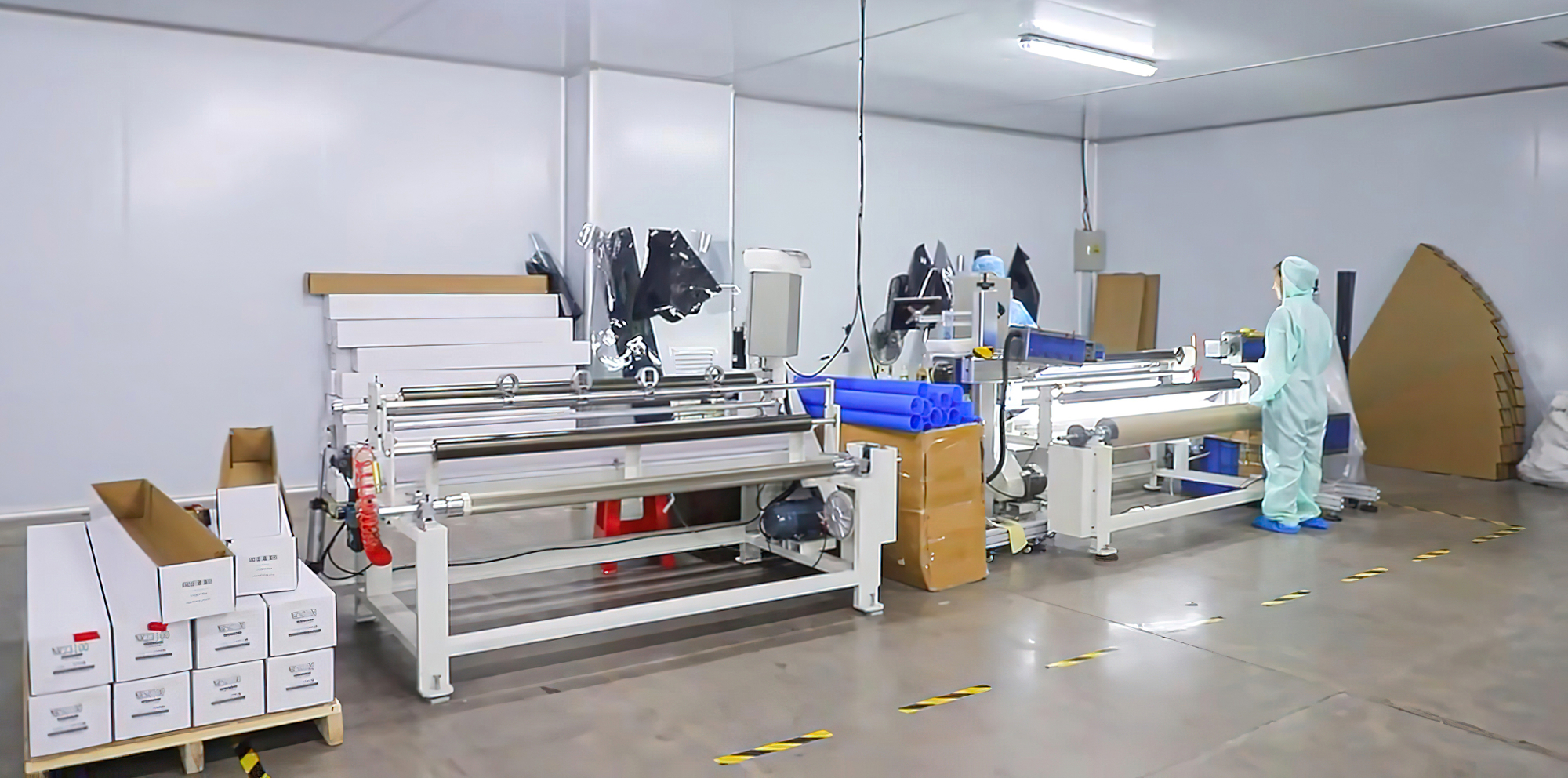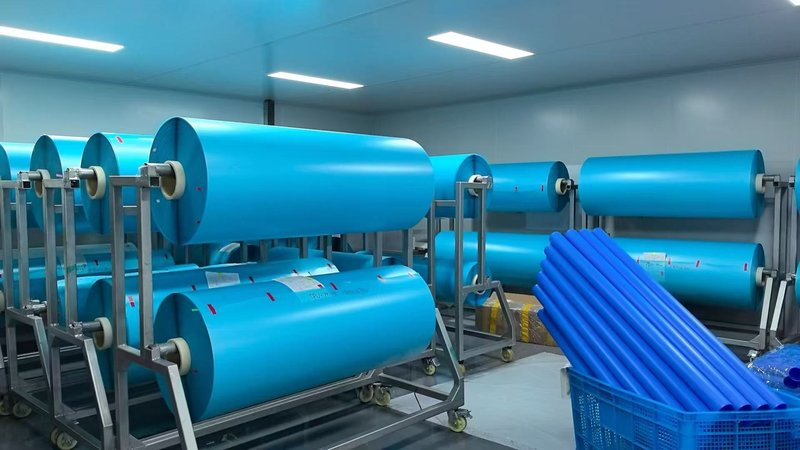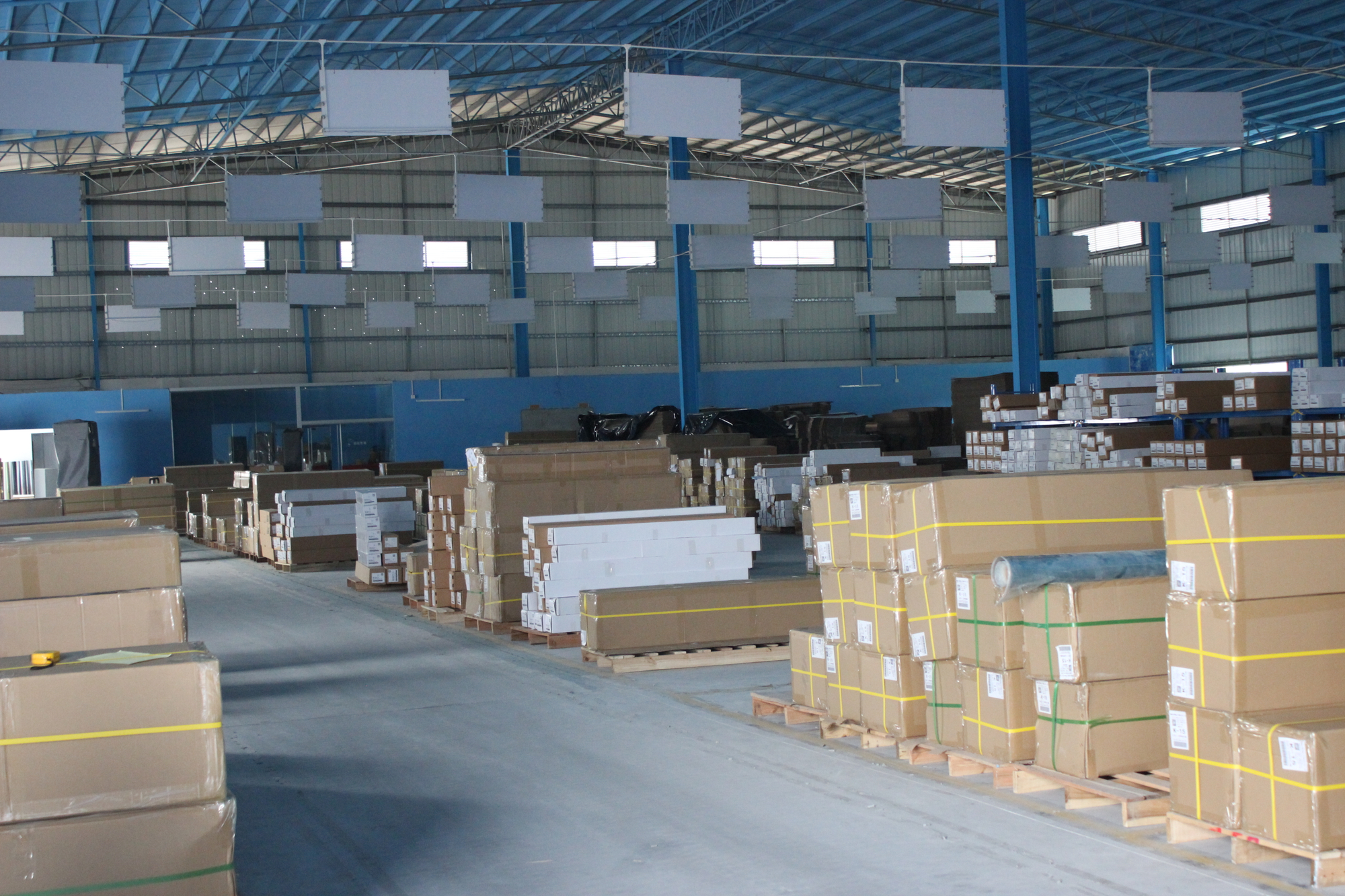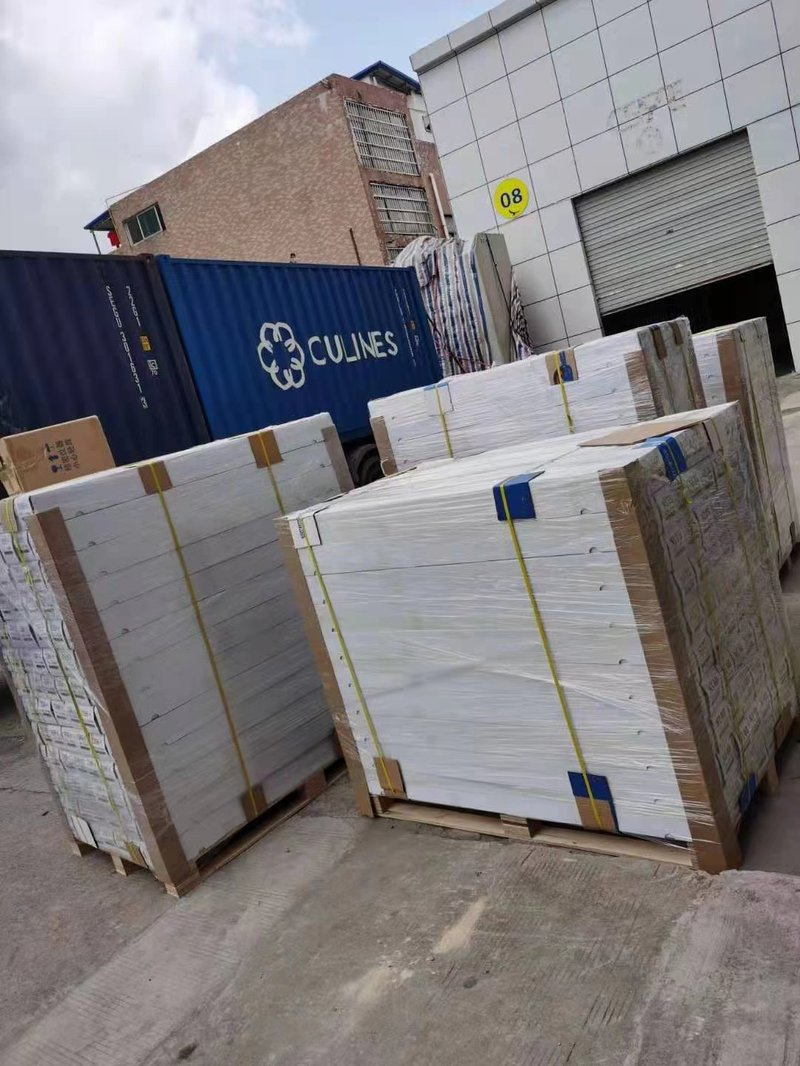

A distributor in Lagos opened a carton last March and found 40 rolls welded to their own liner. The film was perfect when it left our factory eight months earlier.
Nothing happened on the ship. It sat in a room at 78% humidity through one rainy season.
Storage is the part of this business nobody budgets for. You pay for the container, the duty and the freight, then the film goes on a shelf and quietly starts to age.
I have walked through warehouses in Dubai, Manila, Nairobi and Sao Paulo. The ones that lose film are not careless. They never measured the room.
Here is how to store window film rolls so a carton you sell in year two is still the film you paid for, and how to fix the room for under $500.
The Right Temperature and Humidity (Get These Wrong = Ruined Film)
Film is a sandwich of PET, adhesive and a release liner. All three react to heat and water, and they react at different speeds.
Heat softens the adhesive. Water gets into the PET and the liner. Together they turn a roll you cannot sell.
What 15-25C and 40-60% RH Mean in a Real Warehouse
The industry target is 15 to 25C and 40 to 60% relative humidity. Avery Dennison writes 20C plus or minus 2 and 50% RH plus or minus 5 in its automotive bulletin.
3M prints 21C and 40 to 50% RH on every box. Both are tighter than most warehouses.
Put a thermometer on the floor of a metal-roof warehouse in July and you read 38C. At the roof line it reads 55C or more.
That gap is why the top of the stack fails first. Heat rises, and your most expensive film is sitting in it.
The fix is not a $4,000 air conditioner. It is where you put the pallets, and it is the first thing to get right in how to store window film rolls.
Keep stock below 2m, away from the west wall, and off the concrete. A $15 pallet lifts cartons 15cm off a floor that holds moisture all year.
Humidity is harder. In Manila or Lagos, 75 to 85% RH is normal for six months. Above 65% the adhesive hydrolyses and the liner curls.
A 50-pint dehumidifier holds a 40 to 60 square meter stock room near 50%. It costs $150 to $310 and about $20 a month to run at eight hours a day.
| Factor | Target | What goes wrong outside it | Cheap fix |
|---|---|---|---|
| Temperature | 15 – 25C, ideal 20 – 22C | Above 30C the adhesive softens and layers block. Below 5C the film goes brittle. | Pallet plus a low rack, away from the roof and the west wall |
| Humidity | 40 – 60% RH | Above 65% the adhesive hydrolyses, the liner curls, cartons grow mold. | 50-pint dehumidifier, $150 – $310 |
| Light | No direct sun | Uneven color, tacky liner, dye and glue aged by UV. | Blackout curtain, or move the rack |
| Floor contact | On a pallet, 15cm up | Wicking, damp cartons, rust on steel racks. | Wood pallet, about $15 |
| Chemicals | Separate room or sealed bin | PET absorbs vapor and keeps the smell for years. | Move solvents to another shelf |
Sunlight Does Damage You Cannot See
UV does not stop at the carton. Cardboard blocks most visible light, but a roll left on a shelf by a window takes heat and stray UV for months.
The damage shows as uneven color and a tacky liner. You will not see it until you unroll the first three meters.
Keep stock out of direct sun. A $40 blackout curtain over a skylight does more than any label on the box.
Keep film away from solvents and cleaning chemicals. PET absorbs vapor, and a roll that smells like a paint shop will smell that way in a customer’s car.
Vertical vs Horizontal Storage – Which Is Correct?
Ask five suppliers how to store window film rolls and you get two answers. One says stand the rolls on end. The other says lay them flat.
Both describe the same rule from different angles. It is not about direction. It is about what carries the weight.
A 1.52m by 30m roll covers 45.6 square meters and weighs 8 to 9 kg in its carton. Something has to hold that mass for months without deforming the film.
If the film carries it, you lose. If the carton, the core or a rack carries it, you are fine.
What Actually Carries the Weight
A boxed roll is designed to stand. The five-layer carton and the plastic end caps take the load, and the film never touches the floor.
A bare roll is a different object. Stand it on its cut end and 8 kg rests on the edge of a thousand wraps of film. Grit gets pressed into that edge, and the roll leans, so the wraps slide.
That slide has a name: telescoping. You see it as a cone shape, with the layers stepped out at one end. Onyx Coating’s troubleshooting guide warns against standing rolls on their ends for this exact reason.
Laying a bare roll flat is not safe either. Two high is fine. Five high puts weight on the middle, the core goes oval, and film feeds through the plotter with a wave in it.
The best home for a bare roll is a cradle, or a pair of arms through the core. A 1.52m roll is a beam. A beam supported only at its ends sags in the middle, and after a year that sag shows as a ripple down the center of the film.
| How it sits | Who carries the load | Risk | Use it for |
|---|---|---|---|
| Boxed, standing on the carton end | The carton and the end caps | Low. Corners crush if stacked badly. | Your default for unopened stock |
| Bare roll, standing on its cut edge | The film edge | High. Telescoping, wavy edge, grit pressed in. | Nothing. Avoid. |
| Bare roll, flat, 1 – 2 high | The outer wrap | Medium. Flat spots after 6 months. | Short term, on a clean shelf |
| Bare roll, flat, 3 or more high | The middle of the roll | High. Oval core, wave in the film. | Nothing. Avoid. |
| Hung on arms through the core | The core | Low, if the arms sit close together. | Opened rolls you cut from daily |
How Long Window Film Lasts in Storage (Shelf Life Guide)
Shelf life is where suppliers disagree most, because the number depends on the conditions each one assumes, and on how to store window film rolls once they leave the factory.
3M recommends five years and prints the storage conditions on the box. Avery Dennison states two years from the manufacturing date. HEXIS states one year.
Same product class, five times the range. The difference is not the film. It is the promise each company makes.
Treat the number on the carton as a maximum, not a guarantee.
| Source | Storage condition stated | Shelf life stated | What it means for you |
|---|---|---|---|
| 3M, safety and security films | 21C, 40 – 50% RH | 5 years | Longest claim in the industry, still tied to storage |
| Avery Dennison IB 7.1 | 20C +/-2, 50% RH +/-5, original package | 2 years from production date | The number most Chinese exporters also quote |
| HEXIS, graphics films | 15 – 25C, 50% RH, original packaging | 1 year | Conservative, aimed at sign shops |
| Most Chinese film factories | 15 – 27C, 30 – 60% RH | 2 years | Matches Avery Dennison in practice |
| Any film past its date | Not covered | No warranty | Sometimes still good. Test before you sell. |
Why the Same Roll Lasts 12 Months in One Warehouse and 6 in Another
Shelf life is an exposure budget, not a date. Every month above 30C and every week above 65% RH spends part of it.
Two rolls from the same batch can have very different remaining life by the time a shop opens them. One sat in an air-conditioned office. The other sat under a tin roof.
That is why I ask distributors to write two dates on every carton: production date and receipt date. The gap tells you how much of the budget is already gone.
Signs Your Film Has Been Stored Badly
You can read a roll in two minutes without a lab. Most storage damage leaves a signature.
Cut the first meter and look at it in reflected light. Then hold it against a window. 3M’s own guidance is to inspect the first 10 feet before you trust a roll.
Then compare it to a fresh roll from the same series. Your eye is better than you think at catching a color shift.
| What you see | What happened | Still usable? | What to do |
|---|---|---|---|
| Cone shape, layers stepped out at one end | Telescoping from heat, no core plug | No | Write it off, file the claim |
| Egg-shaped or oval core | Stacked too high, weight on the middle | Partly | Cut around the wave, use for small windows |
| Wavy or corrugated edge | Stood on its cut edge, or crushed in transit | Partly | Trim 50 – 75mm, check the inner width |
| Layers stuck, film tears as you unroll | Blocking from heat and pressure | No | Write it off |
| Milky or hazy film | PET took in moisture | No | Write it off |
| Glue lines, sticky liner | Adhesive migrated in heat | No | Write it off |
| Yellow or brown cast | UV and age | No | Write it off |
| Musty smell, mold on the carton | Months above 70% RH | No | Write it off, then check the whole pallet |
| Curl at the tail end | Long storage in a warm room | Yes | Cut the curled section, use the rest |
Check Before You Cut, Not After
The expensive mistake is cutting a full car set from a bad roll. You lose the film, the labor and the day.
Unroll two meters. Check the color against a control sample. Run a fingernail across the adhesive and feel whether it is tacky or greasy.
If the film smells sharp when you open the box, stop. A strong solvent smell means the adhesive or the liner has changed.
This is the same logic as checking film before it leaves the factory. The full routine is in our guide to pre-shipment inspection.
Transit damage is the other half of the story. Crushed corners, oval cores and wavy edges often start inside the container, not in your store room. How rolls should be packed covers that side.
A Simple Warehouse Setup for Under $500
You do not need a climate chamber. You need to know the number and be able to move it. That is most of how to store window film rolls, in one shopping list.
Here is the list I send to new distributors. These are 2026 retail prices and the total lands between $350 and $500.
| Item | Cost | What it buys you |
|---|---|---|
| Thermo-hygrometer with min/max memory | $15 – $40 | The number. Without it you are guessing. |
| 50-pint dehumidifier with continuous drain | $150 – $310 | Holds a stock room at 50% RH in a humid climate |
| 4 wood pallets | About $15 each | Keeps cartons off the concrete |
| Wooden A-frame or wall rack | $60 – $150 | Gets bare rolls off the floor and off each other |
| 20 core plugs | $1 – $2 each | Stops oval cores and telescoping |
| Blackout curtain for the skylight | $30 – $60 | Blocks UV and cuts roof heat |
| Silica gel packs for opened cartons | $20 – $40 | Covers the gap between dehumidifier cycles |
| Total | $350 – $500 | About the price of 5 rolls of ceramic film |
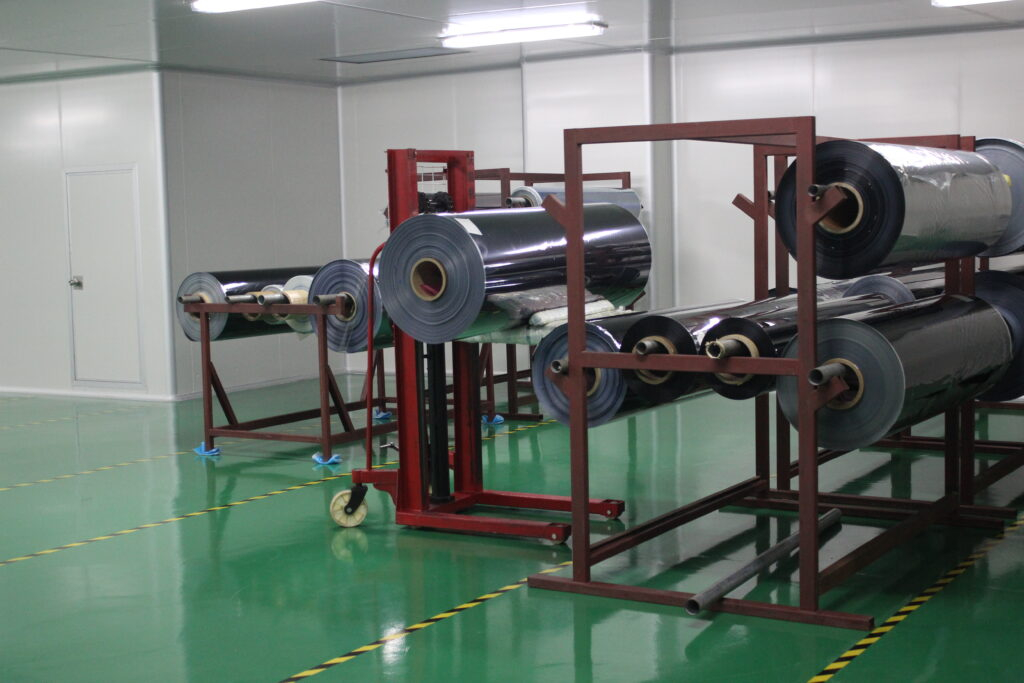
Five rolls. That is the whole comparison. A distributor holding 600 rolls has $30,000 to $60,000 sitting on that floor.
If bad storage costs you 5% of that stock, you lost $1,500 to $3,000. The setup pays for itself the first time it saves one pallet.
FIFO Without Software
First in, first out fails in most warehouses because the newest cartons get stacked in front. The old ones then sit at the back for a year.
Solve it with a marker and a roll of tape. Write the production date in large numbers on the end of every carton. Add a colored dot for the quarter it arrived.
Load from the back, pick from the front. If you cannot reach the back, the pallet is too deep.
Once a month, open one carton from the oldest pallet and check two rolls. Ten minutes. It is the cheapest insurance in this business.
Frequently Asked Questions
Can I still sell film that sat in storage for three years?
Sometimes. Unroll two meters, compare the color to a fresh roll, and check the adhesive. If it passes, sell it with a shorter warranty. If it fails, write it off.
Does a dehumidifier matter if my climate is dry?
Less than in Manila, but heat still matters. In Dubai the problem is 45C, not water. Keep stock low, out of the sun, and never near the roof.
My warehouse freezes in winter. Is the film ruined?
No. Film handles cold in storage. The danger is installing it cold. Let cartons sit indoors 24 to 48 hours before cutting, or the film will craze and the edges will lift.
Should rolls stand or lie down?
Boxed rolls standing on the carton end, or bare rolls hung on arms through the core. What you must avoid is a bare roll standing on its cut edge, or five rolls stacked flat.
How do I know the film was damaged before it reached me?
Check cartons on arrival, photograph every crushed corner, and unroll two meters from the bottom layer. Transit damage and storage damage look different, and the claim depends on which one it is.
Does storage affect the warranty?
Yes. Most manufacturers exclude damage from improper storage, and some start the warranty clock at the production date. Ask when the clock starts before you sign the PO.
Is a purple or bubbly film always a storage problem?
No. Those failures usually come from the film itself, not the room. I explain the difference in why cheap film turns purple or bubbly.
Send Me a Photo of Your Store Room
Tell me your city, your summer temperature and how many rolls you hold. I will tell you which series survives your warehouse, and what to check before the next container lands.
For the Gulf, XO and NK hold their color through 45C summers. For South America, IR and DD give you margin at volume. For Southeast Asia, the range runs from HP carbon to SF ceramic.
And have the film inspected at the factory, not after it has spent a season in your store room. One bad pallet costs more than the inspection.
Send the photo first. I have seen worse, and I will tell you honestly what will fail first. That is really the whole answer to how to store window film rolls: measure the room before you blame the film.