
Three years after you ship a container to Manila, the phone rings. The rear glass has gone purple, and the shop wants a credit.
That call is never about the $2 a roll you saved. It is about the 400 rolls behind it.
I have watched film age in Dubai heat, Lagos humidity and Lima sun for over a decade. The failures look random. They are not. A fade is a colorant that lost a fight with UV. A bubble is glue that stopped touching glass. A peel is usually an edge that was never sealed.
Here is what breaks inside a roll, and how to read the signature before you order. It is also the answer to the question I get asked most often: why does window film fade, bubble or peel?
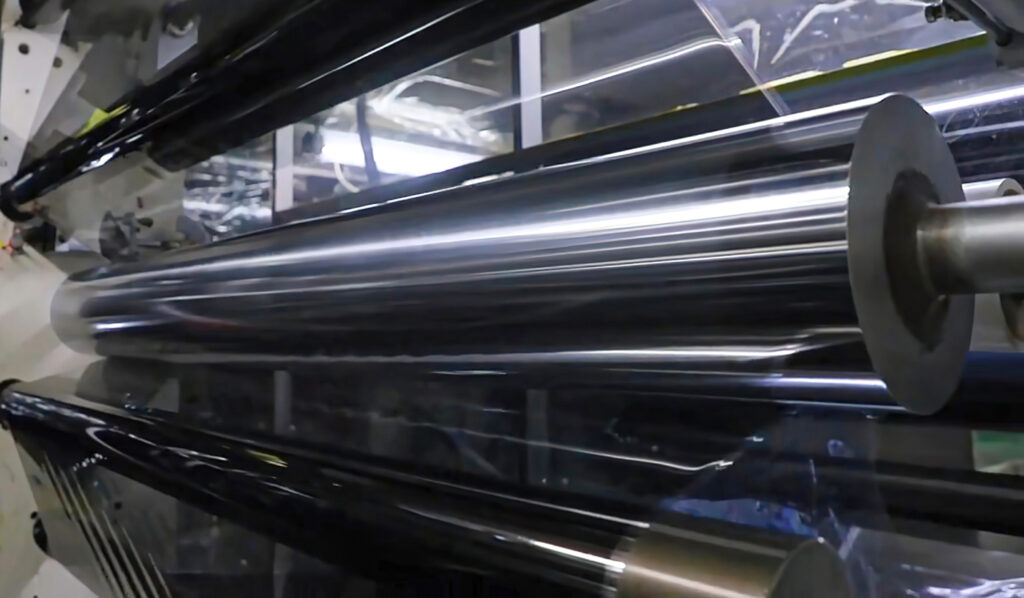
Why Does Window Film Fade, Bubble or Peel? The Three Main Reasons
Our industry uses one word for every failure: defective. That word hides the cause, and the cause decides who pays.
Your customer sees one complaint. The roots are three. Fade is a colorant problem. Bubble is an adhesive problem. Peel is usually an edge or an installation problem.
Look at the film, not the invoice. If the color shifted but the film still sits flat, the colorant died. If the shade is right but the film lifts in patches, the glue let go. If only the top edge curls, someone used the window too early.
| What you see | What actually failed | When it shows up | Who ends up paying |
|---|---|---|---|
| Purple or brown shade, film still flat | Dye or colorant layer | Year 2 – 5 | The brand. You eat the freight. |
| Bubbles spreading from the middle | Adhesive lost grip on the glass | Year 1 – 4 | Split between brand and shop. |
| Top edge curling down | Edge never sealed, window used early | Week 1 – month 6 | The installer |
| Cloudy, milky, hard to see through | Layers separating, base PET degrading | Year 5 onward | The brand |
| Fine spider cracks across the panel | Film embrittled by UV | Year 6 onward | The brand |
| Bubbles in the first 7 days | Dust or trapped water from install | Day 1 – 14 | The installer |
Timing separates them faster than any lab report. Bubbles in week one are dust or water from installation. Bubbles in year three are chemistry, and no installer can fix chemistry.
One pattern repeats in every market I sell into: the rear window fails first. It is the largest glass, it sits at the worst angle to the sun, and the defroster grid keeps it hot.
How UV Exposure Destroys Cheap Dye-Based Film
UV is only about 3% of the sun’s energy that reaches your car. That 3% is enough to end a cheap film inside two summers.
A UV photon carries enough energy to break the chemical bonds in a dye molecule. Once the bond breaks, the molecule stops absorbing the same wavelength, and the color changes.
Untreated PET loses over 40% of its tensile strength after 500 hours in a QUV chamber. Weak film also loses its grip on curved glass.
Dye vs Pigment Colorants
Dyed film gets its darkness from three dyes: red, blue and yellow. Mix them evenly and your eye reads black.
Yellow is the weakest under UV. It fades first, and what remains is red plus blue, which reads as purple.
I wrote the long version of that story here: why cheap window film turns purple or bubbly.
Pigments behave differently from dyes. Carbon particles are chemically inert, so there is nothing to fade. The film goes from black to a slightly lighter black, and most drivers never notice.
Nano ceramic goes further. Our ceramic series uses cesium-doped tungsten oxide, an inorganic particle. No dye, so no color to lose.
| Colorant | How the color is made | Under UV | Color life in strong sun | Typical series |
|---|---|---|---|---|
| Organic dye | Red, blue and yellow dye mixed to black | Yellow fades first, leaves purple | 2 – 5 years | Entry level, 1 – 1.5 mil |
| Carbon | Carbon particles dispersed in the layer | Inert, nothing to fade | 7 – 12 years | DD, matte black |
| Metalised | Metal deposited on the PET | Oxidises, can turn cloudy | 5 – 10 years | PK, reflective |
| Nano ceramic | Cs0.33WOx particles, no dye | Inorganic, no color to lose | 12 – 20 years | XO, NK, SF, IR |
UV Stabilizer Comparison
Two additives do the work. UV absorbers swallow UV and turn it into heat. HALS hunts the free radicals that UV leaves behind.
A published PET study measured yellowness after 720 hours of UV. No stabiliser: plus 8.5. UV absorber alone at 0.3%: plus 2.3. HALS alone at 0.2%: plus 3.1. Both together at 0.5%: plus 1.2.
The pair is about four times better than nothing, and twice as good as either one alone.
There is a cost catch. UV absorbers slowly migrate out of the film. HALS does not migrate, but it stops working in acidic PET. Good film uses both. Cheap film uses a light dose of one.
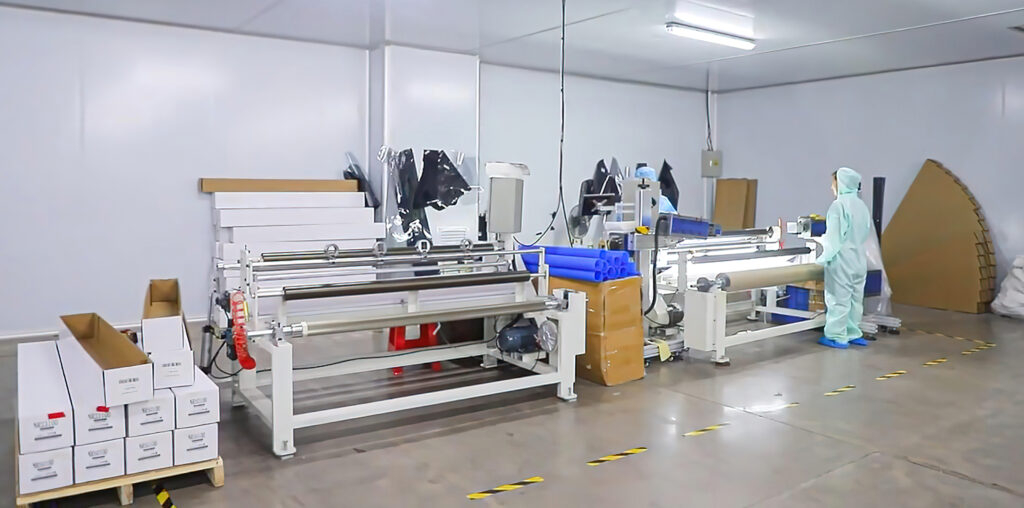
Why Low-Quality Adhesive Causes Bubbling
Bubbles are not air pushing in from outside. They are the gap that opens when adhesive stops touching the glass.
The adhesive is one layer in a stack of five, and the rest of that stack decides how fast it fails. I walk through all five layers in window film construction explained.
The adhesive is usually 25 to 35 microns thick. That bond has to survive the glass expanding in the sun and shrinking at night, thousands of times.
Two chemistries dominate. Rubber-based adhesive grabs fast and costs little. Acrylic grabs slower and costs more.
Acrylic is a saturated polymer, so it has no double bonds for UV to attack. Rubber-based adhesive is unsaturated, and UV snaps those bonds. The glue turns brittle, then gummy.
Heat finishes the job. Acrylic keeps its cohesion to about 120C. Rubber-based adhesive softens above 90C, and a dark rear window in Riyadh passes 90C on an ordinary afternoon.
Rubber-based adhesive is also more hygroscopic. Peel strength can drop 30% after a week above 60% relative humidity. Bad news for Bangkok and Lagos.
Adhesive Quality Grades
I sort suppliers into three tiers: budget rubber, standard acrylic, and UV-stable acrylic with documented aging data.
Ask for peel strength to ASTM D3330, and adhesion measured before and after UV exposure to ASTM G154. A strong result is over 80% adhesion kept after 1,000 hours.
A supplier who cannot send that page has not run the test. That is your answer, even when the reply is polite.
| Adhesive | Initial tack | Heat ceiling | UV stability | Edge lift risk | Where you find it |
|---|---|---|---|---|---|
| Rubber based | Very high | Softens above 90C | Poor, yellows and embrittles | High after 2 years | Lowest cost film |
| Standard acrylic | Medium | Holds to about 120C | Good | Medium | Mid tier film |
| UV stable acrylic | Medium | Holds to about 120C | Very good, over 80% kept after 1,000h | Low | Ceramic and premium |
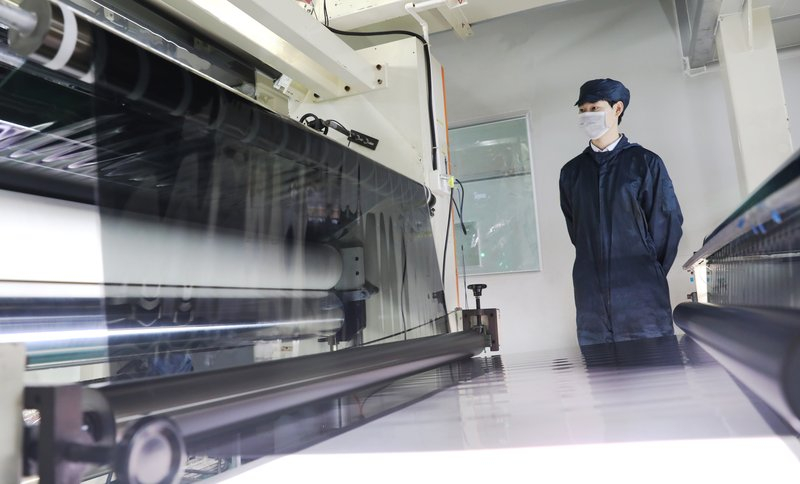
You can test it yourself. Apply a sample to clean glass, leave it 48 hours, then peel at 90 degrees. Leave a second sample in sun for a day, cool it, press the edges. If they lift, that adhesive will not survive your market.
The Role of Installation in Film Longevity
Installation causes three failures: contamination, trapped water, and early window use. All three are avoidable, and all three get blamed on the film.
Dust is the worst. One particle under the film holds the adhesive off the glass in a small circle. That circle becomes a bubble in 18 months, and in a photo it looks exactly like a film defect.
Water is next. Installers use slip solution to position the film. If 70% of it is not squeezed out, it stays under the film and turns into vapor pockets as the glass heats.
The third is the customer. A window lowered on day two can peel the top edge, and that edge rarely seals again.
Proper Curing Time
Curing is not instant. Water-based acrylic adhesive needs up to four weeks to reach full bond, and humidity sets the pace.
In that window the film looks hazy and carries small water bubbles. That is normal. It is also where most false warranty claims begin, because nobody told the customer.
3M’s own care card says not to wash the film for 30 days, and not to lower the windows until the film is dry.
In Jakarta, tell the customer 21 to 30 days. In Dubai in July, 7 to 10 days is realistic. Give a number, or the customer invents one.
When a shop sends photos of bubbling, I ask one question: how many cars came from that roll? One car means installation. Five cars from the same roll means the roll.
How to Pick Film That Won’t Come Back to Haunt You
You cannot test 20 years of aging in an afternoon. So when a buyer asks why does window film fade, bubble or peel, I send four documents instead of an opinion.
Start with the warranty table, not the warranty card. A serious manufacturer lists which series covers fading, which covers bubbling, and which covers neither.
3M publishes this. Their table shows Crystalline, Ceramic IR and Color Stable cover never fading to purple. Their FX-HP line covers color maintenance but drops the no-purple promise. That table is a free product map.
The next document is the accelerated aging report. You want QUV or xenon arc hours, and a delta E figure after the test. Delta E under 3 is hard to see. I list the test standards worth asking for in one place.
Then ask for adhesive data. Peel strength, UV retention, test standard. If the answer is that the glue comes from Japan, ask again.
The last one is the money question: what does the warranty pay? Most manufacturer warranties replace film, not labor. If your shop spends $150 to $300 stripping and re-tinting one car, that cost lands on you.
Warranty Claim Prevention
Prevention costs less than any claim. Three habits remove most of it.
Print a care card in the local language. Windows up 3 to 5 days, no ammonia cleaner ever, no washing for 30 days. Hand it over with the keys.
Write the roll number on every invoice. When a claim arrives, you trace it to a batch in seconds instead of arguing for a week.
Replace on the first failure from a batch. One credit costs you $60. One purple car outside a shop in Riyadh costs you the next ten customers.
Run the math once and the choice gets easy. A cheap roll saves $2 per car. One warranty re-tint costs $150 to $300. That is 75 to 150 cars of savings wiped out by a single claim.
Frequently Asked Questions
Six questions come back every month. The first one is always why does window film fade, bubble or peel in the first place.
Can faded or purple film be fixed?
No. Once the dye is gone, nothing brings it back. Replacement is the only fix, and stripping a rear window costs $75 to $150.
Is bubbling always a film defect?
No. Bubbles in week one are installation. Bubbles after a year are adhesive. Count the cars from that roll before you blame either side.
How long should window film last?
Dyed 3 to 5 years in strong sun, carbon 7 to 12, ceramic 12 to 20 with a clean install. Anything shorter is a material or install problem.
Does a lifetime warranty mean the film will not fade?
No. Most cover manufacturing defects for the original owner only, and many exclude labor. Read the covered-failure list, not the word lifetime.
Why does the rear window fail first?
It is the biggest glass, it takes the most sun, and the defroster grid traps heat. It is also the most expensive window to strip.
Can I test film before placing a bulk order?
Yes. Ask for a 1.52m sample roll. Run the 48-hour peel test, then leave one panel in sun for 30 days beside a control sample in a drawer.
Send Me Your Market and I Will Send the Right Series
Tell me your country, your summer temperature and your monthly volume. I will send back the series that fits, the warranty terms in writing, and the aging data for that product.
For the Gulf, XO and NK hold their color through 45C summers. For South America, IR and DD give you margin at volume. For Southeast Asia, the range runs from HP carbon to SF ceramic.
One sample roll costs less than one warranty claim. Ask for it before the container, not after. That is the short answer to why does window film fade, bubble or peel.