
Two rolls of film reached a tint shop in Nairobi last year. Same shade, same price, same supplier. One went purple in eight months. The other still looks new today.
The installer cut a strip off each roll and taped both to a window card. The cheap one had four layers. The good one had six.
You cannot see that on a price list. Layers are where film cost actually lives, and they are where warranty claims are born. This guide walks through the window film layers one by one, with the real thicknesses and test values buyers should ask for.
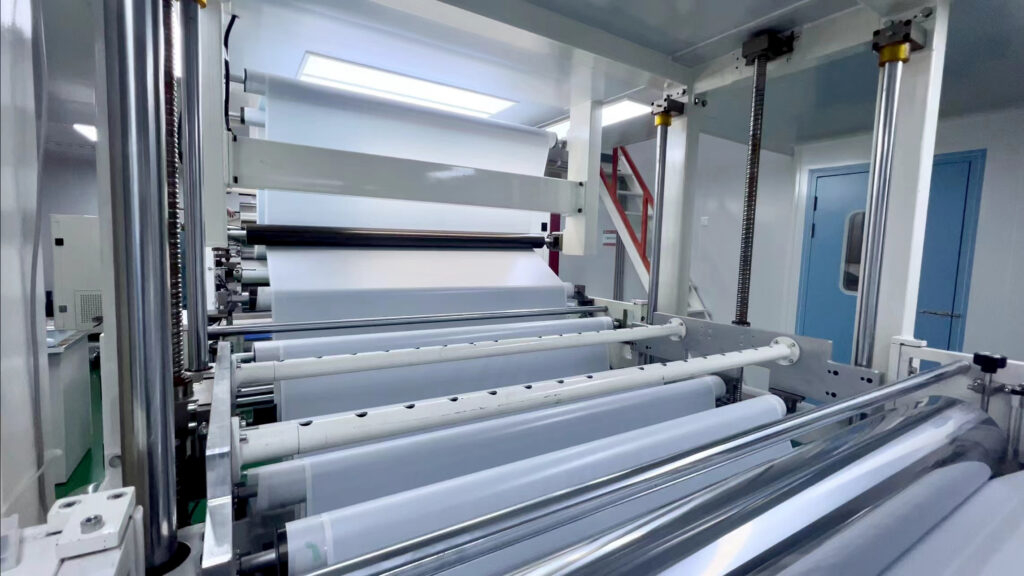
A Cross-Section of Window Film (Like a Sandwich)
A finished automotive film runs five to seven layers. Total thickness lands between 100 and 150 microns for a single-ply product.
For scale, 1.5 mil is about 38 microns. That is thinner than a sheet of office paper, and every layer inside it has one job.
Think of a sandwich. The hard coat is the bread, the PET plies are the filling, the adhesive is the butter, and the liner is the wrapper you throw away.
Layer Diagram, From Outside to Glass
Start with the surface your customer touches. That is the scratch-resistant hard coat, usually 1 to 3 microns of UV-cured polyurethane or acrylic.
Under it sits the first PET ply, 50 to 75 microns thick. It carries the structural load and most of the optical clarity.
Then comes the functional layer. Ceramic, carbon, dye or metal, and it is often under 1 micron thick. This thin coating does the thermal work. If you want the deep dive on coating technologies, we compared how nano ceramic film compares to magnetron sputtering metal film in a separate guide.
Many premium films add a second PET ply. It protects the coating from oxidation and holds glass fragments together on impact.
A laminating adhesive bonds those plies together. Then the mounting adhesive. Then the release liner on the outside of the roll.
Every one of those layers can be built cheap. That is why two films with the same VLT number can behave nothing alike.
| Layer | Typical thickness | Job it does | What the cheap version does |
|---|---|---|---|
| Hard coat | 1-3 microns | Resists washing and squeegee abrasion | Micro-scratches, hazy look within a year |
| PET base ply | 50-75 microns | Structural backbone and optical clarity | Haze, wavy distortion, curled edges |
| Functional layer | Under 1 micron | Blocks infrared and UV energy | Fades purple, heat rejection drops |
| Laminating adhesive | 5-15 microns | Bonds the PET plies together | Delamination and bubbles at year two |
| Mounting adhesive | 25-35 microns | Bonds film to glass | Edge lift, adhesive transfer, fog |
| Release liner | 23-100 microns | Protects adhesive until install | Wrinkles, liner tears, pulled adhesive |
PET Base Film Quality Grades
PET is the backbone. It decides whether the finished film looks like glass or looks like plastic wrap. If you are still choosing between constructions, start with the different types of car window tint and which one lasts longest , then come back to the layer details below.
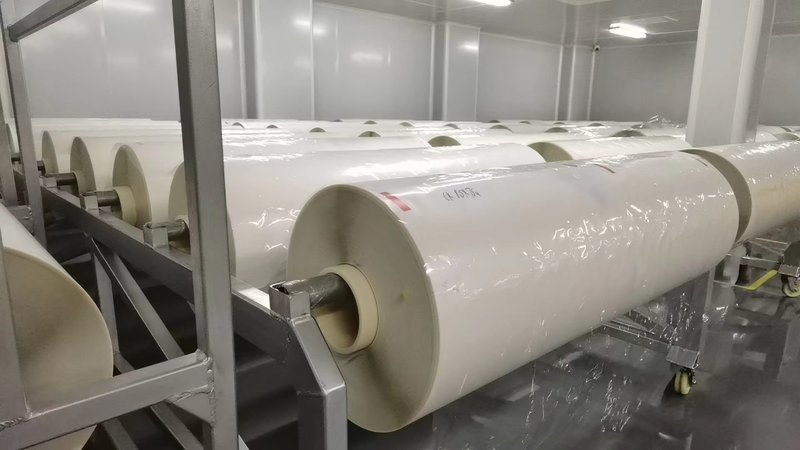
The number that separates grades is haze, measured under ASTM D1003. Lower is clearer.
Toray’s optical clear grades for solar window film spec 0.6% to 1.1% haze. Display-grade PET goes below 0.5%.
Economy rolls often sit near 2% haze. You will not see it under shop lights. You will see it on a black car in shade, as a grey milkiness.
Thickness matters too. Toray supplies these grades from 23 to 350 microns, so a film maker can pick the ply that fits the job.
Ask your supplier for the PET grade and a haze value. A vague answer usually means they bought whatever was cheapest that month.
| PET grade | Haze (ASTM D1003) | Where you find it | What the driver sees |
|---|---|---|---|
| Standard optical PET | About 2% | Economy dyed and 2-ply film | Slight milkiness in shade or low light |
| Optical clear PET | 0.6-1.1% | Premium ceramic film | Looks like nothing is on the glass |
| Display grade PET | Below 0.5% | Screens and specialty optics | Not needed for auto tint, costs more |
The Scratch-Resistant Layer – Your First Line of Defense
The hard coat is the layer that fails first in the real world. Not heat, not sun. Abrasion.
A shop towel, a squeegee edge, a seatbelt buckle, a dog’s nails. Every pass takes a little off the surface.
Without a proper hard coat, the film turns dull long before the adhesive gives up. The customer blames the film, not the cloth.
That one complaint is why a cheap roll costs more than it saves. A single re-do eats the margin on three cars.
Hard Coat Thickness Comparison
Most hard coats land between 1 and 3 microns. Thin coats cut cost and cut life.
Scratch resistance is measured by pencil hardness under ASTM D3363. A 3H result is typical for a quality product.
The test uses graded pencils at a fixed load and angle. A 3H pencil is pushed at 17 newtons in the standard setup.
What does 3H survive? Fingernails sit near Mohs 2 to 2.5, and copper keys near 3 to 4. Both lose to 3H.
What beats it? Sand, and the quartz inside it, sits at Mohs 7. No automotive film wins that fight.
One warning. Pencil numbers only compare inside the same pencil brand and the same load. Ask for the load in grams and the pencil brand.
The UV Blocking Layer – Invisible but Essential
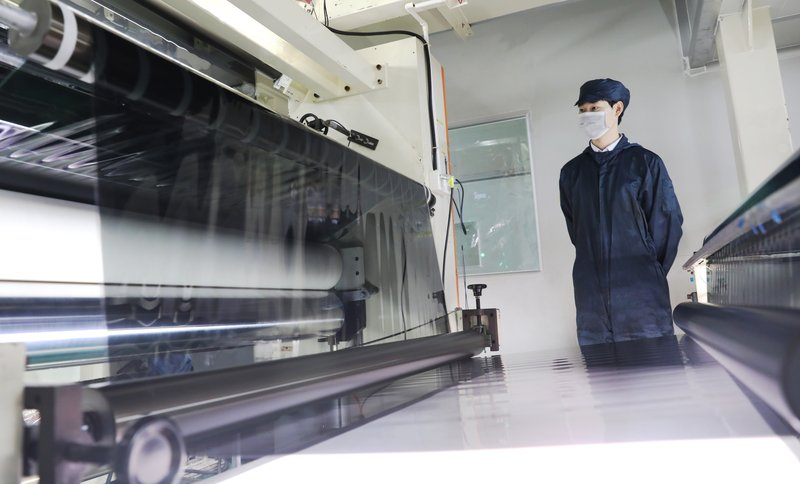
UV carries only about 3% of the solar energy hitting a car. Skip it and you will still pay for it.
UV absorbers and hindered amine light stabilizers do this work. They are chemistry inside the PET and the adhesive, not a separate sheet.
Absorbers take UV photons and turn them into a small amount of heat. Stabilizers neutralise the free radicals that break polymer chains.
Get that combination right and the film holds 99% or better UV block for a decade. 3M publishes 99.7% to 99.9% on its CS IR line.
Get it wrong and two things happen at once. The car interior fades, and the film itself yellows and turns brittle.
Why 99% Is Not the Same as 99.9%
That 0.9% gap sounds trivial. Across ten years in Dubai or Phoenix, it is the difference between a warranty and a claim.
UV damage is cumulative. A film rated 99% lets through ten times more UV than one rated 99.9%.
Customers notice UV failure as a colour shift. The dashboard, leather and parcel shelf all fade unevenly, and they blame your film. We explain why tint lightens or changes colour after installation in another article, and the UV package is always part of the answer.
So the UV layer is not a spec line. It is your warranty exposure, and it is worth two minutes on the phone with your supplier.
The Adhesive Layer – Why Cheap Glue Ruins Good Film
A good ceramic coating can be ruined by a bad adhesive. It is the cheapest layer to cut and the most expensive to get wrong.
Mounting adhesive does two jobs. It holds the film to glass, and it decides how the film looks for the next ten years.
Premium products use cross-linked acrylic pressure-sensitive adhesive, 25 to 35 microns thick, with a refractive index near 1.49.
That refractive index matters. Match it to the PET and the film disappears into the glass instead of showing a grey film line.
Rubber-based or under-cured acrylic glue fails differently. It lifts at the edges first, then hazes, then lets go in one sheet.
Pressure-Sensitive vs Dry Adhesive
There are two mounting systems in the trade, and buyers mix them up constantly.
Pressure-sensitive adhesive is tacky on contact. It grips immediately and keeps gripping on curved glass. That is why automotive film uses it.
Dry adhesive is not sticky at all. Water activates it, and it forms a chemical bond over days rather than seconds.
Dry adhesive wins on flat glass. It cures clearer, lasts longer, and forgives a mistake because you can lift and rinse it.
If your market is architectural film, ask which system you are buying. If you sell auto tint, PSA is the correct answer and always will be.
Release Liner Quality
The liner is the layer nobody prices in. It is also the layer that decides how your installer’s day goes.
Silicone-coated PET liners usually run 23 to 100 microns. 3M specs 0.9 mil, about 23 microns, on its automotive line.
Release force is tuned in grams per inch. Too light and the adhesive lifts with the liner. Too tight and the liner fights the installer.
Quality liners hold residual adhesion above 85% and stay flat after thermal aging. Cheap ones wrinkle and drag adhesive across the sheet.
Ask for the release force range and the residual adhesion figure. That request alone tells a supplier you know what you are buying.
How to Tell If a Film Has All the Right Layers
You cannot count window film layers with your eyes. You can still screen a roll in ten minutes at your bench.
The 10-Minute Bench Check
Hold a sample to a light and look for haze or a wavy pattern. Clean optical PET shows neither.
Run a fingernail across the surface with light pressure. A good hard coat will not mark. A thin one will.
Peel the liner back slowly and watch the adhesive. It should stay on the film, not transfer to the liner.
Fold a corner, press it, then unfold it. Cheap PET creases and stays creased. Good PET recovers.
Rub the adhesive side with a wet thumb. PSA feels tacky. Dry adhesive feels slick. That tells you what you are actually buying.
Then ask for the paperwork. Haze value, hard coat thickness, pencil hardness with load, adhesive chemistry, UV rating and release force.
A real factory has all six on one page. If they only have a colour chart, order your samples somewhere else.
FAQ: Window Film Layers and Construction
How many layers does a good window film have?
Five to seven. Hard coat, one or two PET plies, a functional coating, laminating adhesive, mounting adhesive and a release liner. Total thickness runs 100 to 150 microns.
Does a thicker film mean better heat rejection?
No. Heat rejection comes from the functional coating, not from mass. A well-built 1.5 mil ceramic film beats a thick dyed film every time.
Which KSB series uses which construction?
XO and NK are pure nano ceramic built on our cesium tungsten oxide layer — see XO nano ceramic film series and NK nano ceramic film series. SF adds a small amount of metal for a richer look (SF nano ceramic film series). IR is ceramic at a volume price point (IR nano ceramic film series).
DD is carbon ceramic and it installs fast, which suits high-volume shops and fleets (DD nano carbon film). K is our 2-ply colour stable line for price-led markets (K / HP 2-ply colour stable film), and PK is the metallic reflective upgrade in the same 2-ply family.
Why does my film look slightly green or grey?
That is the PET and the ceramic material showing through. NK has a slightly green background by design. Grey usually points to a lower PET grade or a metal layer.
Can a cheap film damage the glass or the defroster?
Yes. Adhesive that over-bonds can pull defroster lines off when the film is removed. Under-cured adhesive can leave residue that needs solvent and scraping.
What should I ask before placing a bulk order?
Ask for the PET grade and haze value, hard coat thickness, pencil hardness with test load, adhesive chemistry, UV rating and release force. Six answers, one page.
Get the Layer Spec Sheet Before You Order
Do not buy film on colour charts alone. Buy the layer stack.
We run magnetron sputtering and precision coating lines in Guangzhou, and the full window film layers structure is documented for every series we sell.
Ask for a sample kit with XO, NK, SF, IR, DD, K and PK, plus the layer spec sheet behind each one.
Tell us your market and we will point you at the right construction. Gulf buyers get XO and NK. South America gets IR and DD. Southeast Asia gets the full line.
Message KSB Window Film with the market you sell into, and we will send the stack that fits it.