
Walk into any tint shop in Houston, Manila, or Riyadh and you’ll see the same wall: five films, five prices, and a customer asking the same question — which one actually lasts? The answer decides rework calls, refunds, reviews, and whether that customer ever comes back.
I’ve spent a decade manufacturing window film in Dongguan for buyers in 80+ countries, watching every tint type fail and succeed in real conditions. This guide breaks down the five main car window tint types — dyed, metalized, carbon, ceramic, and nano-ceramic — by how long they actually last, why they fail, and what to stock for your market. It also explains why cheap film turns purple or bubbly, so you can spot the problem before you order a container, not after.
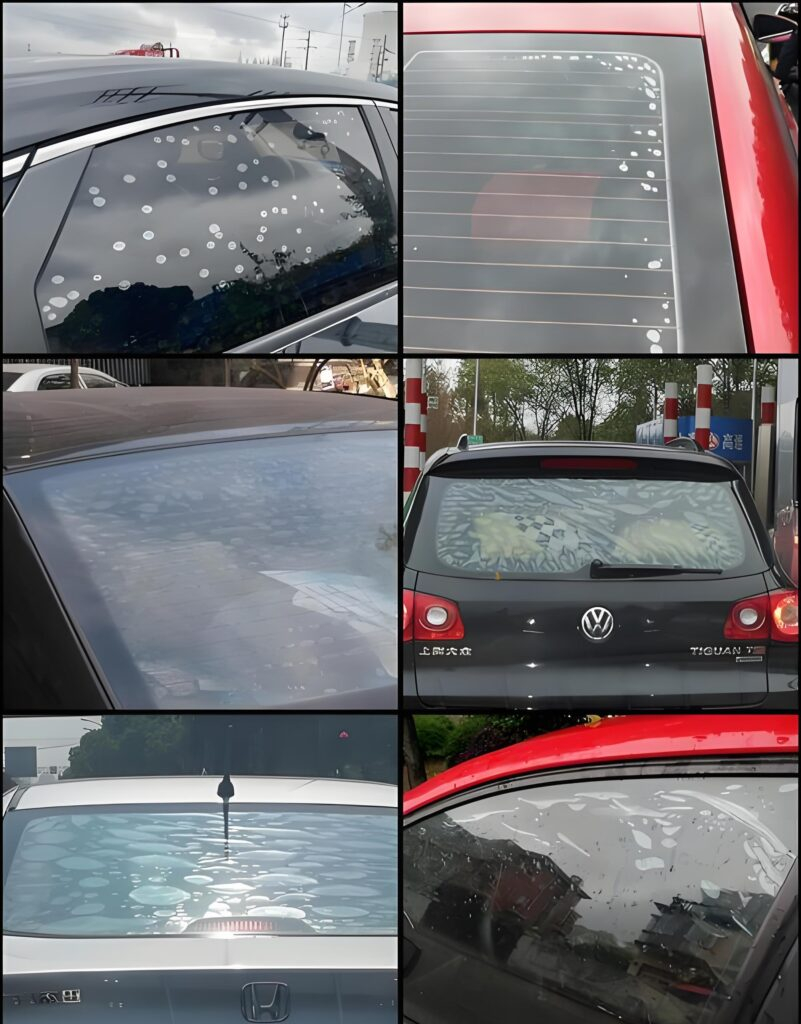
Why cheap film turns purple or bubbly?
Dyed Film: Affordable But Short-Lived
Dyed film is the cheapest option on the market. A layer of dye sits between the adhesive and a polyester base, and that dye is what blocks light. It is also the oldest type of window tint — and the most common one on old cars.
How does it work? The dye acts like sunglasses glued to your window: it absorbs visible light so the glass looks darker, but it does very little to stop infrared heat — the part of sunlight that makes a car interior feel like an oven.
Here’s the problem: dye fades. Heat and UV break it down over time. What started as a nice charcoal shade turns purple in 18–24 months, and the numbers drift with the color — a film installed at 15% VLT can end up closer to 25% VLT after two or three summers, because faded dye lets more light through. In strict markets, that drift gets cars pulled over or failing inspections.
Lifespan: 2–3 years in most climates; closer to 18 months in Dubai or Arizona heat, where the adhesive also degrades faster and edges start bubbling. For a shop, dyed film is a liability — your customer comes back in two years with purple windows asking for a refund. The only buyers who genuinely choose it are end customers on a tight budget and some large dealerships or rental fleets tinting cars they plan to sell within a year.
Pricing is the whole appeal: a full install can be done with material costing well under $30. But cheap at the counter is expensive in rework — the labor to redo one car usually costs more than the film ever saved.
Metalized Film: Strong Heat Blocking, But a Signal Problem
Metalized film solves the fade issue with tiny metal particles instead of dye. The metal reflects heat — think of a thin mirror built into the window — and a good line blocks 40–60% of solar heat while holding up 5–7 years without fading. You can feel the difference the moment you put it under a heat lamp.
But here’s the catch that drives installers crazy: metal interferes with signals. GPS, radio, toll transponders, sometimes even cell signals. Modern cars are full of antennas — glass-mounted GPS, TPMS sensors, keyless entry — and metalized film can block all of them. A customer in Sydney called me once, furious because his E-Toll tag wouldn’t read through the windshield.
Some shops work around it by leaving a gap near the antenna or using metalized only on side windows, but that adds complexity to every install, and complexity eats your labor margin. In 2026, with ceramic prices at record lows, most shops I work with have stopped stocking metalized film altogether.
Carbon Film: The Sweet Spot for Most Shops
Carbon film gives you that matte black look without the signal problems. Instead of metal, it uses carbon particles embedded in the film — naturally dark, so no dye is needed, which means no purple fade, ever. It blocks around 40–50% of heat, has zero signal interference, and lasts 5–8 years with a stable color.
For most shops, carbon is the reliable middle ground: better than dyed, cheaper than ceramic, and customers can see the difference instantly. It’s also a strong margin play — in my experience, carbon is where many shops build their core business.
If your market is budget-conscious — parts of South America, Africa, or Southeast Asia — carbon is the film that moves. It gives the customer a professional look at a price they will actually pay, and you don’t get called back in two years.
Ceramic Film: Top Performance, Longest Life
Ceramic film is where the serious stuff starts. It uses ceramic nanoparticles — the same material used in high-tech coatings — to block heat without any metal, so there are no signal problems, ever. The numbers: 80–90% infrared rejection, 99% UV, zero interference.
Why doesn’t it fade? Because of what it’s made of. Quality ceramic film relies on inorganic materials — ceramic particles that don’t break down under UV the way organic dyes do. That structure is why a good ceramic film keeps its performance and its color for years in direct sun, and why it stays optically clear — noticeably clearer than dyed or carbon, which is why it has become the default choice in most professional tint shops.
Lifespan: 8–10 years, easily. Most quality lines carry a 5–8 year warranty, and the real service life runs well past it. We have installers in the Gulf running our ceramic lines for 5+ years with no visible degradation — in 48°C summer heat. Ceramic also handles panoramic sunroofs on modern cars: you can still see out, but the cabin doesn’t cook.
For the shop owner, ceramic is the lowest-friction product you can stock. It cuts rework and warranty claims, which directly lifts customer satisfaction, and it installs at a healthy ticket price that protects your revenue per bay. Fewer callbacks, happier customers, better margins — that’s why most professional shops make ceramic their first recommendation.
Nano-Ceramic: The New Gold Standard
Nano-ceramic takes the same technology and shrinks the particle size. Smaller particles mean better clarity and even higher heat rejection in a thinner film — often 90%+ IR rejection with no haze, no color shift, and the longest lifespan of any type: 10+ years.
This is the film I recommend to dealers who want to charge premium prices. In the US and Gulf markets, nano-ceramic installs at 2–3x the price of dyed, and customers happily pay when you show them the heat lamp demo.
The one honest downside is the cost to stock it, and you need installers who can sell it. But for a shop targeting premium cars — Teslas, BMWs, Land Rovers — it’s the difference between a $150 job and a $500 job on the same car.
Quick Comparison: Cost vs Lifespan vs Performance
| Film Type | Cost/m | Lifespan | Heat Rejection | Key Trade-off |
| Dyed | $2–4 | 2–3 years | 20–30% | Fades to purple, VLT drifts |
| Metalized | $3–6 | 5–7 years | 40–60% | Blocks GPS/radio signals |
| Carbon | $4–8 | 5–8 years | 40–50% | No fade, no signal issues |
| Ceramic | $8–15 | 8–10 years | 80–90% | No fade, no signal issues |
| Nano-ceramic | $12–20 | 10+ years | 90%+ | Premium price to stock |
Think about profit per install, not just cost per meter. A nano-ceramic job that costs you $60 in film can sell for $400–500; a dyed job that costs $20 sells for $150 and comes back to bite you in two years. The math is not close. And remember: the average driver keeps a car about 8 years in the US and 12–15 in Mexico or the Philippines — so the lifespan question is really about repeat business or complaints.
Which Type Should Your Shop Stock?
Here’s my honest advice after a decade in this business: don’t stock everything. Stock what your market will actually buy.
In the Gulf or Southeast Asia, where heat is the #1 complaint, ceramic and nano-ceramic are your workhorses — our IR Series (82% IR rejection, pure ceramic) and XO/NK lines are what move in those markets.
For budget-conscious markets, carbon film is your entry point — decent margin without the reputation risk of dyed film.
Whatever you choose, ask your supplier for the full spec sheet and a physical sample before you commit: heat lamp test it, scratch it, leave it in the sun for a week. A $50 sample run tells you more than any sales pitch — and if you’re comparing suppliers or new to importing, the Automotive Window Film Buyer’s Guide walks through the whole process.
A manufacturer that shows real test data and offers samples from the same batch they ship is the partner worth keeping — that’s what we do at KSB, and why importers keep reordering.
FAQ: Window Tint Types & Lifespan
Q: Which type of window tint lasts the longest?
A: Nano-ceramic film lasts the longest — 10+ years in normal use. Standard ceramic follows at 8–10 years, carbon at 5–8 years, and dyed film at just 2–3 years before it starts fading.
Q: How many years does ceramic window film actually last?
A: Quality ceramic film lasts 8–10 years in practice. Most lines carry a 5–8 year warranty, and because ceramic particles are inorganic, the film keeps its color and heat rejection well past the warranty period.
Q: Why does dyed window film turn purple?
A: The dye breaks down under UV and heat. As it degrades, the color shifts toward purple or blue, and the film lets more light through — a 15% VLT film can drift toward 25% VLT after a few summers.
Q: Does carbon window film fade or bubble?
A: No. Carbon film uses naturally dark carbon particles instead of dye, so the color is stable and it won’t fade or bubble within its 5–8 year lifespan.
Q: Is metalized film still worth stocking?
A: Only in limited cases. It blocks 40–60% of heat and lasts 5–7 years, but it interferes with GPS, radio, and toll signals. With ceramic prices lower than ever, most shops have dropped metalized film.
Q: What’s the best window tint for hot climates?
A: Ceramic or nano-ceramic. They block 80–90%+ of infrared heat without signal interference, making them the best choice for the Gulf, Southeast Asia, and southern US markets.
Q: How can I check film quality before placing a bulk order?
A: Ask for the full spec sheet, run a heat lamp test on a sample, scratch it, and leave it in the sun for a week. A quality manufacturer will share real test data and samples from the same batch they ship.
Q: Does a window film warranty cover fading and bubbling?
A: On quality films, yes. Dyed film’s 2–3 year lifespan is the main cause of fade and bubble claims; ceramic and carbon films carry 5–8 year warranties and rarely trigger claims.
Conclusion
Every film type has its place, but only two are worth building a business around. Dyed is cheap and short-lived — fine for dealership flips, expensive for everyone else. Metalized blocks heat but blocks signals. Carbon is the reliable middle ground for budget markets. Ceramic and nano-ceramic are where the growth is: longest lifespan, fewest callbacks, best margins, and the only products that let you charge premium prices. Stock for your market, test before you buy, and choose a manufacturer who shows real data.
Still Unsure Which Line Fits Your Market?
Send us a message with your region and your average customer’s budget. We’ll recommend the two film types that make you the most money there — no sales pitch, just the numbers we see across our dealer network in 80+ countries.