
Last August a distributor in Jeddah sent me photos of 14 cartons with crushed edges. The film inside was still usable. The damage happened inside the container, not on the road. It is the reason every importer who needs to ship window film from China asks about packing before anything else.
Two layers of cartons had been loaded flat on top of the bottom layer. Twenty-four days later the bottom rolls were oval and the edges were wavy.
That shipment cost him about $2,100 in write-offs and three weeks of selling time. The fix was $180 of pallets and airbags.
I have shipped film to more than 60 countries. Almost every damage claim I have seen came from packing or insurance, never from the film itself.
This guide covers both. If you plan to ship window film from China this quarter, read it before you book your first container.
Sea Freight vs Air Freight — Which One Do You Pick?
Start with the maths of one roll. A standard 1.52m x 30m roll covers 45.6 square meters and weighs 8 to 9 kg in its carton.
Air freight from China to the US ran around $6.30 per kilo in September 2026. Europe sits at $4 to $7.50, the Gulf at $3.50 to $6.50.
That puts one roll at $50 to $55 by air. The same roll leaves our factory at $20 to $40.
You pay more for the flight than for the product. Air only makes sense for swatches, samples and a rush replacement for a key account.
Everything else goes by sea. Film is light and bulky, which is the cheapest possible cargo to move in a container. If you ship window film from China on a schedule, that gap between air and sea pricing sets your landed cost.
LCL vs FCL — Where the Break-Even Sits
Under 12 to 15 cubic meters, LCL is the cheaper choice. That is roughly 200 to 280 rolls in cartons.
Above that, book a full container. A 20ft holds around 1,000 to 1,300 rolls of 1.52m x 30m film. A 40ft holds 2,000 to 2,600.
The per-roll gap is real. A 200-roll LCL shipment to the US West Coast lands near $10 per roll in ocean and terminal charges. The same film in a 40ft lands near $4.
LCL also adds five to fifteen days and two extra handlings. Your cartons get co-loaded with chemicals, machinery and bagged goods. In my experience, that is where most crushed corners come from.
One more thing. A container full of film is a light box. A 40ft of 2,000 rolls weighs about 18 tonnes against a 26-tonne payload limit.
Terminals treat light boxes casually. They get stacked high and moved fast. That is exactly why dunnage matters more for film than for tiles.
| LCL (shared box) | FCL 20ft | FCL 40ft | |
|---|---|---|---|
| Best order size | 40 – 250 rolls | 1,000 – 1,300 rolls | 2,000 – 2,600 rolls |
| Ocean cost to US West Coast | $80 – $160 per CBM | $6,840 – $8,240 per box | $8,550 – $11,330 per box |
| Freight per roll | $9 – $12 | $6 – $8 | $4 – $6 |
| Transit time | 28 – 46 days | 12 – 40 days | 12 – 40 days |
| Handlings before your door | 4 to 6 | 2 | 2 |
| Damage risk | High | Low | Low |
| Best for | First trial order | Trial to full container | Established volume |
How Window Film Rolls Are Packed for Shipping
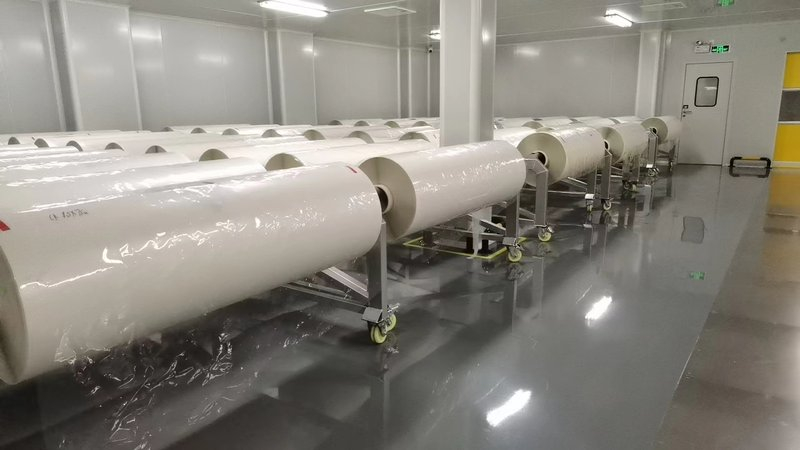
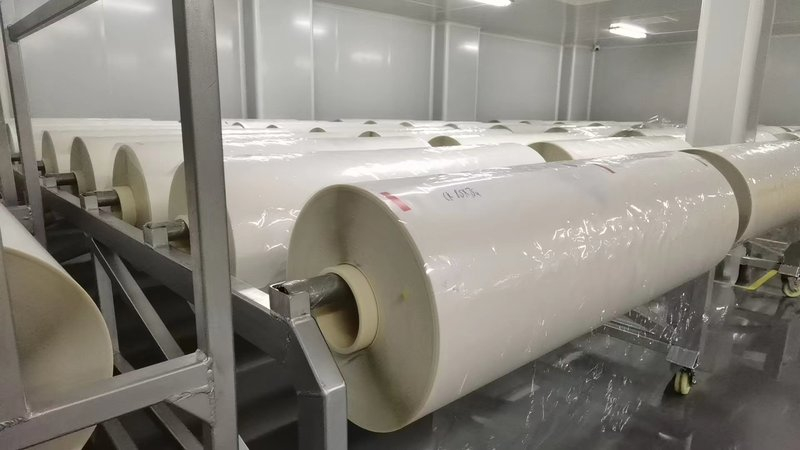
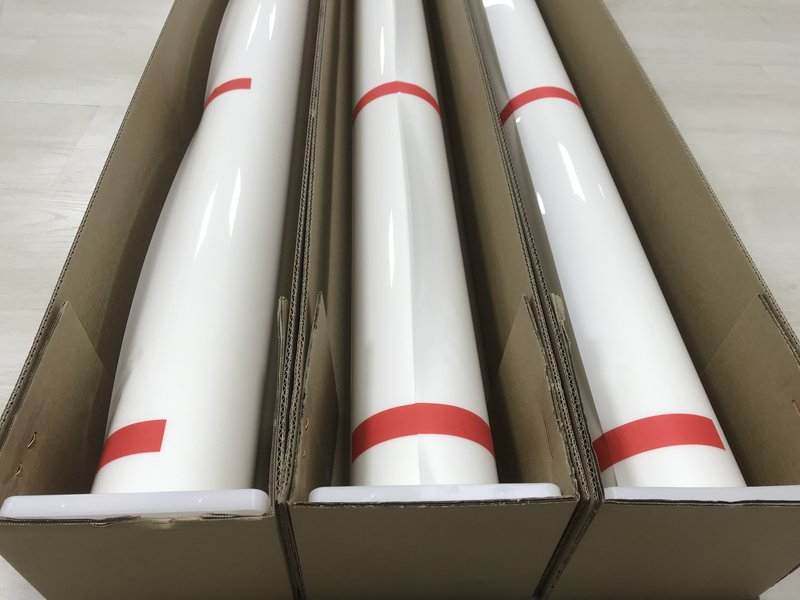
A proper export carton for film is 160 x 18 x 18 cm. It holds one roll, and it should be five-layer corrugated board, not three.
Inside, the roll sits on a rigid core, usually three inch, with plastic end caps. Those caps stop the roll collapsing into an egg shape under load.
The film is wrapped in a poly sleeve before boxing. That sleeve is not decoration. It keeps dust off the adhesive and blocks light.
The film type you buy also decides how much a damaged carton costs you. A $20 roll of dyed film and a $60 roll of ceramic film fail the same way, but only one of them hurts. Our automotive window film buyer’s guide explains the price tiers. If you are still deciding what to stock, we also compared which type lasts longest in a separate guide.
The Loading Pattern That Prevents Most Damage
Film rolls ship on end, never flat. Flat rolls carry the weight of everything above them and go oval. Oval rolls will not lay flat on glass.
We load in vertical columns, braced against the container walls, with the last row locked by airbags.
A 30cm gap stays open at the ceiling. That gap is not wasted space. It is where condensation forms and where you hang desiccant.
Ask your supplier for loading photos with the seal number visible. A factory that will not send them is telling you something about how the box was loaded.
Container Rain Is the Real Enemy
A steel container in the sun reaches 60 to 70°C inside. At night it drops 20 to 30°C. Moisture condenses on the ceiling and drips onto your cargo.
A 40ft box on a 25-day voyage can produce up to 1,000 liters of condensate. That is not a typo.
Cartons go soft and collapse. Film edges take water stains. Adhesive can haze, and hazed adhesive shows up as silvering on the glass three months later.
The fix costs under $60. Hang 8 to 12 kg of calcium chloride desiccant per 40ft from the lashing rings, high on the walls. Use 4 to 6 kg for a 20ft.
Never load in the rain. Never load wet pallets. Check that the container does not smell of the last cargo. Film absorbs solvent vapor and keeps it.
What “FOB” and “CIF” Mean (and Which One Protects You)
These two terms decide who owns the risk at sea, and who buys the insurance. Most first-time buyers get this wrong.
FOB means the seller delivers the goods on board the vessel at the Chinese port. After that rail closes, the risk is yours.
CIF means the seller pays the ocean freight and the insurance to your port. The risk still passes to you in China. The difference is who chooses the forwarder and the insurer.
Why I Recommend FOB for Repeat Buyers
Under CIF your supplier picks the insurer. Incoterms 2020 only requires the seller to buy ICC C cover, which is the narrowest level.
ICC C covers fire, sinking, stranding and collision. It does not cover theft, rough handling or seawater entering the container. Those are the three things that actually damage film.
Under FOB you buy your own cover, you see the real freight rate, and you keep the forwarder relationship. If you ship more than one container a year, that is worth the extra paperwork.
Ask for an FOB price and a separate freight quote. If the two numbers look odd, you now know why. Our step-by-step guide to importing window film walks through the full sequence from deposit to delivery.
| What happened to the cargo | ICC (A) | ICC (B) | ICC (C) |
|---|---|---|---|
| Theft or pilferage | Covered | Not covered | Not covered |
| Rough handling by a forklift | Covered | Not covered | Not covered |
| Seawater into the container | Covered | Covered | Not covered |
| Condensation (container rain) | Covered | Covered | Not covered |
| Fire, sinking, collision | Covered | Covered | Covered |
| General average contribution | Covered | Covered | Covered |
| Earthquake, lightning | Covered | Covered | Not covered |
A policy at ICC A costs roughly 0.1% to 0.5% of the insured value. On a $30,000 container that is $30 to $150. Buy it.
Insure at CIF plus 10%. That is the market convention and the Incoterms minimum.
Read the transit clause too. Cover ends 60 days after discharge, not when you feel like opening the box.
How Long Does It Take to Ship Window Film from China? (Real Timelines by Route)
Suppliers quote ocean transit. You live with door-to-door. Add 7 to 14 days for clearance, drayage and inland delivery.
These are 2026 port-to-port ranges. They move with blank sailings and Red Sea routing.
| Route | Main port | Ocean transit | Door to door |
|---|---|---|---|
| China to US West Coast | Los Angeles / Long Beach | 12 – 18 days | 22 – 32 days |
| China to US East Coast | New York / Savannah | 29 – 40 days | 38 – 52 days |
| China to North Europe | Rotterdam / Hamburg | 30 – 38 days | 38 – 50 days |
| China to UK | Felixstowe / Southampton | 28 – 35 days | 36 – 48 days |
| China to Middle East | Jebel Ali | 18 – 25 days | 25 – 32 days |
| China to Australia | Sydney / Melbourne | 12 – 18 days | 20 – 28 days |
| China to West Africa | Lagos / Tema | 35 – 45 days | 45 – 58 days |
| China to South America | Santos / Callao | 35 – 45 days | 45 – 60 days |
Two things stretch those numbers. Cape of Good Hope routing adds 7 to 14 days on Europe and US East Coast lanes. LCL adds 5 to 15 days on top of everything.
Then there is the clock nobody warns you about. US terminals give 4 to 5 free days before demurrage starts, and the first tier runs $175 to $300 per container per day.
One importer I work with paid $2,640 because a packing list was wrong. His freight was $3,100. The paperwork cost almost as much as the box.
File the customs entry before the vessel lands. Book the truck before discharge. Return the empty the same week.
What to Do If Your Shipment Arrives Damaged
First, do not sign a clean delivery receipt. If the cartons are crushed, write it on the receipt before you sign. A clean signature means you accepted the cargo in good order.
Second, photograph everything before you move anything. The seal, the doors, the stack, the crushed corner, the film edge.
Third, keep the packaging. Insurers reject claims where the carton was thrown away before the surveyor arrived.
The Damage Claim Process, Step by Step
Notify the carrier in writing within three days of delivery for visible damage. That deadline comes from the Hague-Visby Rules, and it is enforced.
Notify your insurer the same day and ask for a joint survey. The surveyor’s report is the document that gets paid, not your photos.
Build the file: bill of lading, commercial invoice, packing list, survey report, photos, and a repair or replacement quote.
Expect 30 to 90 days for a clean claim. Expect a fight if the surveyor decides the packing was inadequate. That exclusion applies to ICC A as well.
Under CIF you claim on your supplier’s policy. Under FOB it is yours. Either way the survey happens where the cargo landed, so you need a local contact.
Do not dump damaged film before the claim settles. It has salvage value, and insurers will deduct it from the payout if you sold it.
FAQ: Shipping Window Film
Is it cheaper to ship window film by sea or by air?
Sea, by a wide margin. One 1.52m x 30m roll costs $50 to $55 by air and about $4 to $10 by sea, depending on container size. Air is for samples only.
How many rolls fit in a 20ft container?
Around 1,000 to 1,300 rolls of 1.52m x 30m film, and 2,000 to 2,600 in a 40ft. Exact counts depend on core size and carton dimensions.
Should I buy FOB or CIF?
FOB if you ship more than one container a year. You control the forwarder and buy ICC A cover. CIF is simpler, but the seller’s insurance is usually ICC C, which excludes theft and water damage.
What is the minimum order that makes a full container worth it?
About 250 to 300 rolls. Below 12 to 15 cubic meters, LCL is cheaper. Above it, a 20ft wins on freight per roll.
How do I stop condensation from ruining my film?
Hang 8 to 12 kg of calcium chloride desiccant per 40ft, keep a 30cm gap at the ceiling, and never load in the rain. That combination handles most routes.
How long do I have to file a damage claim?
Three days from delivery for visible damage under the Hague-Visby Rules. Notify your insurer the same day and request a joint survey.
Get a Packing Spec Before You Book the Box
If you would rather ship window film from China without a damaged carton, send me your destination port and your first order size. I will send back an FOB Guangzhou price, a packing spec and a loading plan.
Ask any supplier for container loading photos with the seal number visible. Then ask what desiccant weight they use per 40ft. The answers separate real exporters from traders.
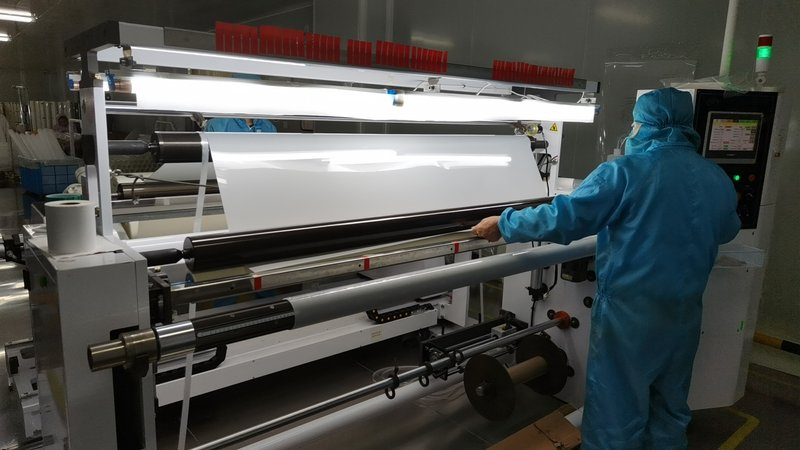
KSB ships XO and NK nano ceramic film to Gulf buyers, IR and DD volume lines to South America, and the full range to Southeast Asia: SF nano ceramic and high performance carbon. Every line is built for the route it travels.
Every shipment leaves with desiccant in the box spec and a packing list that matches the carton count. If a carton count is off at destination, we want to hear about it in week one, not month three.
We answer within one business day.