
A $110 roll of ceramic film does not cost you $110. Land it in Miami in October 2026 and it costs $167. That gap between the FOB quote and the money that leaves your account is your real window film import cost, and most buyers never see it until the container is already on the water.
I have priced film for importers for eleven years. Here is the full bill, with two real shipments and this month’s rates.
The Two Numbers You See First: FOB Price and Freight
What the FOB price leaves out
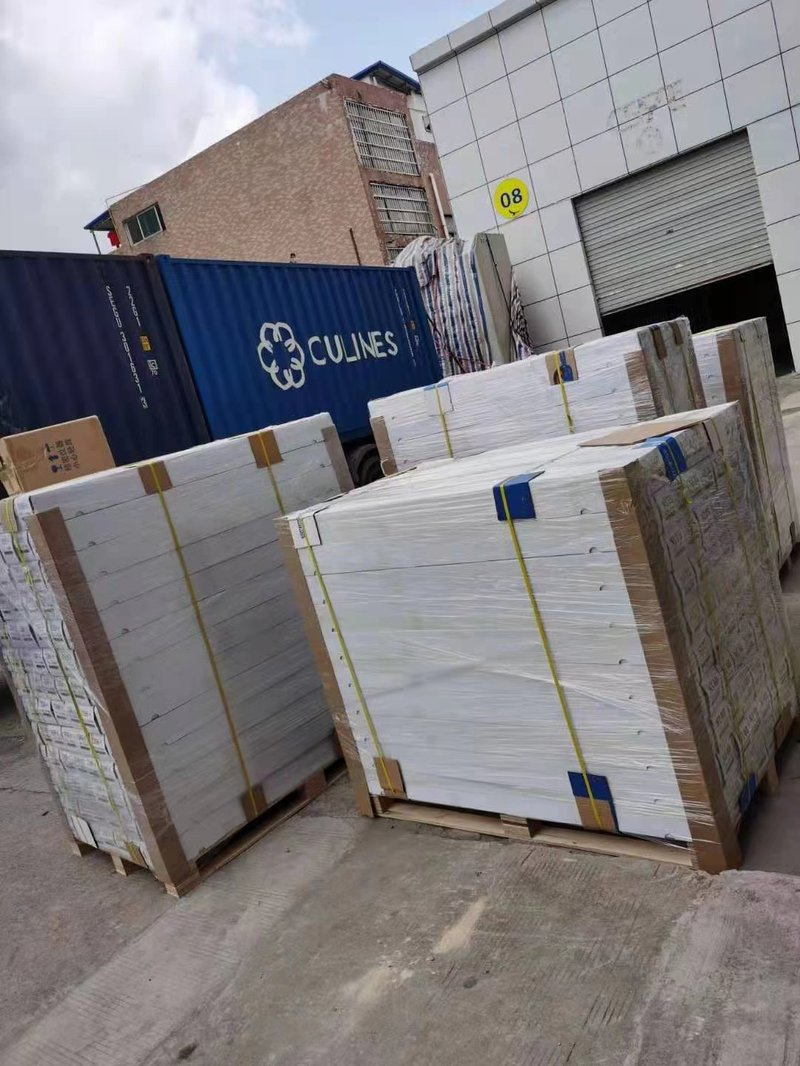
FOB Guangzhou covers the film, the export carton, the container loading, and Chinese export clearance. It stops at the ship’s rail.
Everything past that rail is yours: ocean freight, insurance, duty, port handling, broker fees, and the truck to your door. Most first-time importers budget for two of those six.
The other four are the ones that hurt. I list the worst of them in this guide to the six mistakes first-time importers make.
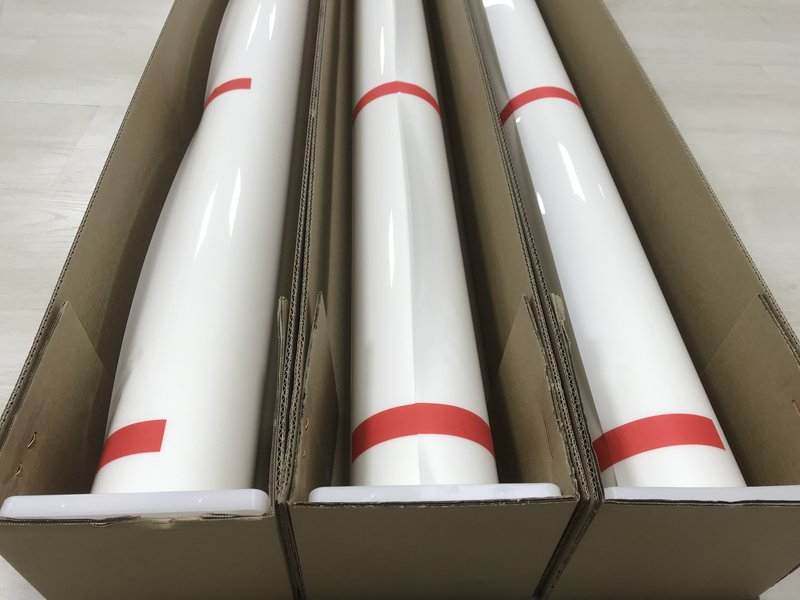
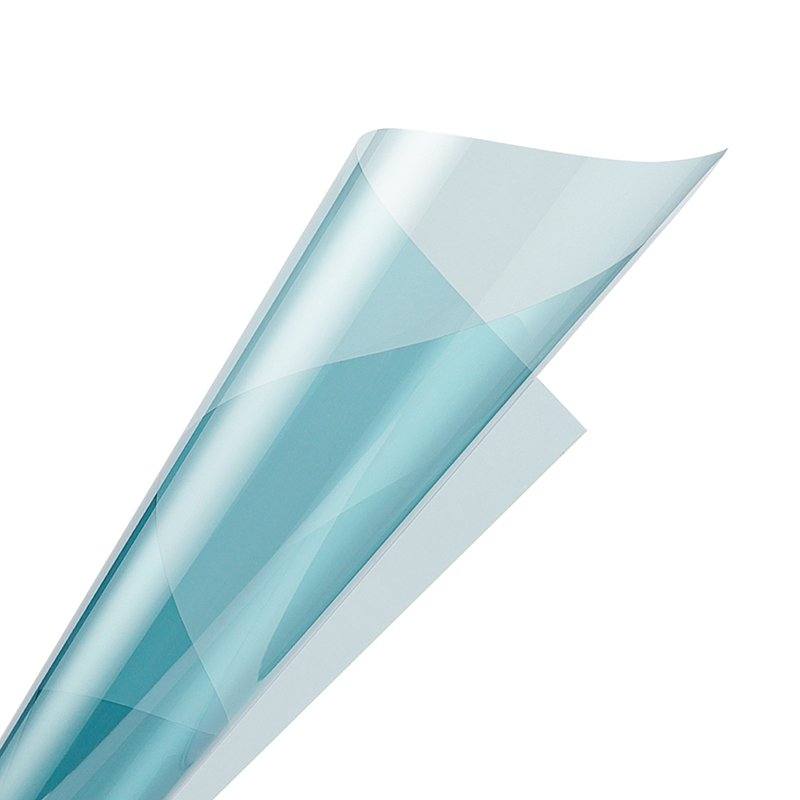
A 1.52m by 30m roll holds 45.6 square meters. Volume ceramic is about $2.40 a square meter ex-works, so call it $110 a roll.
Premium ceramic runs $4 to $6 a square meter, or $180 to $275 a roll. That spread matters, because duty is charged on it.
Freight in October 2026
Drewry’s World Container Index was $4,351 per 40ft on 8 October 2026. Shanghai to Los Angeles was $7,624, to New York $10,220, to Rotterdam $3,337.
A 20ft box books at 65% to 75% of the 40ft rate. Film is light cargo, so a 20ft is usually right: a thousand rolls weighs 8.5 tonnes.
Add $300 to $700 of origin charges for terminal handling, documents, export declaration, and stuffing. Those index rates are benchmarks, not your invoice.
Freight is also the only line that moves with the calendar. Asia-Europe rates fell thirteen straight weeks into October 2026, and carriers were trying to push them back up.
A buyer in Jeddah sent me two quotes last month. One was $14 a roll cheaper. It was EXW, so he paid loading and clearance himself. On FOB terms the gap fell to $3.
The Costs That Land After the Shipment
Import duty by market
Duty is the line that hurts in 2026. Two things decide it: the HS code and the customs value basis.
Window film normally lands under HS 3919.90, self-adhesive plastic film in rolls. Get that wrong and every number after it is wrong.
| Market | HS code | Duty rate | Duty basis + tax |
|---|---|---|---|
| United States | 3919.90.50 | 43.3% (China origin) | FOB value, no VAT |
| European Union | 3919.90.80 | 6.5% | CIF + 19-27% VAT |
| United Kingdom | 3919.90.80 | 6.0% | CIF + 20% VAT |
| Saudi Arabia / GCC | 3919.90 | 5.0% | CIF + 15% VAT |
| United Arab Emirates | 3919.90 | 5.0% | CIF + 5% VAT |
| Australia | 3919.90 | 5.0% | CIF + 10% GST |
| Brazil | 3919.90 | 14.4-16% | CIF + 17-19% ICMS |
| India | 3919.90 | 10-15% | CIF + 18% GST |
| Japan | 3919.90 | 3.8% | CIF + 10% consumption tax |
| Vietnam | 3919.90 | 18-22.5% | CIF + 10% VAT |
Read the last column carefully. The United States assesses duty on FOB value, so freight does not raise your duty.
The EU, UK, and Gulf assess on CIF. There, every dollar of freight carries duty and VAT on top of it.
China origin into the US is the painful case. Base duty is 5.8%, Section 301 adds 25%, and the forced-labor action adds 12.5%. That is 43.3% before a single fee.
Ask your broker to confirm the rate the week you book. These numbers move, and a two-month-old quote is worthless.
The arrival invoice nobody warns you about
In the US you also pay MPF at 0.3464% of value, capped at $634.62 per entry, plus HMF at 0.125%. ISF filing is $25 to $75 and a single-entry bond $50 to $275.
A broker charges $150 to $400 per entry. A CBP exam adds $300 to $1,000 and several days of storage.
At Jebel Ali, terminal handling is $180 to $250 per 40ft. Clearance runs AED 350 to 700 and inland trucking AED 600 to 1,200. Duty is 5%, VAT another 5%.
In the UK the CDS entry costs GBP 45 to 75, deferment GBP 25 to 45, and LCL devanning GBP 35 to 60 per cubic meter. Storage after five free days is GBP 35 to 85 a day.
None of these fees care how good your film is. They are charged by the container, by the entry, and by the day.
A Real Example: One Container to Miami
This is a shipment I costed in September 2026. One thousand rolls of XO ceramic, 1.52m by 30m, FOB Guangzhou at $110 a roll.
Line by line
| Line item | Basis | Amount (USD) | Share of landed |
|---|---|---|---|
| Film, 1,000 rolls | FOB Guangzhou, $110 per roll | 110,000 | 65.9% |
| Origin charges | THC, documents, export, stuffing | 575 | 0.3% |
| Ocean freight, 20ft | Shekou to Miami | 6,900 | 4.1% |
| Cargo insurance | 0.35% of CIF | 410 | 0.2% |
| Import duty | 43.3% of FOB value | 47,630 | 28.5% |
| MPF | 0.3464%, capped at $634.62 | 381 | 0.2% |
| HMF | 0.125% of value | 138 | 0.1% |
| ISF, broker, bond | Filing, entry, single bond | 370 | 0.2% |
| Drayage to warehouse | Port Miami to Hialeah | 550 | 0.3% |
| Total landed | Sum of the lines above | 166,954 | 100% |
| Per roll | 1,000 rolls | 167 | – |
| Per square meter | 45.6 sqm per roll | 3.66 | – |
Goods are $110,000 and duty is $47,630. Landed cost is $166,954, or $167 a roll and $3.66 a square meter.
Duty is 28.5% of the bill. Freight is 4.1%. Origin charges, broker, bond, and drayage together are under 1%.
That is the opposite of what most importers expect. On a full container, the tax is the cost, and the tax is the largest single part of your window film import cost. Logistics is noise.
If your supplier quotes you a landed cost, ask which duty rate he used. At 43.3%, one wrong HS digit is worth thousands on a single container.
A Miami distributor ran this math before his second order. He moved from all-ceramic to a 60/40 split of ceramic and IR. Same shelf price, eleven points more margin.
A Real Example: One Pallet to London
Now the other end. Thirty rolls, same film, LCL to a shop in Croydon. FOB value is $3,300.
Where the money goes on a small order
| Line item | Basis | Amount (USD) | Share of landed |
|---|---|---|---|
| Film, 30 rolls | FOB Guangzhou | 3,300 | 74.4% |
| LCL ocean freight | 1.5 CBM billed at $95 | 143 | 3.2% |
| Origin charges | Documents, CFS, export | 180 | 4.1% |
| Cargo insurance | 0.35% of CIF | 12 | 0.3% |
| UK duty | 6% of CIF value | 207 | 4.7% |
| UK entry + deferment | CDS entry 55 + deferment 35 (GBP) | 115 | 2.6% |
| Destination charges | THC, documents, CFS | 230 | 5.2% |
| Devanning + delivery | 75 handling + 120 haulage (GBP) | 251 | 5.6% |
| Total landed, ex-VAT | Sum of the lines above | 4,438 | 100% |
| Import VAT, reclaimable | 20% of CIF + duty | 732 | – |
| Per roll | 30 rolls | 148 | – |
| Per square meter | 45.6 sqm per roll | 3.25 | – |
Goods are $3,300, freight and fees $931, duty $207. Landed is $4,438, or $148 a roll and $3.25 a square meter.
Same film, different market. Miami pays $167 a roll, London pays $148. The gap is not freight, which was $6.90 against $4.77.
The gap is duty: $47.63 a roll in Miami against $6.90 in London. Everything else is noise by comparison.
Now watch the fee structure flip. On the container, non-duty costs were 5.6% of the bill. On the pallet they were 21%.
Duty follows value. Fees follow shipment count. That one sentence explains most pricing arguments I have with new importers.
VAT is the line you get back. UK import VAT is 20% on CIF plus duty, about $732 here. If you are not VAT-registered, add it to the bill.
Five Costs That Never Appear in a Quote
Bank charges and currency
A telegraphic transfer costs $25 to $50 plus a spread of 0.3% to 1%. A letter of credit costs 1% to 2% and ties up your credit line.
Currency moves more. A 2% swing on a $110,000 order is $2,200, more than drayage and broker combined.
Demurrage, detention, and storage
Free time at US ports is four to five days. The first tier runs $175 to $300 per container per day, so two weeks costs $2,600 to $3,200.
At Jebel Ali, demurrage is $80 to $180 a day for a 40ft. The fix is boring: send documents three days before arrival.
The quality reserve
Cheap film carries a second price. If 8% of rolls arrive with waves or edge lift, your cost per sellable roll rises 8%.
On a $110 roll that is $9. The $98 quote from the other factory is not cheaper at all.
This is why I ask for a pre-shipment inspection on the first order. It costs $300 to $600 and prices the risk before you wire the balance.
Under-invoicing is not a saving
Some suppliers offer to write a lower value so you pay less duty. Do not take that deal.
CBP can assess penalties up to four times the unpaid duty and seize the cargo. Your name is on the entry, not your supplier’s.
There is a legal version of that idea. It is covered in my guide to OEM versus white label window film.
Samples and dead stock
Budget $150 to $400 for samples and courier, plus a reserve for shades that do not sell. Most distributors carry 8% to 12% slow stock.
Your Landed Cost Formula
Your window film import cost equals FOB, plus origin charges, freight, insurance, duty, government fees, broker, bond, inland delivery, and bank charges.
Divide by rolls, then by 45.6 square meters. That per-square-meter window film import cost is the only number you can compare across suppliers.
Set a ceiling before you buy. Landed cost should sit at 55% to 60% of your wholesale price. Above 65%, one slow quarter eats the margin.
On the Miami container, $3.66 landed means you need $6.10 to hold a 40% gross margin. If your market will not pay that, the problem is the mix.
Run the same formula on a 40ft to Jebel Ali. Duty at 5% barely registers, so freight and fees decide your window film import cost. Different market, different lever.
Test two volumes before you commit, one pallet and one container. The answer is rarely the one you expect.
Frequently Asked Questions
Is FOB or CIF cheaper for me?
Neither. They move cost, not remove it. FOB shows you the real freight number, while CIF hides margin inside it. On CIF markets, CIF also inflates your duty base.
Can I legally reduce the 43% US duty?
Sometimes. Correct classification, duty drawback on re-exports, and Foreign Trade Zone storage all help. Undervaluing does not. Ask a licensed broker for a written view.
How much should I budget on top of FOB?
Add 50% to 55% for a US shipment in 2026. Add 20% to 25% for the EU, UK, or Gulf. Both figures already include duty and fees, and both are your real window film import cost.
Why is the final invoice higher than the quote?
Destination charges are billed by the agent at the other end, not the booking office. Ask for a door-to-door quote with every destination fee named in writing.
Does a bigger order always lower my cost per roll?
It lowers fees, never duty. On a pallet, fees were 21% of the bill. On a container, 5.6%. Duty stayed at its own rate either way.
What is the biggest mistake importers make?
Comparing FOB prices across suppliers instead of landed cost per square meter. Two quotes $14 apart can reverse completely after duty, and that is where your window film import cost per square meter separates a profit from a loss.
Let Me Cost Your Next Shipment
If you want the exact landed number for your port, send me the city, the volume, and the film type.
I will send back a costed sheet within 24 hours, using this month’s rates and your HS code.
If you want to compare factories first, start with the wholesale window film directory.
For Gulf buyers, XO nano ceramic and NK nano ceramic handle the heat and the 5% duty structure best.
For South America, IR nano ceramic and DD nano carbon hold the volume price point.
For Southeast Asia, the full range from HP carbon to SF nano ceramic.
Start with a sample roll. Measure it, then run the formula. You will never compare FOB prices again.