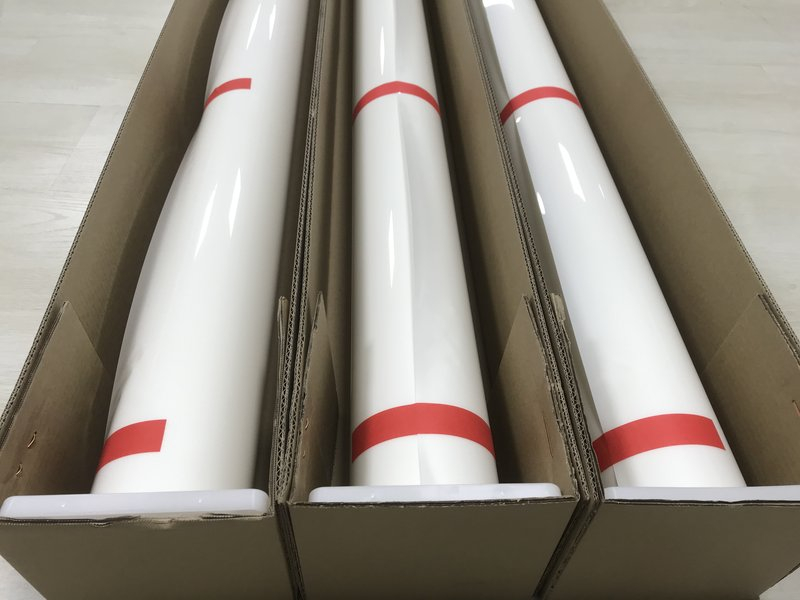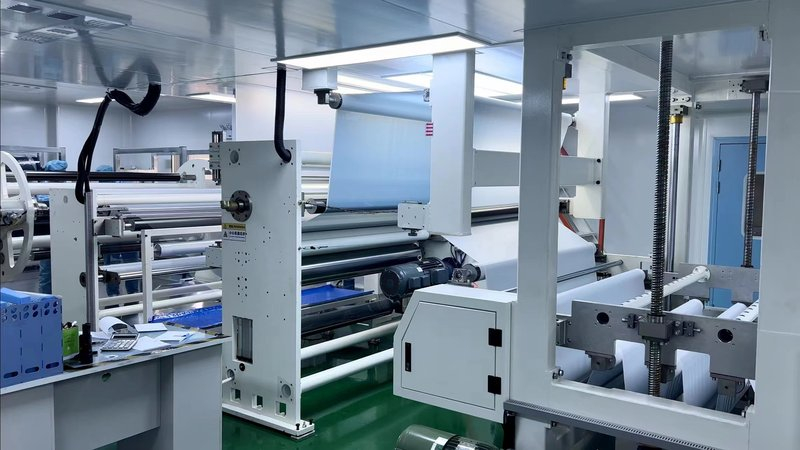

Two importers walk out of the same factory in Dongguan. One carries film in a box that says KSB. The other carries the same film in a box with his own shop name on it. Same coating line. Same roll. Two very different businesses.
I handle export sales at KSB Window Film in Dongguan. Every month I hear this question from buyers in Jeddah, Lima, Jakarta, and Lagos: should I sell your brand, or put my own name on it? The answer depends on one number — how many rolls you already sell. Here is the honest breakdown, including the part where white label costs you money for nothing.
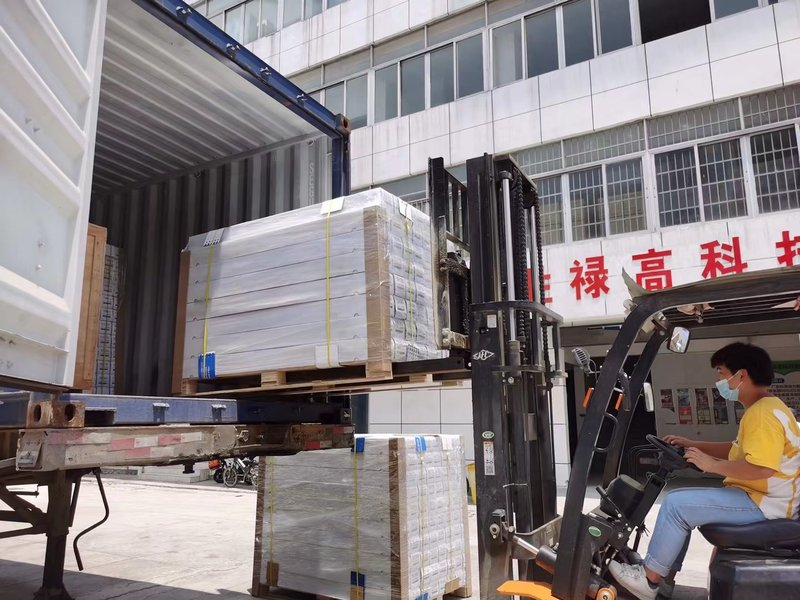
What OEM Actually Means in the Window Film World
Drop the car industry definition. In window film, OEM means you buy film that already carries a manufacturer’s brand. You are a distributor, and the name on the box belongs to someone else.
Say you order 300 rolls of our IR series. The core labels, the cartons, and the warranty cards all say KSB. You sell that film to tint shops as KSB film. Your job is to stock it and sell it. You design nothing.
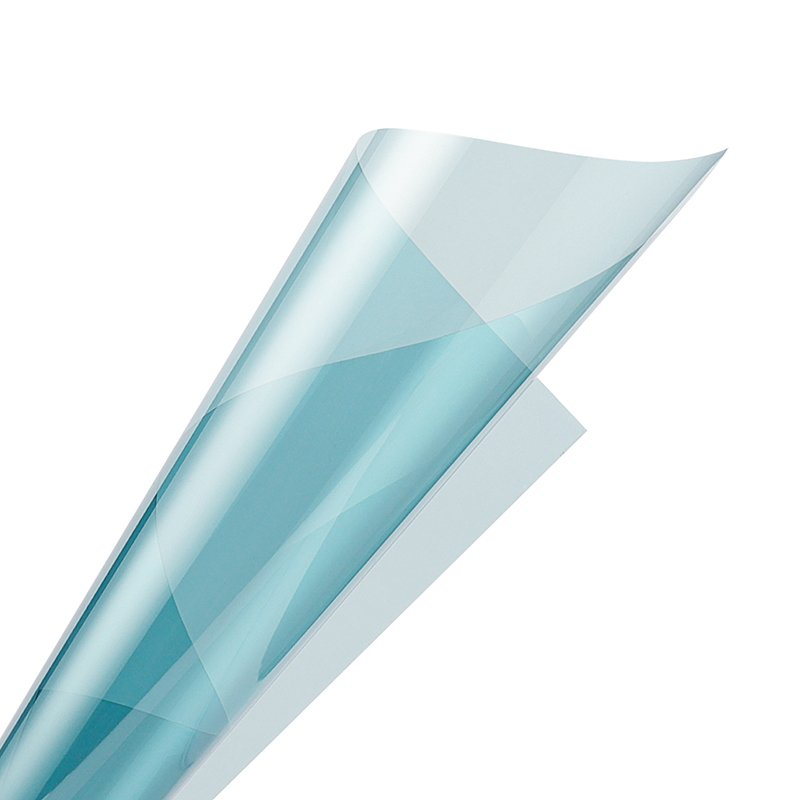
What you get: the lowest minimum order, zero setup cost, and a brand that installers already talk about. Our NK series gets compared by US installers to LLumar IRX. That comparison opens shop doors on day one, and you cannot buy that trust with packaging.
What you give up: shops can find the same film from another distributor, so your price becomes your only difference. Before you commit, make sure you are dealing with a real factory. Our guide on how to find reliable window film manufacturers in China covers the checks.
Real example. A distributor in Jeddah started with 150 rolls, split between XO and NK. He sold on performance, not on his name. XO blocks up to 98% of heat, and in a Gulf summer that number closes a sale on its own. Two years later he had 60 shops on his list. Then he branded.
White Label: Your Brand on Someone Else’s Product
White label means the same film with your name on it. We print your logo on the roll core, the carton, and the warranty card. You get a brand without owning a coating line.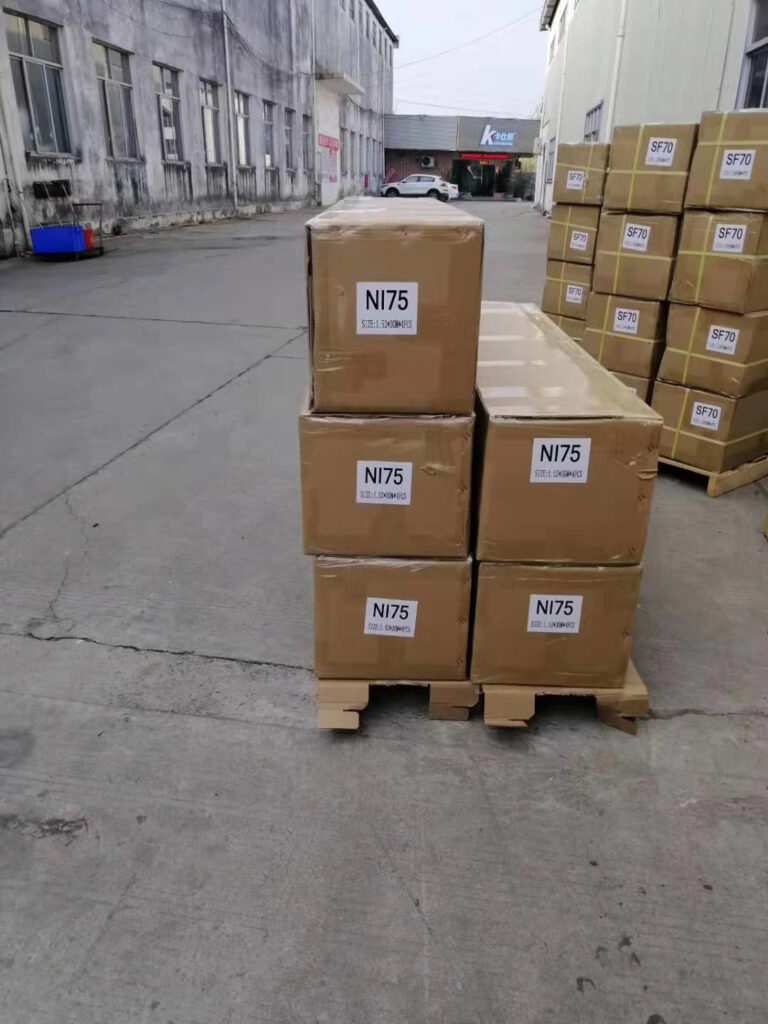
This is the step most importers either rush or skip. Both mistakes cost money.
What changes for your customer: a shop owner sees “Desert Shield Film” on the box instead of KSB. He cannot Google your price. He cannot call another distributor in your city and undercut you.
What it takes: a print run for cartons and core labels. Most factories set the minimum at 300-500 rolls per series. Some accept 200 rolls if you take a shared box size.
What it costs: usually $3-$6 per roll on top of the film price. If your ceramic roll lands at $95, plan on about $100. One-time print setup runs $300-$1,200, depending on box size and colors. Timeline is 3-5 weeks for setup, then your normal production time.
The honest warning: your brand is worth nothing on day one. White label only pays if shops already buy from you. With 20 active shops, a branded box makes you look like a supplier instead of a middleman. With 2 shops, you just paid extra for cardboard.
The Pros and Cons of Each — With Real Profit Numbers
Numbers make this decision easy. Here is the same 300-roll order run through three models. Film size is 30 in x 100 ft throughout.
OEM. You buy 300 rolls of IR series at $95 FOB Guangzhou. IR is pure ceramic with 82% heat rejection, and it sells at a mid-market price. Freight, duty, and clearance push landed cost to about $125. You sell to shops at $165. That is $40 gross profit per roll, or $12,000 on the order. No setup cost, no design work.
The downside: two other importers in your city may sell the exact same film. When one drops to $155, you either match or lose the shop.
White label. Same 300 rolls of IR. Add custom cartons and core labels at $4 per roll, so $99 FOB. Landed cost about $130. Now you sell at $185, because shops quote “your brand” to their customers instead of a film anyone can buy. That is $55 per roll, or $16,500 on the same container. $4,500 more than OEM.
The downside: $300-$1,200 in print setup you cannot recover if the brand flops. And you must move 300 rolls before the design starts to look dated.
Private label. You want your own shade and your own spec — say a 20% VLT nano-ceramic with a warmer tone for your market. Setup and a trial coating run cost $1,500-$4,000. Minimums jump to 500-1,000 rolls per shade, and the timeline runs 8-14 weeks.
The trap: your film cost drops because you buy deeper, but you now hold inventory for a product no customer has tested. At $210 you earn $80 per roll, yet you need demand for 500 rolls before the first one ships. Private label suits buyers already moving 500+ rolls a year in one series. For everyone else, it is a warehouse bill.
One more factor: packaging is a percentage of film cost, so it hurts cheap film more. Our K series is a simple 2-ply color-stable film that lands around $45. Add $4 of branding and you raised cost by 9% to sell to a market that buys on price. On a $95 ceramic roll, that same $4 is 4%. White label works best on premium film, where a branded box supports a higher price.
Which Option Works Better When You’re Just Starting
Start with OEM. Not because it is cheaper, but because you do not yet know what your market buys.
Reason one: you need to test the range. OEM lets you bring in XO, NK, SF, IR, DD, and K side by side with no print cost. Six months of selling tells you more than any market report.
Reason two: the factory’s brand carries the trust problem for you. Our SF series holds 92-95% heat rejection with a slight metal content that gives it a deeper look. Our DD carbon film is the one high-volume shops and fleet accounts ask for, because it installs fast and carries a 5-year warranty. Those are real selling points, and they work before you have a name.
Reason three: your money goes into inventory instead of packaging. On a first order, cash is your scarcest resource.
When to switch: after two or three repeat orders, once you know your top two series by sell-through. Then white label those two. Do not brand all seven at once.
Regional notes from our own order book. Gulf buyers lean on XO and NK — heat rejection of 95-98% is what closes deals in Riyadh and Dubai. South America does well with IR and DD, where ceramic performance at a sharp price beats premium lines. Southeast Asia buys across the full range, which makes OEM trial orders the right first move there.
One warning about starting with white label. An importer in Lagos printed 1,000 cartons for a ceramic series before he tested anything. The film was good. His market wanted a cheaper carbon product. He sold the ceramic slowly and threw away most of the cartons. That was a $4,000 lesson in sequence.
How to Switch from OEM to Your Own Brand Later
The switch is easier than most buyers expect. You do not change factories. You change packaging. Five steps.
Step 1: pick your top two series by sell-through, not by what you like. Your favorite film is rarely your best seller.
Step 2: ask for a written 12-month price hold before you print. Resin prices move. A branded roll you cannot restock at the same price is worse than no brand at all. This is one of the questions to ask a window film supplier before placing an order, and it matters most on the order that carries your name.
Step 3: brand one series first. Print 300 rolls, sell them, then do the second. Two series in one print run doubles your risk for no extra reward.
Step 4: register the name in your own country before the print run. Trademarks take 6-18 months in most markets. Printing a name you cannot protect wastes the whole exercise.
Step 5: keep one OEM line running. Your branded line is your margin. Your OEM line is your volume, and your fallback if the brand needs a redesign.
Real timeline from buyers we work with: OEM order one at month 0-2. Repeat OEM order at month 3-5. White label on the top series at month 6-9. Second series or first private label at month 10-18. Buyers who follow this order rarely go back. Buyers who white label on order one usually reprint within a year.
If your first order is still ahead of you, settle the order size before anything else. Our breakdown of the minimum order quantity for window film from China shows what each series really requires.
FAQ: OEM, White Label, and Private Label Window Film
What is the difference between OEM, white label, and private label window film?
OEM means you resell film under the manufacturer’s brand. White label means the same film with your logo on the packaging. Private label means a custom product built to your own spec.
What is the minimum order for custom branded window film?
Most factories ask 300-500 rolls per series for custom cartons and core labels. Some accept 200 rolls with a shared box size. Private label usually starts at 500-1,000 rolls per shade.
How much does white label packaging add to my cost?
Plan on $3-$6 per roll for cartons and core labels, plus $300-$1,200 in one-time print setup.
Can I put my logo on film without changing the product?
Yes. That is exactly what white label is. The film inside is unchanged, and you keep the same performance and warranty terms.
How long does it take to get my own branded window film?
3-5 weeks for print setup plus normal production time on the first run. A private label order with a custom spec runs 8-14 weeks.
Should I start with OEM or white label?
Start with OEM if you have not tested your market yet. Move to white label once you have two proven series and repeat customers.
Do I own the film formula with white label?
No. You own the brand and the packaging. The formula stays with the factory unless you move to private label and pay for development.
Start With the Film, Not the Box
Pick the film your market actually buys. Then decide how much brand you want around it. Buyers who do it in that order build something. Buyers who do it backwards pay for packaging twice.
If you are not sure yet, start with a sample set. Test XO, NK, SF, IR, DD, and K in your own shop, on your own customers’ cars, before you commit to a container or a print run.
Tell us your market and your monthly roll volume. We will tell you honestly whether OEM or white label fits you better right now — even when the cheaper answer earns us less. Send a message to KSB Window Film for a quote and a sample kit.