
Half the buyers who fly to China to visit a window film factory go home with photos of a showroom. The supplier was real. The factory was not theirs.
I handle export sales at KSB Window Film in Guangzhou. I have hosted buyers from Jeddah, Lima, Lagos and Melbourne. I have also watched a rival’s customer tour a borrowed plant in Shantou, then wire a 30% deposit to a personal account the next morning.
Here is the trip plan I send buyers before they fly to visit a window film factory in China. When to come, what to look at, and the four checks that separate a factory from an office with good lighting.
Planning Your Trip: When to Go and What to Bring
Timing decides whether you see a running plant or an empty one. Two things control the calendar in China: Chinese New Year and the Canton Fair.
Best Times to Visit (Avoid Chinese New Year)
Chinese New Year 2027 lands on February 6. The official holiday runs about February 4 to 12. That is not the real window.
Production thins around January 15 as workers take early leave. After the holiday, lines run short-staffed until mid-March, because a share of the workforce never comes back. Plan for six to eight weeks of soft capacity, not nine days.
Book your visit for late March through mid-June, or late August through mid-October. Both windows have full crews and normal shipping schedules. Also dodge October 1 to 7 for National Day, and the first week of May for Labour Day.
Want to pair the trip with a trade show? The 140th Canton Fair runs October 15 to 19, 2026. Phase 2 follows October 23 to 27, then Phase 3 October 31 to November 4. Automotive parts sit in Phase 1. Building materials sit in Phase 2. Pick your halls before you land.
Book factory days around the fair, not during it. Hotel rates jump, and your supplier’s sales manager will be in a booth instead of on the line with you.
Interpreter Tips That Save You a Day
Your supplier’s export rep speaks English. The line supervisor does not. That gap is where the useful answers live.
Bring your own interpreter if you want to question the operators. A local one in Guangzhou costs about RMB 800 to 1,200 a day. That is cheaper than one wasted trip.
Brief them the night before on film vocabulary. Substrate, sputter target, adhesive, release liner and slit width do not translate cleanly in a general app.
Set up your phone before you fly. Google, WhatsApp and Instagram are blocked on mainland networks. WeChat works, and it is how every Chinese factory communicates. Load Alipay or WeChat Pay so an international card works for hotels and trains.
One more thing. Ask for the address in Chinese characters and show that text to your taxi driver. A Guangzhou business park can have four gates and two buildings with almost the same name.
What to Look at During the Factory Tour
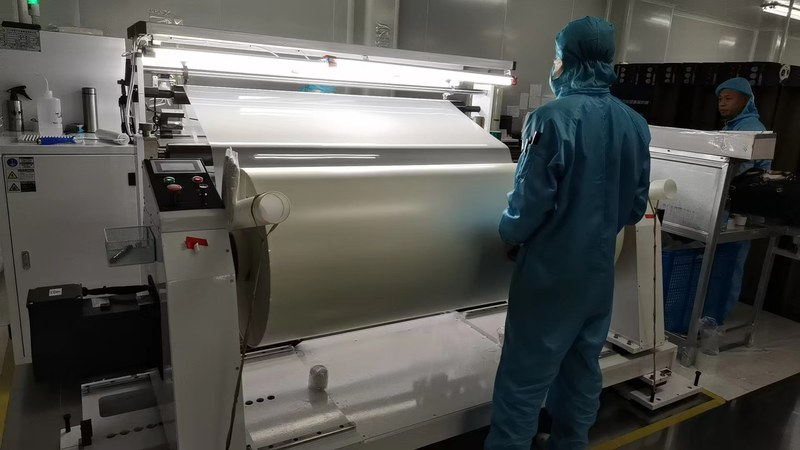
Skip the meeting room first. Ask to start on the floor and do the presentation after. If the floor comes second, you are on a sales tour.
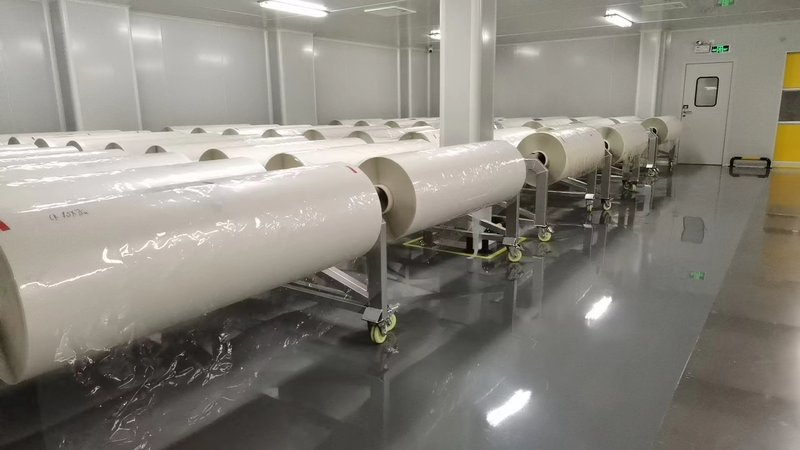
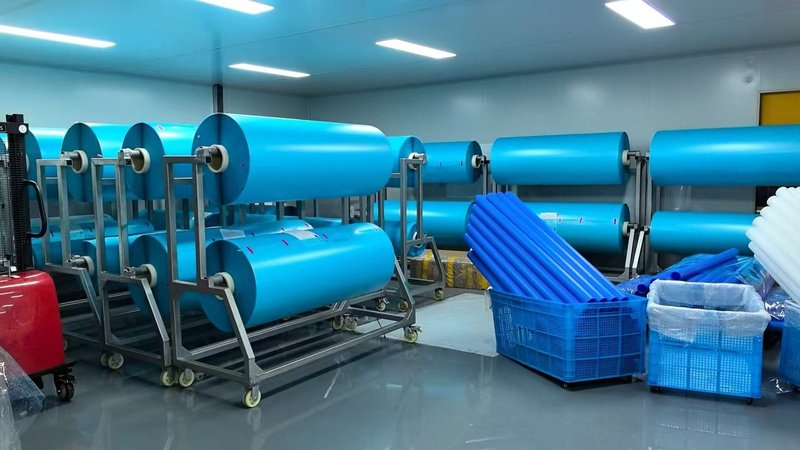
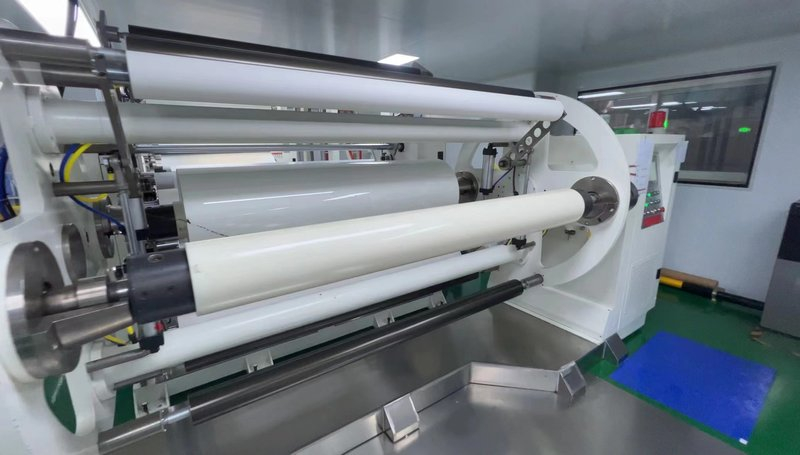
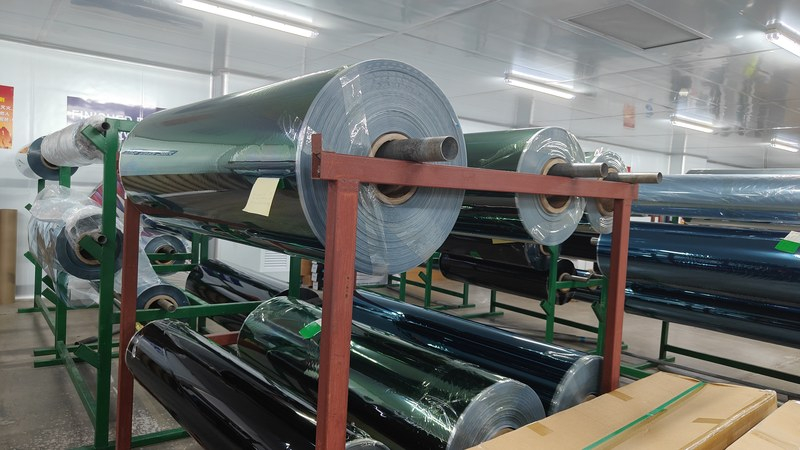
Walk the process in order. Raw PET rolls in. Coating. Laminating. Slitting. Packing. A real plant flows one direction, with no truck ride in the middle.
Factory Tour Checklist
Ask for eight things, and photograph each one. Raw PET roll inventory, showing the film supply behind the claimed output. The coating line running, not “down for maintenance today”. The sputter targets inside the chamber, where used material shows wear rings. The clean room rating, because serious plants run Class 1,000 (ISO 7) with Class 100 (ISO 5) over the coating core. Batch numbers on finished rolls. A QC lab with a spectrophotometer, not a handheld meter. Weathering chambers, either QUV or xenon arc. And the headcount on the floor, to compare later with the social insurance figure on the license.
The Equipment That Separates Good Factories from Bad
Two rooms decide your film quality. The coating hall and the lab.
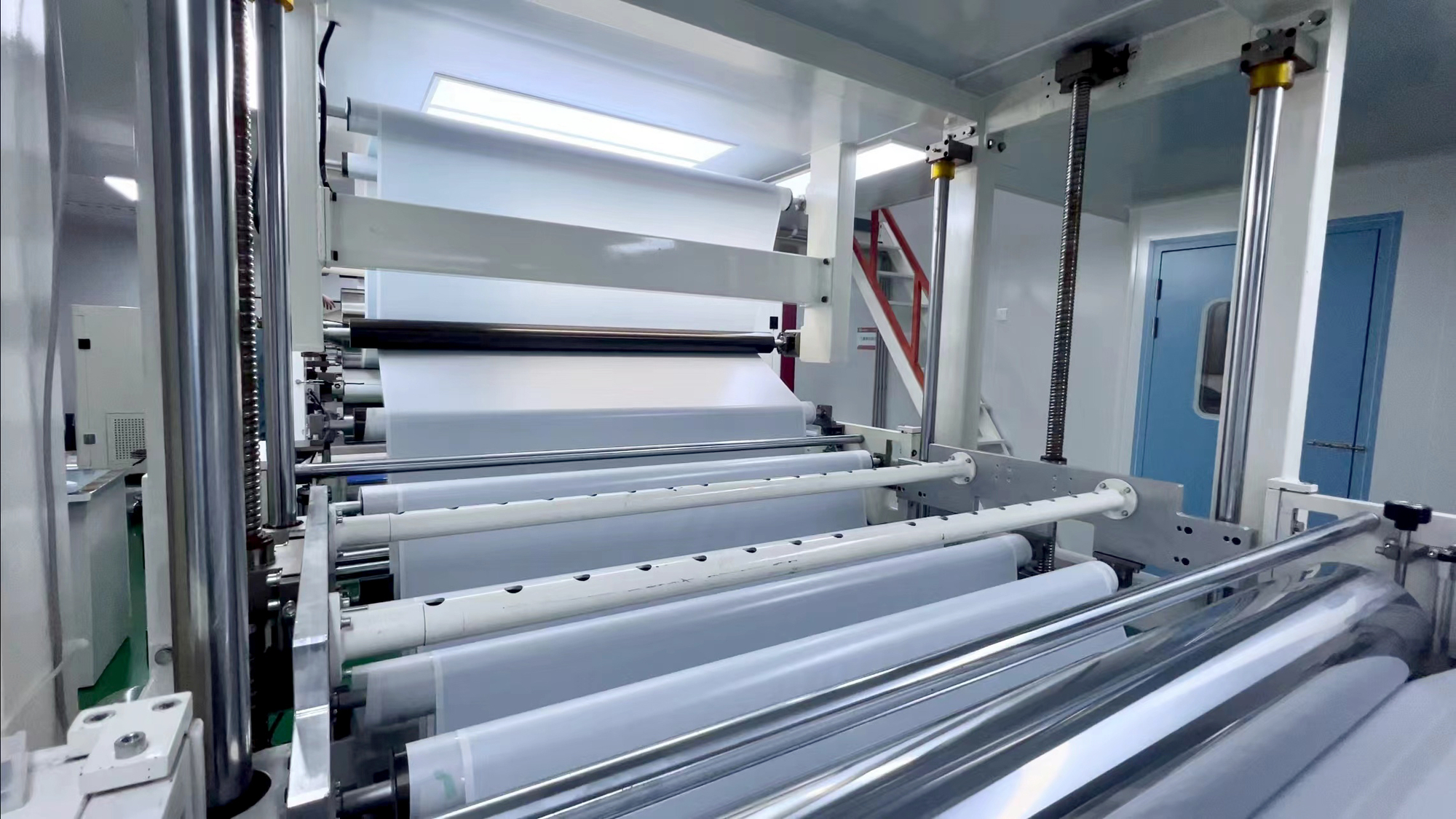
Coating Machine Inspection
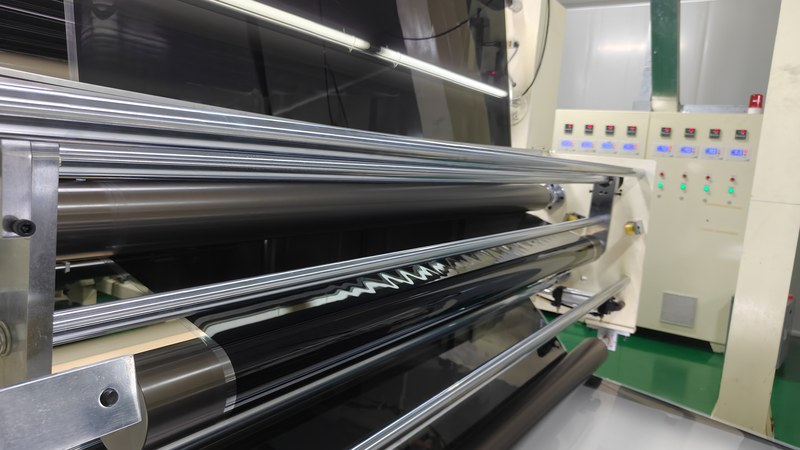
Look for magnetron sputtering. It is how ceramic and metal film gets its heat rejection layer, and it is the most expensive asset in the building.
Count the chambers and the cathodes. A single-chamber machine with one planar cathode makes simple dyed and metal film. Multi-chamber lines with rotating cathodes make ceramic film with even color across a 1.52 meter web.
Ask what speed the line runs. Roll-to-roll coating sits between 3 and 12 meters per minute, and film thickness should hold within a few nanometers. If nobody on the floor knows that number, the line is not theirs to manage.
Then ask the question that ends most sales pitches. How many meters did this line run last month, and can I see the production log?
QC Lab Evaluation
A factory without a real lab tests your order on your customers.
Look for four instruments. A UV-VIS-NIR spectrophotometer measuring transmittance from 250 to 2,500 nanometers, the range ISO 9050 and EN 410 both use. A haze meter, because low-angle haze makes cheap film look cloudy at night. A weathering chamber, because film that fades in 18 months in Riyadh costs you the account. And a peel tester, because film that lifts off a rear window in August becomes a warranty claim.
We run these same checks on our XO, NK and SF ceramic lines, and we keep the raw data. When a buyer from Dubai asks why our XO reaches 98% infrared rejection, we show the curve instead of the brochure.
How to Tell If They’re Showing You a Real Production Line
Four checks. They work even if you never leave the meeting room.
They also work before you book a flight. Our guide on how to find reliable window film manufacturers in China walks through the same screening by email and video call.
One: the address. Put it into a satellite map before you arrive. A real factory shows a long rectangular roof, ventilation stacks, loading docks and parked trucks. A residential tower or a serviced office park means you are visiting a sales office.
Two: the business license. Ask for the license itself, not a screenshot. Read the 18-digit Unified Social Credit Code, then check it on gsxt.gov.cn, China’s free government company registry. It is in Chinese, so use browser translation. Confirm three fields. The status reads active. The scope includes production or manufacturing. And the registered address matches the plant you are standing in. A scope listing only sales or import-export means a trading company.
Here is a faster version. Every Chinese business license carries a QR code in the bottom right corner. Scan it. It should open that company’s record on gsxt.gov.cn. I have seen photoshopped licenses where the body was edited and the QR code still pointed at a different company.
Three: the social insurance headcount. The registry lists how many employees the company covers. Compare it with the people you counted on the floor. A plant claiming 300 workers against 40 on the insurance list is a trader with a rented hall.
Four: the payment instruction. This is where the real money sits. The bank account name must match the registered company name exactly, and it must be a corporate account in China. A request to pay a personal account, or a Hong Kong entity under a different name, is the strongest fraud signal in this business.
Trading companies are not automatically a problem. For small mixed orders they are often the better partner. The problem is a trader charging factory prices while claiming to own the machines.
What to Do After the Visit (Follow-Up That Gets Results)
The visit is not the close. The two weeks after it are.
Send a written recap within 48 hours. List what you saw: the line count, the meters per month, the clean room class. Then list what you still need. That email shows you were paying attention, and it gives the factory a reason to send the documents.
Ask for three documents before you talk price. The business license with the credit code. A test report from an ISO/IEC 17025 accredited lab such as SGS or Intertek, naming your product and the reference glass. And the ISO 9001 certificate number. Our guide on which window film certifications actually matter shows how to verify each one in minutes.
Then run the samples. Take the rolls home, install them on a test vehicle, and leave one on a dashboard for a summer. Our guide on how to test window film quality before buying in bulk covers the full routine. A factory that resists a sample order is telling you something.
Post-Visit Negotiation Strategy
Now you negotiate, and you negotiate from strength.
Lead with volume across a mix, not one low price. Start with 100 rolls of K at the entry level, plus 60 rolls of DD carbon and 40 rolls of IR ceramic. That gives the factory a real run. It gives you three price points to sell. And it shows whether they make all three, or buy one in.
Use a 30/70 split. Thirty percent deposit to start production, seventy percent after an independent pre-shipment inspection passes at AQL 2.5 against your signed golden sample. Keep the larger payment tied to inspected goods.
Ask one last question before you sign. Who owns the coating machine? If the answer is a parent company or a partner plant, get that entity named in the contract. The company that makes the film should be the one that takes your money.
FAQ: Visiting a Window Film Factory in China
Do I need a visa to visit a window film factory in China?
Probably not. China’s visa-free policy covers 50 countries for stays up to 30 days, including the UK, Germany, France, Australia, Japan, Korea, Saudi Arabia, Kuwait, Brazil and Canada. Business visits count. US, Mexican and Indian passport holders still need a visa.
When is the best month to visit a window film factory?
Late March to mid-June, or late August to mid-October. Avoid mid-January to mid-March around Chinese New Year, and the first week of October.
What is the biggest red flag during a factory visit?
A bank account name that does not match the registered company name on the business license.
Can I visit a Chinese factory without speaking Chinese?
Yes. Your supplier’s export rep handles the meeting. Hire a local interpreter for about RMB 800 to 1,200 a day to question the line operators.
Is it bad if my supplier is a trading company?
No, as long as they say so. The problem is a trader charging factory prices while claiming to own the machines.
How do I check a factory before I book a flight?
Look up the license number on gsxt.gov.cn, check the address on a satellite map, and ask for a live video walkthrough of the coating line.
Come See the Line Yourself (CTA)
Reading about a coating hall is not the same as standing in one.
We are in Guangzhou, and our plant runs ceramic film on magnetron sputtering lines. Come and look. We will show you the raw PET stock, the targets, the slitting floor and the lab bench where the transmittance curve is measured.
If a trip is too far this quarter, start smaller. Ask for a sample kit with XO, NK, SF, IR, DD and K, plus the test reports behind each one. Install them in your shop and leave one on a dashboard.
Send a message to KSB Window Film and tell us which market you sell into. Gulf buyers, we will point you at XO and NK. South America, IR and DD. Southeast Asia, the full line. We will send the license, the certificate numbers and the report for the product you care about. Check all of it before you book a flight.