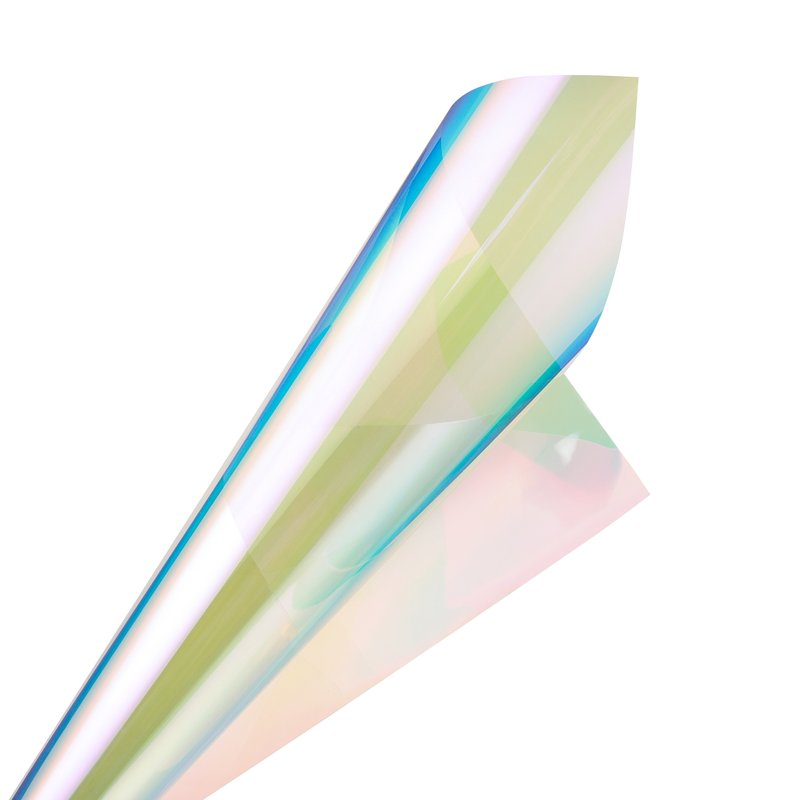

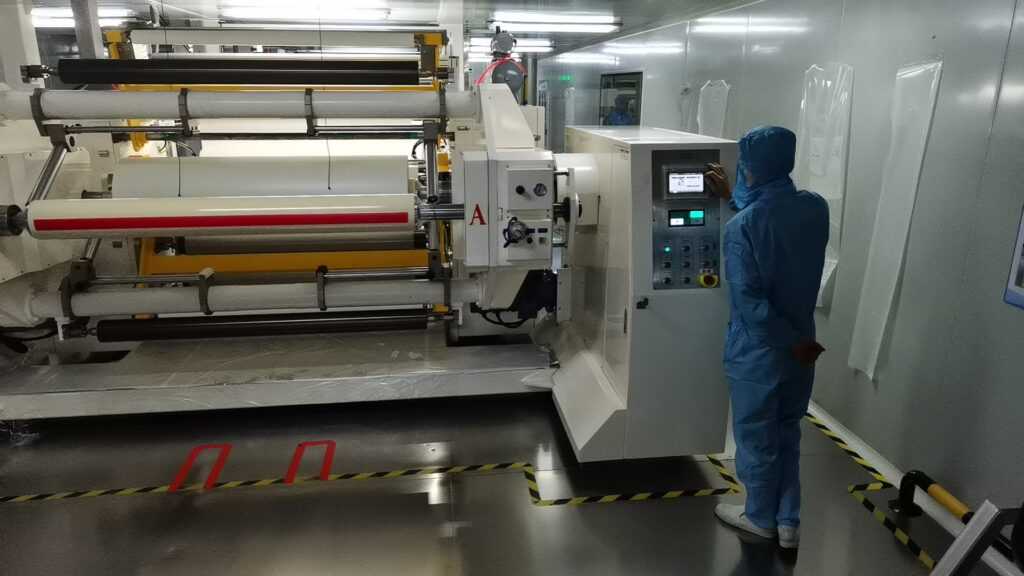
Three rolls of film sit on a table at the Canton Fair. They look almost the same. The prices are $95, $320 and $780.
A buyer from Lagos picked the $95 roll last April. Six months later his installers were re-doing windows for free. The film had gone purple and bubbled at the edges. He lost the shop account.
Dyed, carbon and ceramic window tint are not three grades of one product. They are three different technologies, and each one fits a different customer. Get the mix right and you build repeat orders. Get it wrong and you pay for the returns.
Here is how to tell dyed, carbon and ceramic window tint apart, what they really cost, and how to stock the right mix for your market.
Side-by-Side Comparison (So You Can Show Customers)
Start with what your customer actually sees and feels.
A dyed film is polyester soaked in dye. It looks glossy and deep black. A carbon film carries carbon particles, so it dries to a matte finish. A ceramic film holds nano ceramic particles, and it looks neutral and clean, almost like factory glass.
Heat splits them further apart. Dyed film blocks 15% to 35% of total solar energy. Carbon reaches 35% to 55%. Ceramic runs 50% to 70%, and top nano ceramic grades go higher.
UV is the one place they tie. All three hit 99% when they are made properly. UV absorbers are cheap, so even a budget dyed film can print 99% on the box. Do not let that number close the sale for you.
Signal interference is another tie, as long as none of them contain metal. Metalized film is the one that kills GPS and toll transponders. Dyed, carbon and ceramic are all safe.
| Feature | Dyed | Carbon | Ceramic |
|---|---|---|---|
| IR rejection | 5-30% | 40-60% | 80-99% |
| TSER | 15-35% | 35-55% | 50-70% |
| UV rejection | 99% (fades) | 99% (stable) | 99% (stable) |
| Lifespan | 3-5 years | 7-10 years | 10-15 years |
| Signal safe | Yes | Yes | Yes |
| Wholesale / roll | $90-200 | $250-450 | $500-900 |
How to Tell Them Apart in 30 Seconds
You do not need a lab to spot the difference.
Peel back a corner and look at the adhesive. Dyed film has color in the glue. Carbon film shows dark grey. Ceramic film is nearly clear.
Hold a sample against the light. Carbon looks flat and matte. Ceramic stays clear and does not turn milky at an angle.
Then run the heat lamp test. Put a 250W lamp 12 inches from a piece of glass, once bare and once filmed. Read the temperature after five minutes. Dyed drops it a few degrees. Ceramic drops it by 15 to 20 degrees. Our guide on how to test window film quality before buying in bulk walks through the full routine.
What the Color Says About the Film
Customers buy with their eyes, so the look decides the price they accept.
Dyed film is the shiniest of the three. That glossy black still sells where people want the tint to be obvious.
Carbon gives a matte black that reads like factory glass. Installers in the US and Europe ask for it because it photographs well.
Ceramic is the most neutral. At 70% VLT it is nearly invisible from outside, which is what a buyer with a new SUV wants.
One warning. Cheap film labeled ceramic often looks like the real thing. Ask for the spectral chart, not a photo.
Heat Rejection: The Numbers Don’t Lie
This is where most buyers get burned, and it has nothing to do with the film itself.
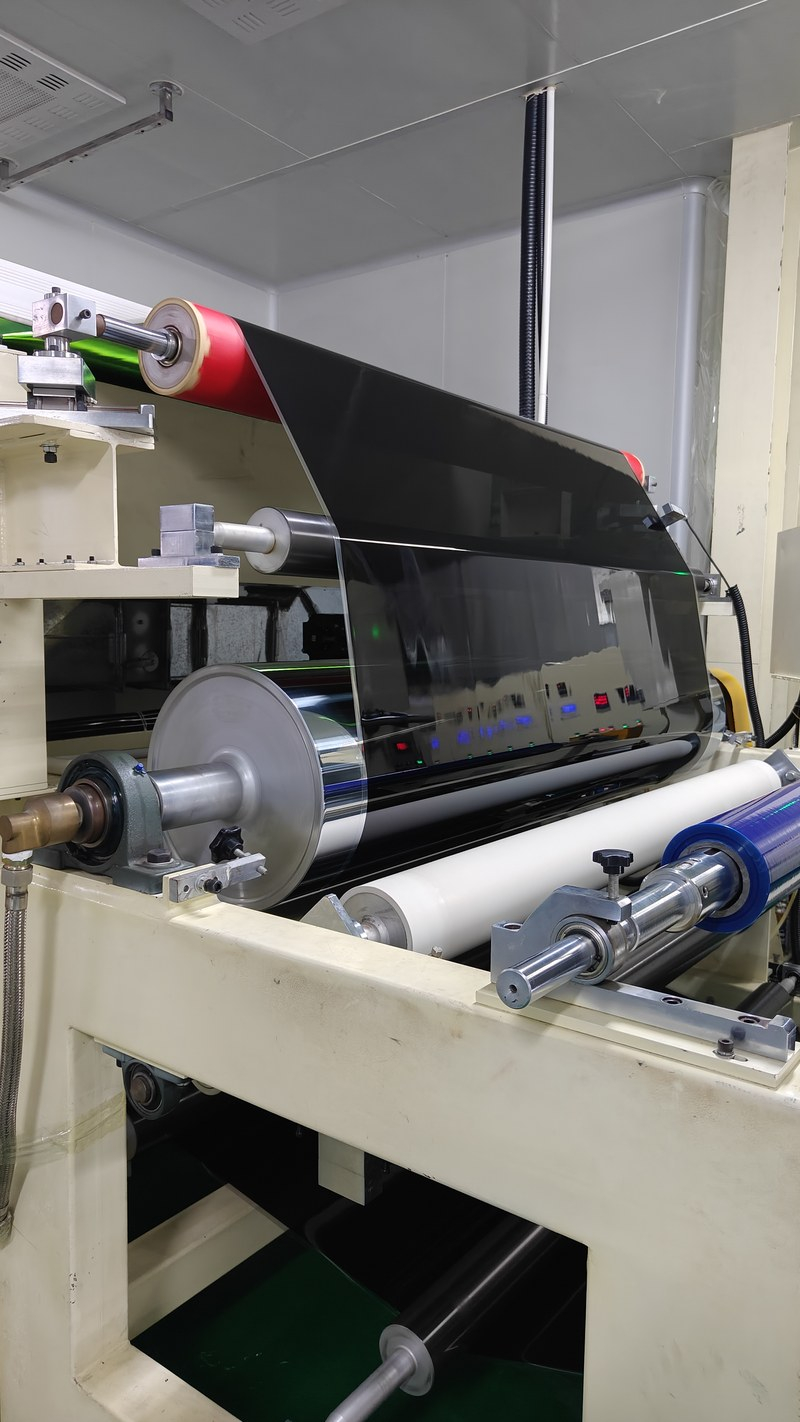
The problem is the word IRR. There is no single standard for measuring it. A factory can test at one wavelength, often 950nm, and report 98% infrared rejection. Ceramic particles peak near that wavelength, so the number is easy to hit.
That same film might reject only 45% of total solar energy. Both numbers are real. They measure different things.
The honest metric is TSER, or Total Solar Energy Rejection. It covers UV, visible light and infrared together, measured on film applied to glass. It decides how hot a parked car gets.
Why “99% IR Rejection” Can Mean Almost Nothing
Run one check before you believe any infrared claim.
Ask the supplier for the spectral curve from 780nm to 2,500nm. That range covers the full near-infrared band. Weighted against the solar spectrum, it gives you IRER, infrared energy rejection. IRER also counts heat the film absorbs and later re-radiates into the cabin.
A consistent film reads like this: IRER near 75% and TSER near 60%. A film claiming 98% IRR with 45% TSER is quoting one point on a curve.
Compare at the same VLT too. A 5% VLT dyed film and a 70% VLT ceramic film are not in the same race. If you want to read a window film spec sheet without getting fooled, we broke the method down here.
The Temperature Test Your Customers Can Feel
Numbers sell to you. Temperature sells to your customer.
At 100 degrees outside, a car with no tint reaches 150 degrees inside after an hour in the sun. Dyed film at 35% VLT brings it to about 140. Carbon lands near 125. Ceramic sits around 110.
That is a 40 degree gap between dyed and ceramic. Park two demo cars on your lot with a thermometer in each and let the customer read both. It closes faster than any brochure.
How Long Each Type Lasts Before It Needs Replacing
Warranty claims are where thin margins die. Know the timeline before you stock.
Dyed film fades in three to five years. UV breaks down the organic dye, the film shifts purple, and the adhesive softens in summer heat. Every failure is a free re-do for your installer.
Carbon holds seven to ten years. Carbon particles do not break down the way dye does, so the color stays. That is why shops call it the workhorse.
Ceramic runs ten to fifteen years and often carries a manufacturer lifetime warranty. It is the only one of the three you can sell with a no-comeback promise. Our guide to the different types of car window tint and which one lasts longest covers the rest.
Fade Timeline by Type
Think in re-do costs, not just roll price.
If a dyed job fails in year three and you replace it free, you paid twice for one sale. At $180 a car with a 20% failure rate over three years, most of your margin is gone.
Carbon cuts that risk hard. Ceramic removes it. A customer paying $500 today is often cheaper for you than one paying $180 three times.
Which Type Your Customers Will Actually Pay More For
Here is the math that changes how you buy.
A 40 inch by 100 foot roll covers about 31 square meters. On side and rear glass that is roughly nine cars, allowing for waste. Prices below are wholesale, per roll.
- Dyed: $90 to $200 a roll. Materials run $10 to $22 a car. US retail is $100 to $275.
- Carbon: $250 to $450 a roll. Materials $28 to $50 a car. Retail $150 to $525.
- Ceramic: $500 to $900 a roll. Materials $55 to $100 a car. Retail $280 to $1,000.
Now run one roll of each. Dyed at $150 cost and $180 retail returns about $1,470 across nine cars. Carbon at $350 and $280 returns about $2,170. Ceramic at $700 and $500 returns about $3,800.
Ceramic earns 2.6 times what dyed does from the same shelf space. It also ties up 4.7 times the cash. That is the trade you are making.
Profit Margin by Type
Margin percentage and margin dollars are not the same thing.
Dyed looks strong on paper at 85% gross margin, but the dollars are small and the warranty risk is high.
Carbon is the volume play. It gives you a mid price point that beats dyed on performance and beats ceramic on entry price.
Ceramic runs near 80% margin with triple the dollars per car and almost no comebacks. That is why serious shops push it.
The Upselling Script: Dyed to Carbon to Ceramic
Do not sell one film. Sell a ladder.
Start with dyed as the price anchor. Then say this: the dyed film looks great for about three years. The carbon film costs $90 more and still looks the same in year eight.
Then offer the top step. If heat is the issue, ceramic costs $250 more and cuts cabin temperature by another 25 degrees.
Most customers take the middle. Some take the top. Almost nobody goes back to the bottom after the temperature demo.
How to Stock the Right Mix for Your Market
The right mix depends on where you sell. Climate and wallet set the ceiling.
Regional Demand Patterns
In the Gulf, ceramic is not an upgrade. It is the default. The Middle East film market grows 7% to 9% a year against a global 5% to 6%, and ceramic plus hybrid is moving at 12% to 15%. A full ceramic install sells for $300 to $600 in Saudi Arabia and $400 to $800 in the UAE. Stock XO and NK. Our XO series reaches 98% infrared rejection with full UV block, and NK is a pure nano ceramic that buyers compare to LLumar IRX.
In South America, price decides. Dyed still moves, but carbon carries the volume, and privacy sells as hard as heat. Stock IR and DD. IR rejects 82% of heat at a price that competes with big brands. DD is the carbon ceramic installers ask for when cars have to move through the bay fast.
In Southeast Asia, run the full line. Tropical heat, heavy personalization and a strong aftermarket mean you need three price points on the shelf. Add K for entry jobs, and SF for shops that want a premium look with 92% to 95% heat rejection.
FAQ: Dyed vs Carbon vs Ceramic Window Tint
Which one blocks the most heat?
Ceramic, by a wide margin. Nano ceramic film rejects 80% or more of infrared and reaches 50% to 70% TSER. Dyed film sits at 15% to 35% TSER.
Does any of them block phone or GPS signals?
No. Dyed, carbon and ceramic are all non-metallic. Metalized film is the one that interferes with GPS, toll transponders and satellite radio.
Why does dyed film turn purple?
UV breaks down the organic dye. Once the dye degrades the film shifts purple, then fades. Carbon and ceramic do not use organic dye, so they hold color.
Is carbon film worth the extra cost over dyed?
Yes, for most shops. It lasts two to three times longer and does not come back as a warranty claim. The price gap is roughly $150 to $250 a roll.
Can I tell ceramic film from dyed film without a meter?
Peel a corner and look at the adhesive. Dyed film has color in the glue. Ceramic film is nearly clear. Then confirm with the spectral chart from 780nm to 2,500nm.
What mix should a new importer start with?
Two carbon shades and two ceramic shades at 35% and 20% VLT, plus one dyed SKU as a price anchor. Test the market before you add depth.
See All Three Side by Side (CTA)
Reading about film is not the same as holding it.
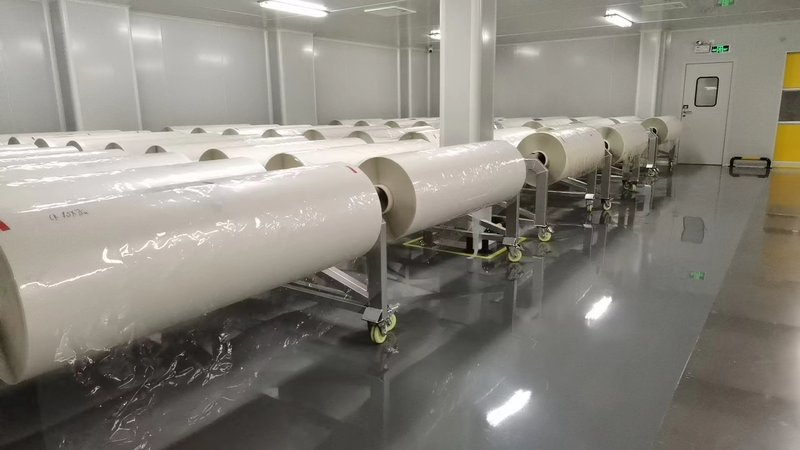
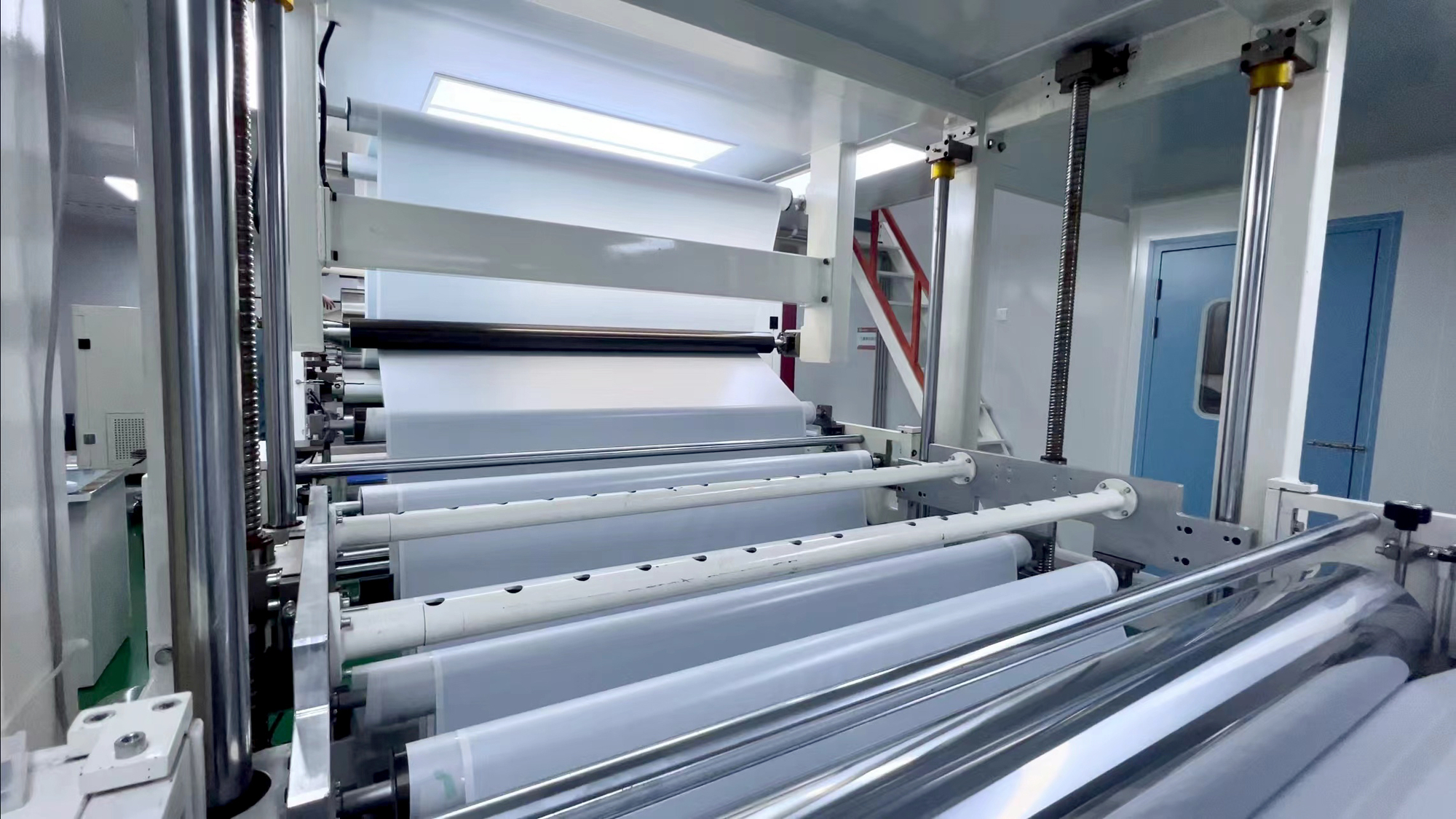
We are in Guangzhou, and we run ceramic film on magnetron sputtering lines. Ask for a sample kit with XO, NK, SF, IR, DD and K, plus the spectral charts behind each one. Run the heat lamp test on your own bench and compare the curves at the same VLT.
Tell us which market you sell into. Gulf buyers, we will point you at XO and NK. South America, IR and DD. Southeast Asia, the full line.
You will know which roll belongs on your shelf within a week. Send a message to KSB Window Film and tell us what your customers are asking for.