
A tint shop in Riyadh lost a 40-van fleet order last March. The fleet manager wanted cooler cabins. His drivers refused anything darker than 50% VLT.
That shop stocked only 5% and 20% ceramic. A competitor had a 70% shade on the shelf and took the account. Same heat problem, different inventory.
So, can window film block heat without dark tint? Darkness and heat rejection are two separate variables. Pick the right film technology and you can cut cabin heat by half while the glass still looks close to factory clear.
Why “Dark” Doesn’t Mean “Cool” (The Science Behind It)
Sunlight reaches your car in three bands. UV runs 280 to 380nm and carries about 3% of the energy. Visible light runs 380 to 780nm at roughly 44%. Near-infrared runs 780 to 2,500nm and carries about 53%.
That near-infrared band is the heat you feel on your arm through the glass. It is also invisible, so a film can block nearly all of it without changing what your customer sees.
Dyed film has no infrared layer. It cuts heat only by cutting light, which makes darkness its only lever. That is why a 20% dyed film often feels hotter than a 70% ceramic film. Here is a full guide with dyed, carbon and ceramic window tint compared side by side.
IR Rejection vs VLT, Explained
VLT is visible light transmission, the number that tells you how dark the glass looks. IRR is infrared rejection across 780 to 2,500nm. TSER adds UV, visible and infrared into one total.
Compare two films at the same 70% VLT. The ceramic one posts 55% TSER. The dyed one posts 28%. Identical look from outside, twice the heat blocked.
What 53% of Your Sunlight Is Doing
Infrared does not stop at the glass. It passes through, hits the seats and dashboard, and those surfaces re-radiate heat as longer waves that cannot escape back out.
That trapped energy is the greenhouse effect inside a parked car. Cabin temperature climbs 15 to 20 degrees Fahrenheit above ambient within the first 30 minutes.
Block the infrared at the glass and the loop never starts. The interior never absorbs the energy, so there is nothing left to re-radiate.
How Clear Ceramic Film Blocks Heat – Explained Simply
Ceramic film carries nano-scale particles inside a polyester layer. KSB uses nano cesium-doped tungsten oxide, Cs0.33WOx, a semiconductor with a strong near-infrared reflection peak.
Particle size is the trick. These particles sit between 20 and 100nm. Visible light waves run 400 to 700nm, so they pass straight through without scattering or haze.
Infrared waves run 780 to 2,500nm. That is the right scale to interact with the particles, so the energy turns into a small amount of heat inside the film and dissipates outward.
Absorption vs Reflection (and Why It Matters for Clear Film)
Most ceramic films absorb infrared. Cesium tungsten oxide absorbs some and reflects the rest back outside before it enters the film at all.
Reflection is the better outcome. A thin film on hot glass has limited room to shed absorbed heat, and energy bounced outside never becomes a problem.
That is why a 70% VLT film built on Cs0.33WOx reaches TSER in the mid-50s. A pure-absorption ceramic at the same shade usually lands near 45%.
Why Ceramic Keeps Your Signals Working
Ceramic particles are non-conductive oxides. They cannot reflect or absorb radio waves, so GPS, Bluetooth, keyless entry and toll transponders all keep working.
Metalized film is the opposite. A Gulf distributor told me last year that SALIK toll tags failed to read on 3 out of 10 cars he tinted with metal film. He moved the whole shop to ceramic within a month.
The Best VLT Options for Customers Who Want Light Tint
If your market wants light film, you need shades above 50% VLT. That is a different inventory decision than most importers make, and it is usually the missing one.
Most wholesale orders I see are stacked at 5%, 20% and 35%. Those shades sell in Southeast Asia and South America, then sit on the shelf in California, New York and Dubai.
One 70% ceramic SKU takes almost no warehouse space. It opens fleet work, windshield work and every market with a strict VLT law.
70% VLT Ceramic Film Performance (Real Numbers)
At 70% VLT, ceramic delivers TSER between 50% and 63%, IRR between 89% and 99%, and UV at 99% or higher. Those come from lab curves measured across 780 to 2,500nm. If the terms feel dense, start with how to read a window film spec sheet.
KSB XO covers four shades, 5/20/35/70, with heat rejection up to 98% and full UV block across the line. XO 70 is the windshield and front-door shade.
Compare dyed at the same 70% VLT. TSER lands at 25% to 35% and IRR stays under 40%. Your customer pays less, feels more heat, and comes back unhappy in three years.
| What You Compare | Ceramic 70% | Carbon 70% | Dyed 70% |
|---|---|---|---|
| TSER (all solar energy) | 50% – 63% | 35% – 45% | 25% – 35% |
| IRR (780 – 2,500nm) | 89% – 99% | 40% – 55% | under 40% |
| UV rejection | 99% + | 99% + | 99% + |
| What it blocks | Invisible infrared | Visible + some IR | Visible light only |
| Signal interference | None | None | None |
| Lifespan in hot climate | 10 – 15 years | 7 – 10 years | 3 – 5 years |
For a cheaper ceramic, IR series runs up to 82% heat rejection and competes with big-brand mid-tier pricing. SF series pushes 92% to 95% with a slight metal content for a deeper look.
DD carbon ceramic installs fast, carries a 5 year warranty, and fits price-led customers. It will not match ceramic on TSER at 70% VLT, so quote it honestly.
Legal-Compliant High-Heat Rejection Options
Strict VLT laws are a product line decision, not a blocker. Roughly seven US states plus Washington DC set front side windows at 70% VLT. New York, California, Pennsylvania and Rhode Island are on that list.
California goes further. CVC 26708(d) requires the film itself to transmit at least 88% VLT, which rules out most tint and leaves only clear heat-rejection film.
New Jersey, Vermont and Delaware allow no aftermarket film on front side windows at all. Those markets need a windshield-first pitch instead of a full-car tint pitch.
Clear Heat-Blocking Film for Windshields
The windshield is where clear film earns its money. Federal rule 49 CFR 571.205 sets a 70% floor for glass used for driving visibility, and no state can go below it.
Factory glass already runs 70% to 74%, which leaves almost no room for darkening. A clear ceramic at 70% VLT rejects 40% to 60% of infrared heat and still meters above the legal line.
One warning to repeat to every installer. Combined VLT is film multiplied by glass, not the film number alone. A 70% film on 72% glass gives 50% combined, which fails a 70% state.
The Legal Compliance Plus Heat Protection Combo
Build the car window by window. Clear ceramic on the windshield. 70% on the front doors in strict states. 35% to 50% on rear glass, where most states set no limit.
That mix keeps the driver visible and still cuts the cabin heat load by roughly half. It also passes a tint meter at inspection, which is the part that saves your customer real money.
A citation runs $25 to $150. Removing film costs $25 to $75 per window. One failed inspection wipes out the profit on the whole job.
Gulf markets run the same logic with different numbers. UAE rules allow only clear film on the front windshield, front side windows at 50% VLT or lighter, and rear glass at 30%.
RTA fines for non-compliant tint run AED 400 to AED 1,500, plus black points and possible impoundment. A Dubai shop selling clear ceramic has a legal product at a premium price.
What to Tell Customers Who Think Darker Is Always Better
Do not argue about it. Show them. I keep two film samples and a 150 watt heat lamp on my desk in Guangzhou, one 5% dyed and one 70% ceramic.
I hold a thermometer behind each sample for 60 seconds. The 70% ceramic reads cooler almost every time. Then I flip the samples and let the customer read the labels.
The Demo: Show a Heat Lamp Through Clear Film
Set the demo up once and reuse it. A clamp lamp, an infrared thermometer, and two film samples taped to cardboard frames. It is the same bench routine behind our guide on how to test window film quality before you buy in bulk.
Run the test three times so the customer sees it repeat. The number that matters is the gap between readings, usually 10 to 15 degrees Fahrenheit.
The Upsell Script That Actually Works
Start where the customer already is. If they ask for 5%, sell them 5% ceramic instead of 5% dyed. Same shade, more heat blocked, better margin for you.
Then say this. The 5% ceramic costs $120 more for the car. The 70% ceramic on your windshield costs another $90 and cuts more heat than the doors do.
That is a $210 lift on one car with no extra install time. Across 60 cars a month it changes the shop’s month, and it is the reason your buyer reorders.
FAQ: Heat Rejection Without Dark Tint
Can a clear film really block heat?
Yes. If you came here asking can window film block heat without dark tint, the short answer is ceramic film. Near-infrared carries about 53% of solar energy and it is invisible. A 70% VLT ceramic film blocks 50% to 63% of total solar energy while the glass stays close to factory clear.
What is the lightest ceramic film you make?
XO series goes to 70% VLT and it is our highest heat rejection line at up to 98%. For a windshield, 70% is the practical limit because combined VLT has to stay legal.
Is 70% VLT film legal on front side windows?
It depends on the state. New York, California, Pennsylvania, Rhode Island, New Hampshire and Washington DC require 70% or lighter. About 15 states allow 35%. Check combined VLT, not the film rating.
Does light ceramic film still block UV?
Yes. UV blocking comes from the film’s UV absorbers and PET base, not from darkness. A 70% VLT ceramic film still blocks 99% or more of UV at any shade.
Which products should I stock for a light-tint market?
XO 70 for windshields and premium front glass, IR series for the volume price point, DD carbon ceramic for price-led customers. Three SKUs cover the whole light-tint range.
Does a 70% shade cost more than a 5% shade?
Not much. The ceramic layer drives the cost, not the shade, so the gap is usually under 10% per roll. You get a second market for almost no extra money.
Get Samples and Test It Yourself (CTA)
You do not have to take my word for any of this. The fastest way to answer can window film block heat without dark tint is to test it on your own bench.
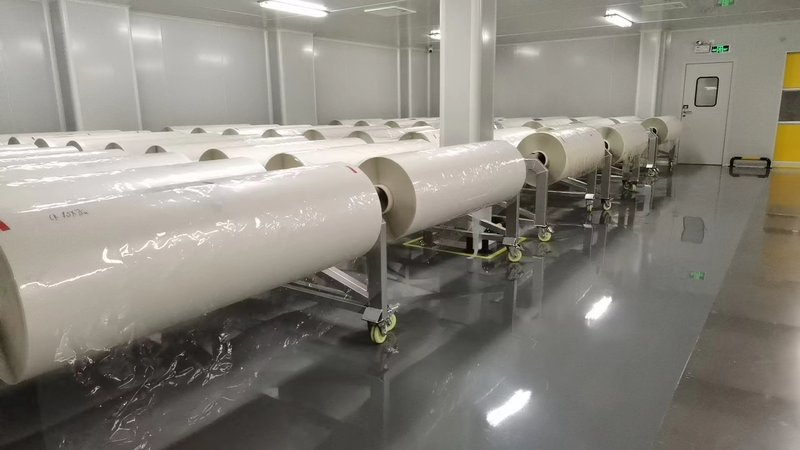
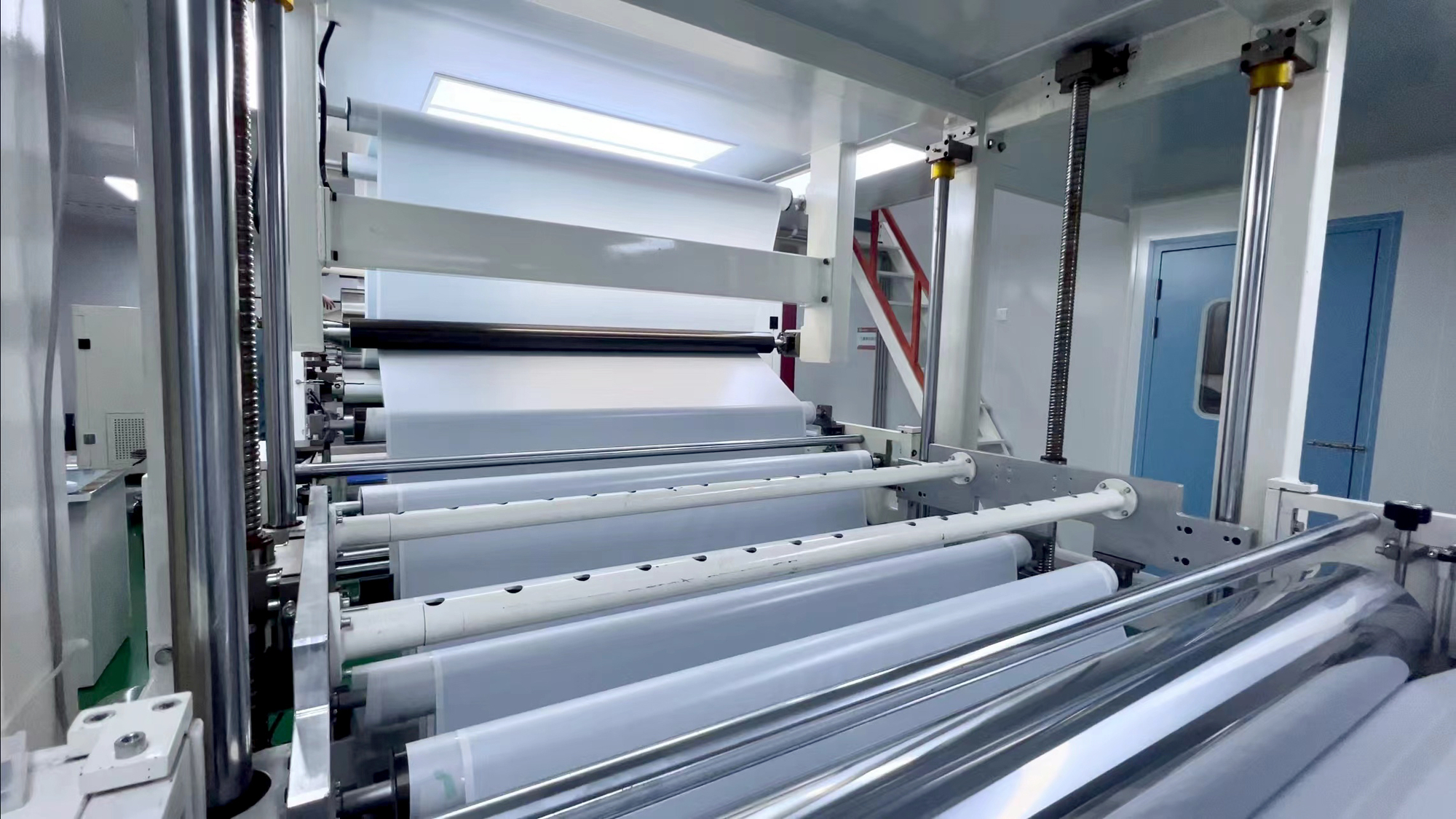
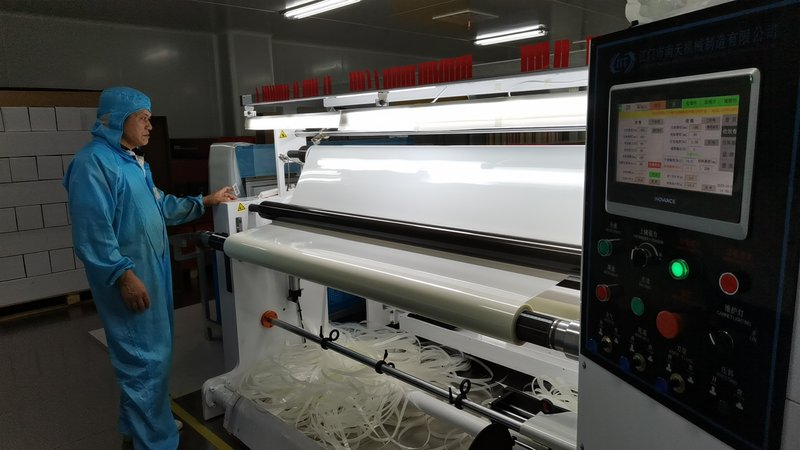
We run ceramic film on magnetron sputtering lines in Guangzhou. Ask for a sample kit with XO, NK, SF, IR, DD, K and PK, plus the 780 to 2,500nm spectral curves behind each one.
Tell us which market you sell into. Gulf buyers get pointed at XO and NK. South America gets IR and DD. Southeast Asia gets the full line.
Hold the 70% shade under a heat lamp next to your current bestseller, then decide what goes on your shelf. Message KSB Window Film and tell us what your customers ask for.