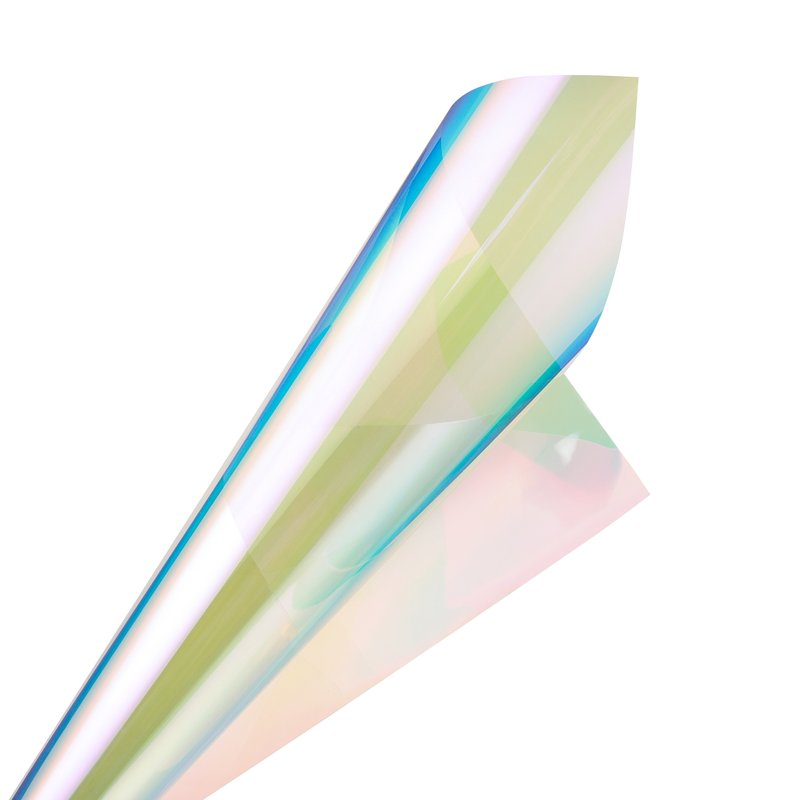

A roll of window film lands on your shop shelf. You unbox it, cut it, install it. Simple, right?
But that roll traveled further than most people fly in a lifetime. It crossed oceans. It passed through at least 3 or 4 sets of hands before reaching you. And the path it took determines everything — what you paid for it, how long the film lasts, and whether your customers come back smiling or calling with complaints.
I’ve been around this business long enough to see importers lose $20,000 on one bad shipment because they didn’t understand where their film actually came from. I’ve also watched small shops turn into regional distributors in 18 months — just by getting their supply chain right.
If you’re importing window film, or thinking about starting, the supply chain isn’t optional knowledge. It’s the difference between building a business and burning through cash.
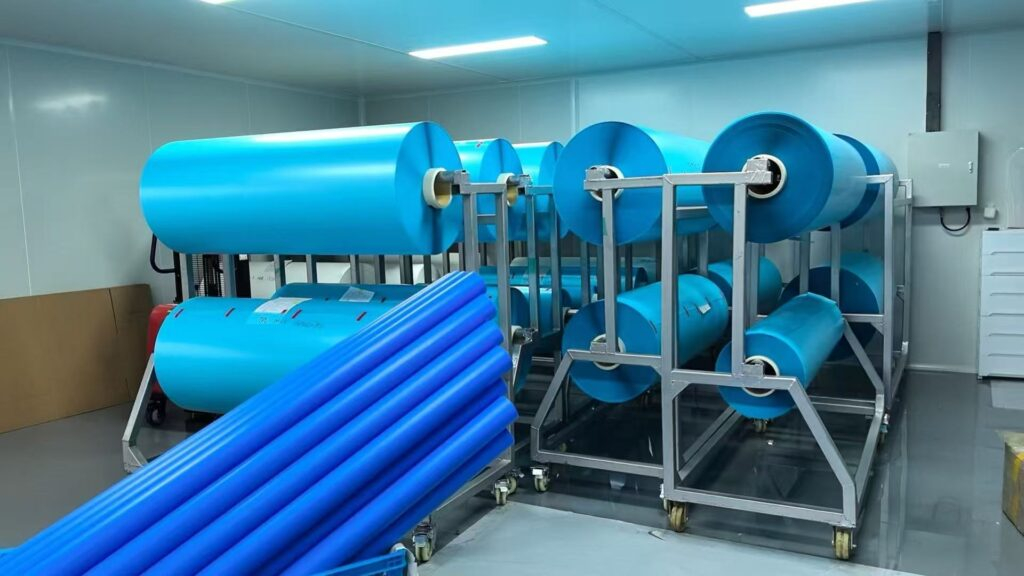
The Journey of a Window Film Roll — From Raw PET Pellets to Your Shop
Window film starts as PET pellets — same base material as water bottles. But here’s the catch: window film uses optical-grade PET, not industrial-grade. That distinction matters. Optical-grade PET costs 30-40% more because it has to be crystal clear with zero visible impurities. One speck of dust in the raw material becomes a defect on a car window.
Most optical-grade PET comes from Japan and South Korea. Companies like Mitsubishi, SKC, and Toray dominate this space. Chinese and American producers are catching up, but Japanese and Korean PET remains the benchmark for clarity.
From pellet to finished roll takes 4 steps:
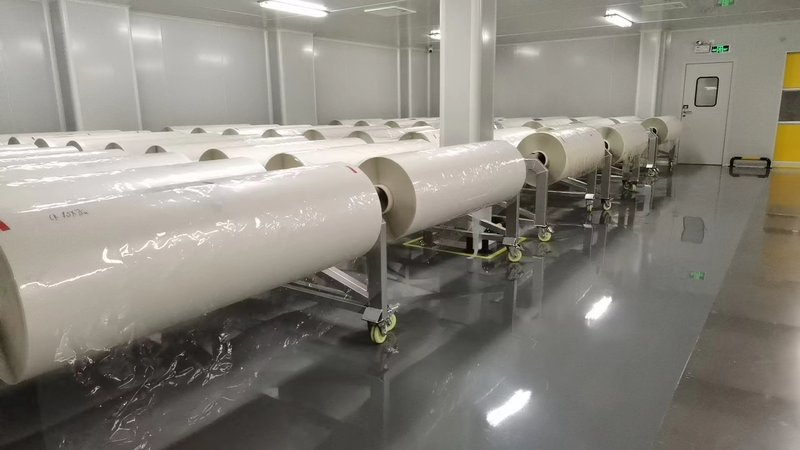
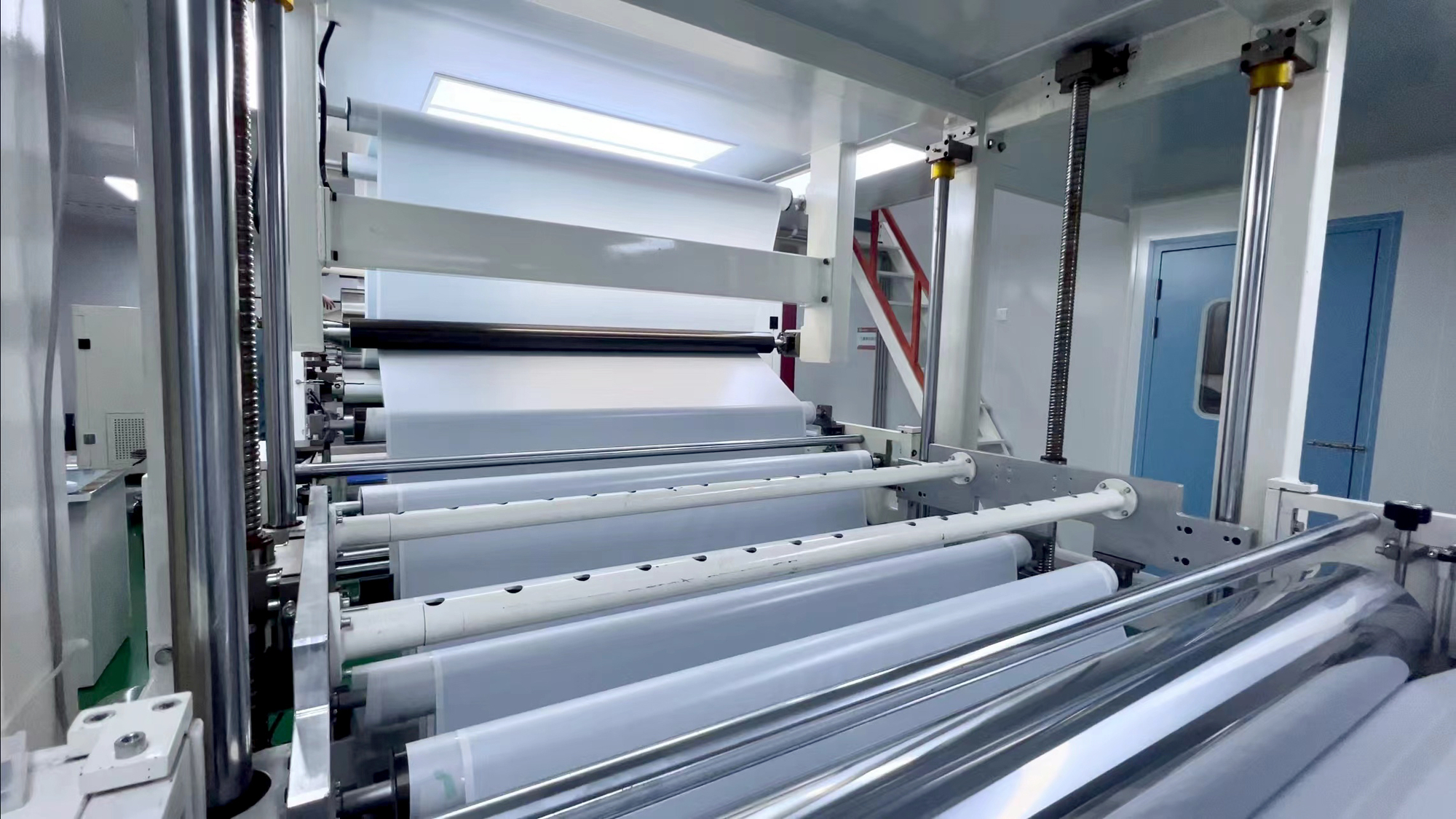
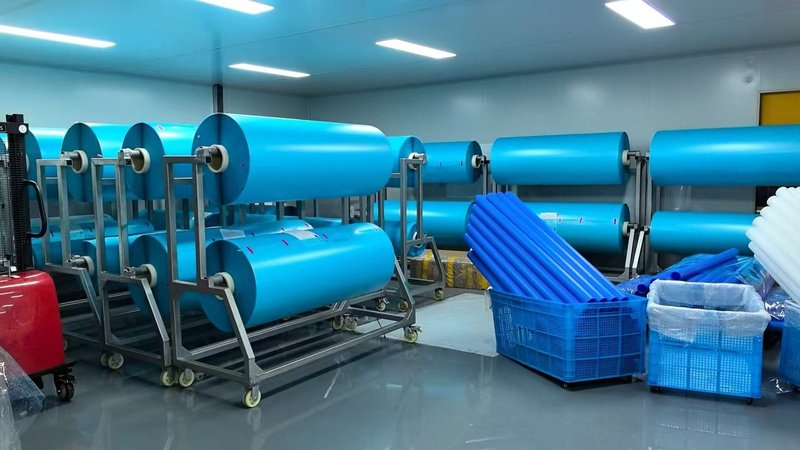
Extrusion: Pellets are melted and stretched into a thin, clear base film in clean-room conditions. Coating: The base film gets its layers — hard coat for scratch resistance, UV blockers, heat-rejection particles (ceramic, carbon, or metal), adhesive, and a protective liner. A nano-ceramic film can have 7 to 9 layers. Slitting: The 60-inch master roll gets cut into shop-ready sizes — 20, 24, 36, or 40 inches. Shipping: Rolls are wrapped, boxed, and stacked into containers. A 40-foot container holds about 3,000 to 4,000 rolls.
Total time from pellets to packed container? 15 to 25 days in a well-run factory. Add ocean freight, and you’re looking at 35 to 60 days door-to-door.
Who Actually Makes Window Film? Manufacturers vs Converters vs Distributors
Here’s what surprises most first-time buyers: the company selling you window film probably didn’t make it.
Manufacturers own the coating lines. They buy raw PET, run the coating machines, and produce master rolls. Globally, fewer than 30 companies have their own coating equipment — each line costs $2 to $5 million.
Converters buy master rolls, slit them into retail sizes, and add their own packaging and branding. Many ‘window film brands’ you see at trade shows are converters. They don’t coat film — they repackage it.
Distributors buy finished rolls from manufacturers or converters and sell to tint shops. That’s the layer most shop owners know.
Every layer adds markup. A roll that costs $12 to manufacture might go for $18 after conversion, $28 at distribution, and hit your shop at $35 to $40. Cut one layer, and the savings hit your bottom line directly.
At KSB, we run everything under one roof in Guangdong. Raw PET in. Coating, slitting, QC, packaging — all one facility. Our XO and NK nano-ceramic series ship as finished products with no converter markup baked in.
The 3 Biggest Manufacturing Hubs — and What Each Is Known For
Window film production clusters in three regions. Each has a specialty.
Guangdong, China (Pearl River Delta): This is the heavy lifter. Roughly 60-70% of the world’s aftermarket window film flows through Guangzhou, Foshan, and Shenzhen. You can find $3 dyed film and $25 nano-ceramic within a 50-mile radius. The catch? Quality swings hard. For every factory with clean-room coating lines and Japanese PET, there are five running outdated equipment. A live video walkthrough separates the real ones from the warehouses with a logo.
Zhejiang and Jiangsu (Yangtze River Delta): Fewer factories than Guangdong, but the quality floor is higher. These facilities often serve both auto and architectural film markets, so they operate to tighter specs.
South Korea and Japan: These two own the raw material game. Optical-grade PET, advanced adhesives, nano-ceramic particles — if it’s a precision input, it’s Korean or Japanese. When someone says ‘Korean technology’ film, they usually mean the PET or ceramic particles came from Korea, even if coating happened in China. That’s not a bad thing — Japanese materials plus Chinese manufacturing efficiency is how the best products get made.
The US has manufacturers too — Eastman (LLumar, SunTek) is the biggest. But US-made film is priced for the domestic market. That’s why importers from Latin America, the Middle East, Africa, and Southeast Asia look to Asia.
How Many Middlemen Are Between the Factory and Your Shop?
Let’s trace a real shipment to Dubai. A shop orders 500 rolls of ceramic film from Guangdong:
Factory makes the film. Export trading company handles docs and logistics. Freight forwarder books the container. Chinese customs clears export. Shipping line moves Guangzhou to Jebel Ali — 18 days. UAE customs processes import. Local agent handles port fees. Trucking company delivers to the warehouse.
That’s 8 touch points. Each takes time. Each adds cost. But not all middlemen are bad. A good trading company prevents nightmare scenarios — wrong HS code = 3-week port hold. Missing SASO certification for Saudi Arabia = container rejected at the border. We’ve seen shipments stuck for weeks over a paperwork error a $200 customs broker would catch in 15 minutes.
The goal isn’t to eliminate every middleman. It’s to know which ones earn their cut and which ones just pass paper.
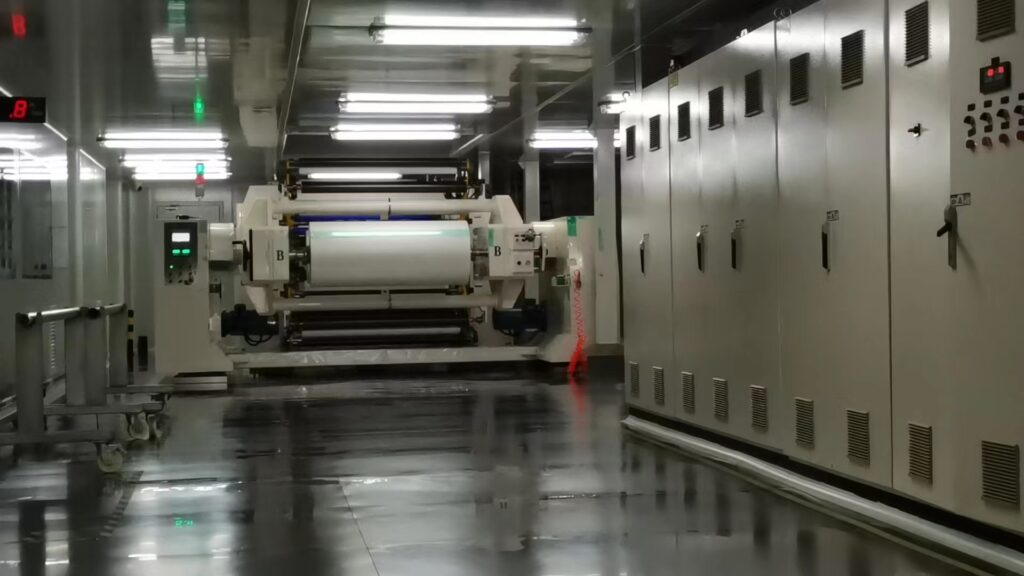
Why ‘Factory Direct’ Doesn’t Always Mean What You Think
Spend 5 minutes on Alibaba and you’ll see ‘factory direct’ everywhere. In reality, many of those sellers are trading companies with nice showrooms.
A real manufacturer can: show their coating line on a live video call, not a pre-recorded clip; share in-process QC photos from different production stages; customize actual film formulations — tweak adhesives, adjust VLT, modify hard coat; and share a third-party factory audit from SGS or Bureau Veritas. A trading company can only change the box design.
I’ve worked with buyers who thought they were factory-direct for two years until they visited China and found a 3-person office above a retail shop. They’d been paying 15-20% extra the whole time.
At KSB, we walk buyers through our coating floor in Guangzhou — extrusion, coating, QC lab, slitting, packaging, all in one building. If a supplier hesitates when you ask for a factory video call, that tells you something.
How the Supply Chain Affects Price, Quality, and Lead Time
A distributor in Saudi Arabia ordered 2,000 rolls of ceramic film at the lowest FOB price he could find: $8.50 per roll. The supplier used industrial-grade PET. After 8 months under 48°C Gulf heat, the film hazed. The adhesive wasn’t formulated for extreme temperatures — bubbles appeared within 6 months. Coating was outsourced, adding 10 days to every reorder.
Total damage: $35,000 in returns, lost customers, and destroyed reputation.
Compare that to a Texas shop chain buying ceramic film from a Guangdong manufacturer that uses Japanese PET and Korean ceramic particles. Per-roll cost: $12.50 — higher on paper. But zero warranty claims in 3 years. Installers work faster because the film handles well. Shops keep reordering because the product stays on cars and looks great 2 years later.
The supply chain sets your quality floor and your headache ceiling. Understand it, and you buy smarter. Ignore it, and you’re gambling with your reputation.
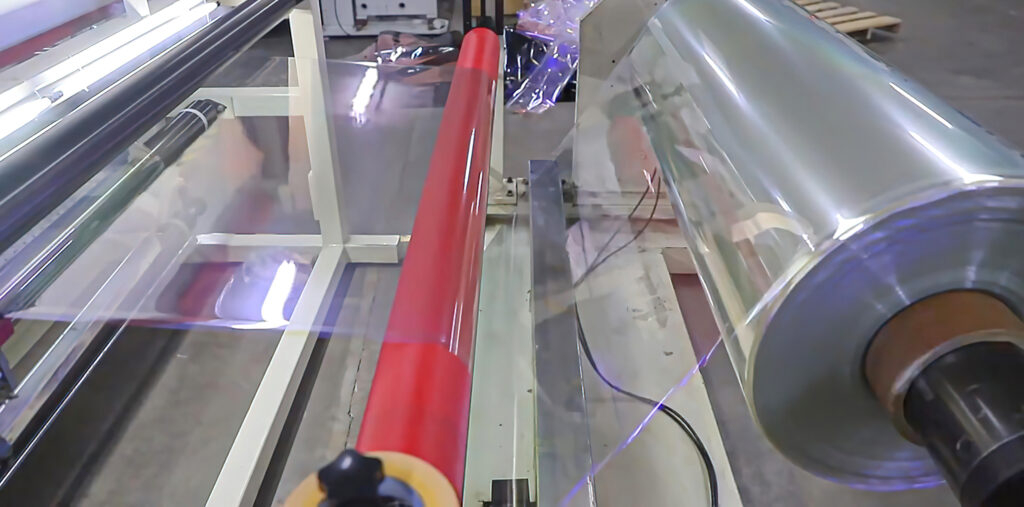
FAQ: Questions Importers Actually Ask
Q: How long to ship window film from China to the US?
Sea freight Guangzhou to LA: 15-18 days on water. Production: 1-2 weeks. Customs both ends: a few days. Trucking: a few more. Total: 35-45 days. Air freight: 7-10 days, but 4-5x the cost.
Q: What’s the smallest order to test a new supplier?
Most factories want 200-300 rolls for a trial run. But start smaller: request 5-10 sample rolls for $100-200. Those 10 rolls tell you more than any spec sheet.
Q: Trading company or direct to factory?
Ordering 500+ rolls and you know logistics? Go direct. New to importing? A good trading company saves you from expensive rookie mistakes. Start with a trading company, switch to direct when you’re ready.
Q: How do I verify a factory is actually a factory?
Live video walkthrough showing the coating line running and current production. A real factory does this in 5 minutes. A trading company gives excuses — ‘floor is confidential,’ ‘camera is broken.’ Keep looking.
Q: Which country makes the best window film?
Japanese and Korean raw materials are unmatched for optical clarity. Chinese factories have perfected coating at scale. The best film in 2026 combines Japanese/Korean materials with Chinese manufacturing. That’s our NK and XO model: Japanese-grade PET, Korean nano-ceramic particles, coated in Guangdong.
Q: What if my shipment arrives damaged?
Marine cargo insurance costs 0.3-0.5% of declared value. Always insure your containers. Film and water don’t mix — a leak means total write-off. The $150 premium on a $30,000 shipment is the cheapest peace of mind you’ll buy.
Q: Should I visit the factory before a bulk order?
Above $15,000? Yes. A $1,500 trip to Guangzhou can save you $30,000 in bad inventory. You see the coating line, meet the QC team, test samples on the spot. If travel isn’t possible, hire SGS or Bureau Veritas for a pre-shipment inspection — $300-500 for an independent quality report.
Ready to See Your Supply Chain Clearly?
Knowing where your window film comes from changes how you buy. You stop chasing the lowest price on a quote and start asking: Where’s the PET from? Who runs the coating line? How many hands add cost before delivery?
Tell us your target market and monthly volume. We’ll walk you through our supply chain from raw materials to your warehouse door. Sample rolls ship within 5 business days.
Browse our range: XO and NK nano-ceramic for premium markets, SF and IR for mid-to-high range, DD carbon for high-volume shops, K color-stable for budget-conscious buyers, and PK metallic for reflective film customers.